A bill heading for an expected signature on the President's desk will effectively protect 2 million acres of wilderness in the U.S. Conservationists are applauding the move, while others worry the bill will hold back alternative energy plans.


"The Omnibus Public Lands Management Act, which cleared the Senate last week, was approved by a margin of 285 to 140 and has been sent to President Obama for his signature."
"The bill would officially designate land in California, Colorado, Idaho, Michigan, New Mexico, Oregon, Utah, Virginia, and West Virginia as wilderness. That means no logging, mining, drilling, or even vehicles."
"The Associated Press details the provisions by state. They include setting aside more than 450,00 acres of wilderness near Santa Clarita, Calif., and along the California-Nevada border, nearly 250,000 acres of Colorado's Rocky Mountain National Park, 517,000 acres in Idaho's Owyhee Canyonlands, and more than 250,000 acres of wilderness in and near Utah's Zion National Park."
Read the full story: House passes bill protecting 2 million acres of wilderness
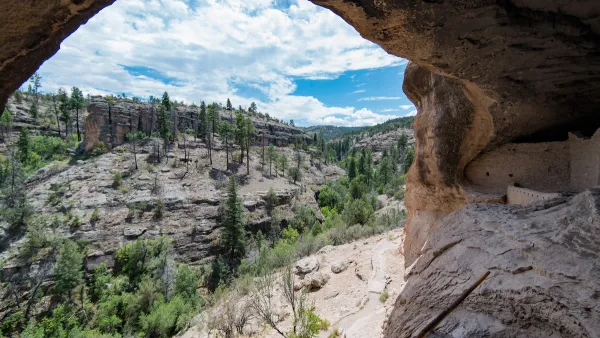
The Changing Nature of Wilderness
U.S. public lands management is undergoing a slow but significant shift.

Returning to a Wilder World
The pandemic induced an accidental 'rewilding' in many places as animals took over cities and streets devoid of humans. As we emerge from our isolation, can we co-exist peacefully?
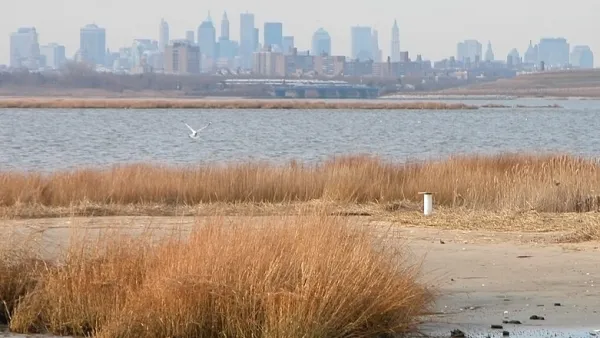
Jamaica Bay: Wilderness in the City
Created so people could "experience nature in the midst of crowds," New York's Jamaica Bay National Wildlife Refuge embodies the characteristics of all modern national parks: abundant, welcoming, and threatened.

Planetizen Federal Action Tracker
A weekly monitor of how Trump’s orders and actions are impacting planners and planning in America.

California plans to bury El Niño’s downpour
If the state plays its cards right, it may be able to store a billion acre-feet of El Niño’s water in aquifers.

Desperate measures: Advocates weigh draining Lake Powell to fill Colorado River
Draining the reservoir could reduce evaporation losses by a couple hundred thousand acre-feet.

Chicago voters approve permanent festival grounds, penalty for vacant property owners
Currently, major summer and fall festivals take over public parks for weeks at a time, drawing criticism from nearby residents

NYC votes to cut outdoor dining red tape, speed up permitting
New York City also voted to allow the Department of Transportation to begin work on urgent projects before notifying elected officials.

California appears to reject Prop. 45
The proposition would have expanded the projects that qualify for a streamlined environmental review, effectively paring down the California Environmental Quality Act.

FREE Course: Walkable City 1: Why Walkability?
After describing his path towards focusing on walkability as the essence of good planning, Jeff Speck marches through his five principal reasons for making more walkable places.
Reinventing Malls: Planning Alchemy—Turning Gray Fields Into Gold
The course focuses on the opportunities and imperatives that shape reinvention of mall sites.

City of Rosemead
Rutgers University, Edward J. Bloustein School of Planning and Public Policy
One Hundred Miles
Hunter College, City University of New York (CUNY)
The Architects Foundation
University of Cincinnati Online
City of Cambridge
Montrose County
The Pocatello Development Authority