An new exhibition in Toronto called Carrot City: Designing for Urban Agriculture includes a concept for Pig City, a high-rise swine farm.


"Proposed by the Dutch architectural firm MVRDV, the argument is that it's more efficient to raise swine in highrise farms than on the ground, where they take up a lot of room. According to MVRDV, if pigs in Holland were raised organically – i.e. fed 100 per cent grain – three-quarters of the country would have to be set aside to meet their needs.
By giving these pigs wings and stacking them in the sties in the skies, the land below remains free and transportation and distribution costs can be cut. Each tower could feed 500,000 people annually. The pigs would also get to enjoy well-ventilated spaces with great views.
God knows how the NIMBYs would respond but this might be one case where swinish behaviour was both the cause and result of their unhappiness.
"Urban farming is in its early stages," says Joe Nasr, who with fellow Ryerson profs Mark Gorgolewski and June Komisar organized the show."
Read the full story: Sty in sky rethinks how we can farm in city
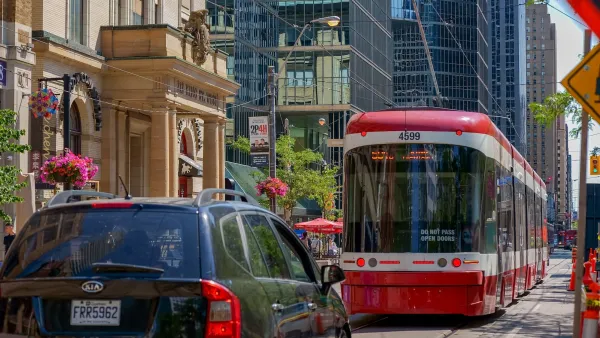
Toronto Man Beats Streetcar on Foot to Highlight Traffic Delays
Runner Mac Bauer says he hopes his project spurs the city to improve transit speed and reliability.

A Multimillion Dollar Virginia Company is Turning Empty Office Buildings Into Farms
Area 2 Farms envisions a world where 90% of the U.S. population lives within 10 miles of an indoor farm.
Ontario Judge Saves Toronto Bike Lanes
A court order bars the provincial government from removing bike lanes, saying the decision would make roads more dangerous and fail to reduce congestion.

Planetizen Federal Action Tracker
A weekly monitor of how Trump’s orders and actions are impacting planners and planning in America.

California plans to bury El Niño’s downpour
If the state plays its cards right, it may be able to store a billion acre-feet of El Niño’s water in aquifers.

Desperate measures: Advocates weigh draining Lake Powell to fill Colorado River
Draining the reservoir could reduce evaporation losses by a couple hundred thousand acre-feet.

NITA’s first budget outlines $5 billion operating plan
The plan also proposes a $9.73 billion capital program for 2027 through 2031.

In Texas, data centers are swallowing promised parkland
Residents who moved to Taylor, Texas for a rural community now have to contend with three data centers in their backyard.

How a Chicago-sized wind farm beat the odds and powered on
The project spanned five presidential administrations and a standoff with a U.S. military base.

FREE Course: Walkable City 1: Why Walkability?
After describing his path towards focusing on walkability as the essence of good planning, Jeff Speck marches through his five principal reasons for making more walkable places.
Reinventing Malls: Planning Alchemy—Turning Gray Fields Into Gold
The course focuses on the opportunities and imperatives that shape reinvention of mall sites.

City of Rosemead
Rutgers University, Edward J. Bloustein School of Planning and Public Policy
One Hundred Miles
Hunter College, City University of New York (CUNY)
The Architects Foundation
University of Cincinnati Online
City of Cambridge
Montrose County
The Pocatello Development Authority