Officials in Pittsburgh are hoping that expanding transit-oriented development will spur growth in struggling and decaying neighborhoods -- and they have the voter-approved legislation to help.


"Can railcars and buses be engines of rebirth for those and other struggling communities? A growing body of planners, nationally and locally, thinks so."
"They have embraced a concept they call transit-oriented development, the aim of which is to create and sustain walkable neighborhoods with a mix of housing and retail development and transit hubs -- light-rail or busway stations -- at their core."
"The General Assembly in 2004 enacted legislation to promote development around transit hubs."
"It allows for creation of Transit Revitalization Investment Districts -- zones within a half-mile radius of those hubs -- where increased tax revenues from development can be earmarked for transit, infrastructure and streetscape improvements."
"Several efforts are under way locally to create such zones."
Read the full story: Can transit grow neighborhoods?
How Would the Movie Speed Look in Today's Los Angeles?
Twenty years after the movie Speed, which took place on the Big Blue Bus, Metro rail system, and other transit facilities, Keanu Reeves and crew might not recognize L.A.'s current transit system. L.A. County planner Clement Lau surveys the changes.
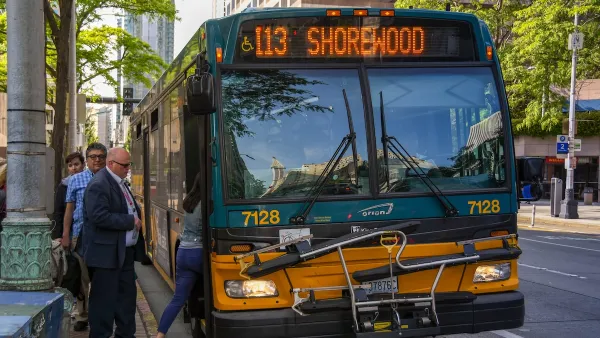
275,000 bus trips are at stake on Seattle's ballot
If passed, the Seattle Transit Measure would trigger a 0.3% sales tax and raise an average of $138 million per year to maintain and expand Seattle’s bus services.
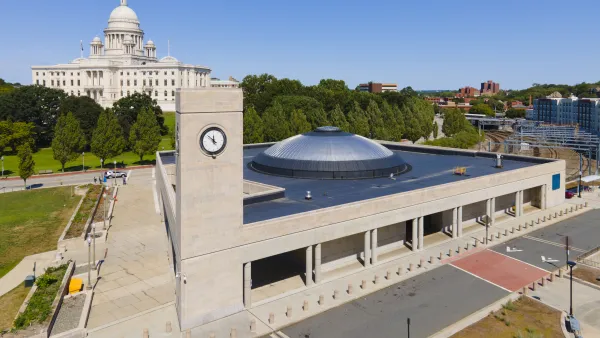
Providence train station to gain new bus hub
The new hub will replace the one currently located at Kennedy Plaza.

Planetizen Federal Action Tracker
A weekly monitor of how Trump’s orders and actions are impacting planners and planning in America.

California plans to bury El Niño’s downpour
If the state plays its cards right, it may be able to store a billion acre-feet of El Niño’s water in aquifers.

Desperate measures: Advocates weigh draining Lake Powell to fill Colorado River
Draining the reservoir could reduce evaporation losses by a couple hundred thousand acre-feet.

Chicago voters approve permanent festival grounds, penalty for vacant property owners
Currently, major summer and fall festivals take over public parks for weeks at a time, drawing criticism from nearby residents

NYC votes to cut outdoor dining red tape, speed up permitting
New York City also voted to allow the Department of Transportation to begin work on urgent projects before notifying elected officials.

California appears to reject Prop. 45
The proposition would have expanded the projects that qualify for a streamlined environmental review, effectively paring down the California Environmental Quality Act.

FREE Course: Walkable City 1: Why Walkability?
After describing his path towards focusing on walkability as the essence of good planning, Jeff Speck marches through his five principal reasons for making more walkable places.
Reinventing Malls: Planning Alchemy—Turning Gray Fields Into Gold
The course focuses on the opportunities and imperatives that shape reinvention of mall sites.

City of Rosemead
Rutgers University, Edward J. Bloustein School of Planning and Public Policy
One Hundred Miles
Hunter College, City University of New York (CUNY)
The Architects Foundation
University of Cincinnati Online
City of Cambridge
Montrose County
The Pocatello Development Authority