As Liverpool ends its year as the European Union's "Capital of Culture", the city is vastly different and better than it was just a year ago, according to this column.


Critic Edwin Heathcote calls it "an extravagant finale for a year that has seen a vast range of events – some more compelling than others."
"Liverpool has much in common with Glasgow, the last UK city to be designated a Capital of Culture: its post-industrial decline, its mix of creative, bourgeois and proletarian culture, its history of radicalism and capitalism, and its harsh chippiness. But it is also, like Glasgow, a city of wonderful architecture, long neglected, often isolated and under-appreciated. The architecture of commerce, the docks, the warehouses, the offices and chambers, taken with the city's unique pair of cathedrals, the delicacy and harmony of the Georgian terraces and the brash confidence of postwar planning, make it one of Britain's most architecturally compelling and diverse cities."
"The built legacy is harder to judge than the cultural content; it will take longer to finish, to mature and to prove itself, but it is surely better than anyone expected. This sharpest, most critical and most cynical of cultural cities feels like a far more attractive, lively and connected place than it did 12 long months ago."
Read the full story: Culture capital’s concrete legacy


Friday Funny: Squirrelly Passenger Causes UK Train Cancellation
Planetizen’s Friday Funny stories are often satirical, but this nutty story from Reuters is 100 percent genuine.
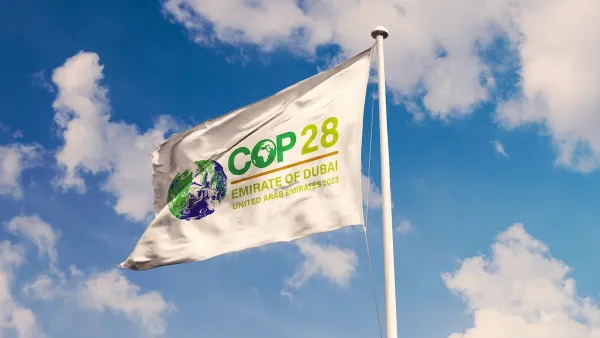
COP28: Beginning of the End for Fossil Fuels?
A deal came together “quickly and unexpectedly" on the final night of the nearly 2-week United Nations climate talks in Dubai, UAE, according to a series of articles by Washington Post climate reporters.
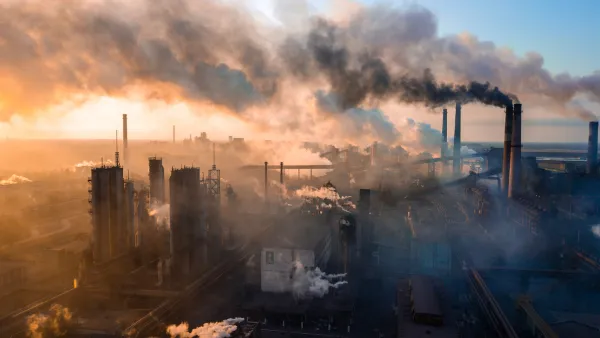
COP28: Will Developed Nations Reduce Emissions?
Tensions between developed and developing nations surfaced over emissions and energy, with the former focused on reducing fossil fuels and the latter pointing to unrealized emissions reductions from the nations most responsible for global warming.

Planetizen Federal Action Tracker
A weekly monitor of how Trump’s orders and actions are impacting planners and planning in America.

The state-sanctioned urbicide of Austin
People don’t kill cities. Freeways do.

US to reduce Colorado River water deliveries to Mexico
A new Colorado Treaty amendment reduces Mexico’s Colorado River water allocation by 250,000 acre feet.

Nation's most wind-powered state turns to coal as data centers increase energy demand
For the first time in decades, Iowa has increased its generation of coal power.

NYC cools commuters with city's first rain garden above a bus stop
New York City officials say the plants in the rain garden can absorb 16 gallons of rainwater during heavy storms.

Brightline West’s future may rely on $6 billion federal loan
The company has until Nov. 2 to make a $400 million equity investment into its proposed high-speed rail line.

FREE Course: Walkable City 1: Why Walkability?
After describing his path towards focusing on walkability as the essence of good planning, Jeff Speck marches through his five principal reasons for making more walkable places.
Reinventing Malls: Planning Alchemy—Turning Gray Fields Into Gold
The course focuses on the opportunities and imperatives that shape reinvention of mall sites.

Greater Baltimore Committee
Eagle County Government
Harvard University Graduate School of Design
The Architects Foundation
University of Cincinnati Online
The Pocatello Development Authority
The Urban Renewal Agency of the City of Pocatello
Journal of the American Planning Association