Starting Monday, some SEPTA trains will launch a pilot program that discourages too-loud talking, a problem now prevalent during rush-hour.


"Amtrak and several commuter rail operations, including the Maryland Transit Administration and the Altamont Commuter Express in California, have similar quiet car arrangements. SEPTA would be the largest transit agency with quiet cars.
A big question for riders will be: Who will enforce the rule?
Amtrak has told us that most of the time, it's self-policing, said Kim Heinle, SEPTA's assistant general manager for customer service. We're hopeful that customers will respond well, and we think they will.
Matthew Mitchell of the Delaware Valley Association of Rail Passengers said the greatest concern expressed by riders was about the potential for confrontations with cell-phone users. He said he was optimistic that wouldn't happen.
'Experience elsewhere has been that the passengers mostly sort these things out themselves, and those who are going to have conversations with a seatmate or make cell-phone calls will know to sit in a different car," he said. "Rail commuters are by and large pretty quiet and respectful to start with, and it's not like the average peak-hour train is all that raucous.'"
Read the full story: SEPTA to test "quiet cars" on rush-hour trains
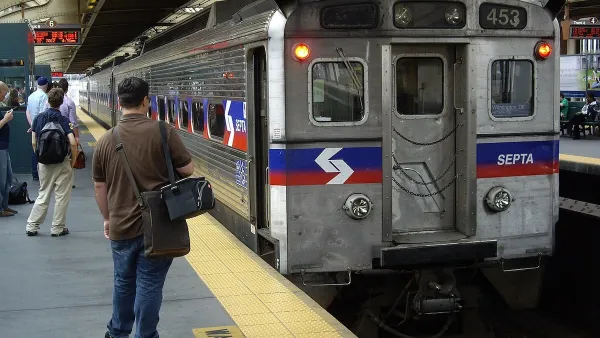
SEPTA Forced to Suspend Fleet after Five Railcar Fires in One Year
Federal regulators told the agency to stop running its Silverliner IV fleet until it can identify and fix the cause of the fires, which forced hundreds of passengers to evacuate trains.
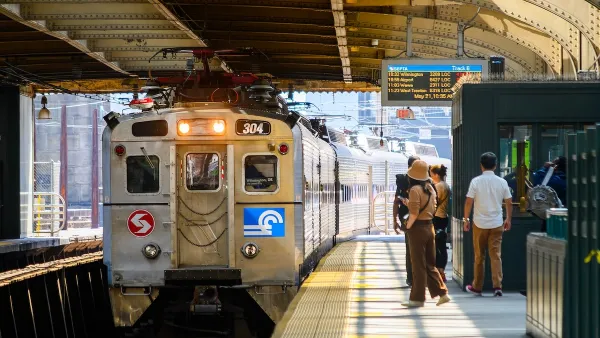
Judge Orders SEPTA to Stop Service Cuts, Fare Increases
The Philadelphia transit agency planned a ⅕ reduction in service and fare hikes to make up for its $213 million budget deficit.
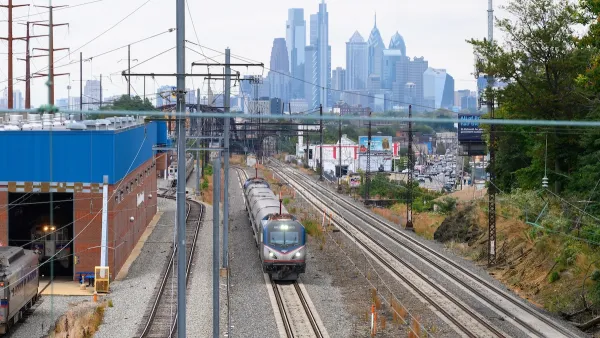
Loss of SEPTA Funding Could Kill Amtrak’s Fifth Busiest Line
The Philadelphia transit agency’s funding challenges could eliminate its contributions to Amtrak’s Keystone Service linking Philly and NYC.

Planetizen Federal Action Tracker
A weekly monitor of how Trump’s orders and actions are impacting planners and planning in America.

Eastern Nebraska is running out of electricity
Data centers and electrification are straining eastern Nebraska’s grid, throttling economic development.

Move over, LA: St. Louis gears up for Olympics, invests millions in downtown redevelopment
The Missouri city will host the 2028 Olympic soccer group stage and knockout matches.

Dallas releases zoning code overhaul to officials
The drafted overhaul is over 400 pages long.

NYC renovations for dangerous, ‘mercilessly crammed’ street delayed until 2027
Construction was supposed to begin this fall.

San Diego’s Midway Rising project gets greenlight from city council
The project looks to become the largest affordable housing development in California's history.

FREE Course: Walkable City 1: Why Walkability?
After describing his path towards focusing on walkability as the essence of good planning, Jeff Speck marches through his five principal reasons for making more walkable places.
Reinventing Malls: Planning Alchemy—Turning Gray Fields Into Gold
The course focuses on the opportunities and imperatives that shape reinvention of mall sites.

City of Rosemead
Rutgers University, Edward J. Bloustein School of Planning and Public Policy
One Hundred Miles
University of Michigan School for Environment and Sustainability (SEAS)
Hunter College, City University of New York (CUNY)
The Architects Foundation
City of Cambridge
The Pocatello Development Authority
The Urban Renewal Agency of the City of Pocatello