Mayor John Fetterman of Braddock, PA struggles with the challenges of reviving a former steel town that has lost 90% of its peak population.


Mayor Fetterman was asked about how he hoped to get his town back on its feet.
'We've been taking a two-pronged approach,"'Fetterman says to answer this question. 'On one hand we have to make improvements in providing functional services and urban space for the existing resident base. When I took office, Braddock had no basketball court. No parks. No place to even walk your dog, except the street.'
Given such a lack of the basic amenities of urban life, the first three years of his term have seen some quick progress. Fetterman ticks off the accomplishments as he drives by them on another impromptu tour of town: Braddock's first basketball courts have been constructed, and its functional green space increased substantially with abandoned lots renovated into parks and gardens. A community-supported agriculture project called Pittsburgh Grow now operates an urban farm under the bridge into town.
Good intentions and hard work only go so far without resources. Fetterman points out, 'Braddock is an Act 47 community.' The term refers to the Pennsylvania legislature's provisions for municipalities (many of them old steel towns like this one) that no longer have the tax base to support themselves. He describes the facts of life for a long-bankrupt town with a disarming lack of spin: 'We wouldn't even have money for 911 service here, if we didn't get a grant for it from the state.'"
Thanks to Nick Gurich
Read the full story: Braddock, Pennsylvania: Out of the Furnace and into the Fire
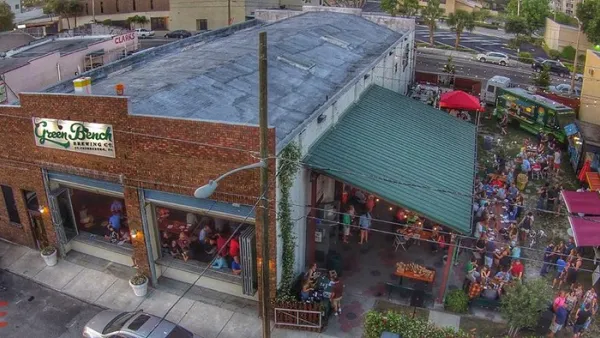
New Book Studies 20 Examples of Adaptive Reuse
A new book on adaptive reuse of industrial buildings is reviewed by Carol Berens.
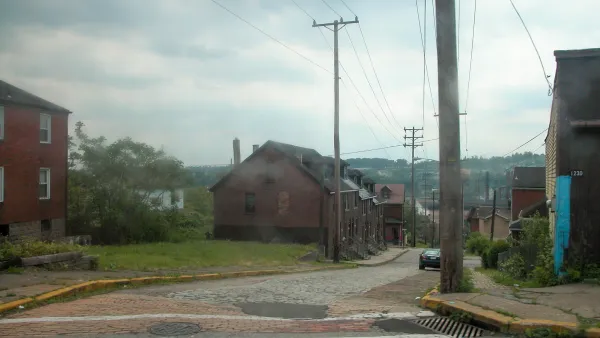
Managing Abandoned Homes in North Braddock
The usual litany of Rust Belt woes hit North Braddock, Pennsylvania particularly hard. The Pittsburgh suburb has shed two-thirds of its population and is burdened with 350 abandoned properties.
The Promise of Renewal in Massachusetts Gateway Cities
Massachusetts is funding a placemaking initiative to renew its old industrial gateway cities. Available funds are only $16 million, but there's a plan to make the money go a long way.

Planetizen Federal Action Tracker
A weekly monitor of how Trump’s orders and actions are impacting planners and planning in America.

Eastern Nebraska is running out of electricity
Data centers and electrification are straining eastern Nebraska’s grid, throttling economic development.
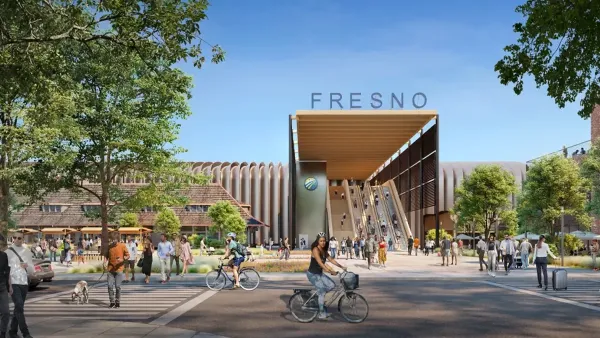
California High-Speed Rail Authority picks trainset manufacturer
The California High-Speed Rail Authority aims to start servicing passengers by 2033.

Massachusetts bogs generate both power, and cranberries
Putting solar panels above farmland is one way Massachusetts is advancing toward its goal of net-zero carbon emissions by 2050.

What could the future of LA transit look like under Raman?
The mayor-elect views broken sidewalks and potholes as crises that can be fixed with better governance.

States are counting on battery farms. Some towns don’t want them.
While fire safety has improved, some communities are still wary.

FREE Course: Walkable City 1: Why Walkability?
After describing his path towards focusing on walkability as the essence of good planning, Jeff Speck marches through his five principal reasons for making more walkable places.
Reinventing Malls: Planning Alchemy—Turning Gray Fields Into Gold
The course focuses on the opportunities and imperatives that shape reinvention of mall sites.

City of Rosemead
Rutgers University, Edward J. Bloustein School of Planning and Public Policy
One Hundred Miles
University of Michigan School for Environment and Sustainability (SEAS)
Hunter College, City University of New York (CUNY)
The Architects Foundation
City of Cambridge
The Pocatello Development Authority
The Urban Renewal Agency of the City of Pocatello