A California state arm called the Bay Conservation and Development Commission has announced plans for a $125,000 contest to come up with ideas for cities to deal with climate change in the San Francisco Bay Area.


"The state agency is preparing to launch a $125,000 competition that will invite architects, planners and engineers to bring innovative proposals "to climate-proof the Bay Area," in the words of the competition outline."
"The aim isn't to stop climate change from happening, say officials, or to build impregnable levees. The goal is to get designers thinking creatively about how to prepare for a world where the sea level might climb several feet - inundating large portions of the developed region unless something is done."
"As now envisioned, $10,000 awards would go to each of the five entrants who present the most innovative schemes for adapting our urban region to natural changes. The current timetable calls for the competition to be launched in the spring and conclude by the end of 2009."
FULL STORY: Call for ideas on living in a warming world

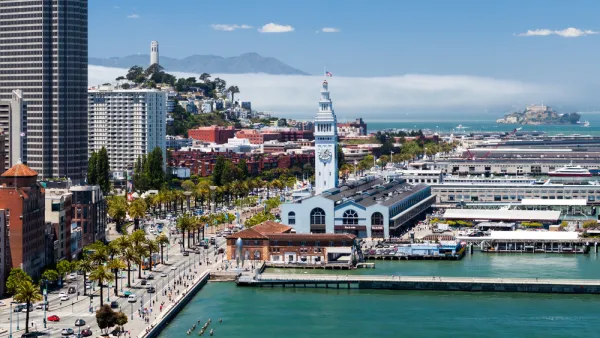
Report: Embarcadero Needs to Rise 7 Feet to Resist Sea-Level Rise
A bombshell report details the adaptation measures that will be necessary to keep San Francisco's Embarcadero high and dry as the climate changes and sea levels rise.
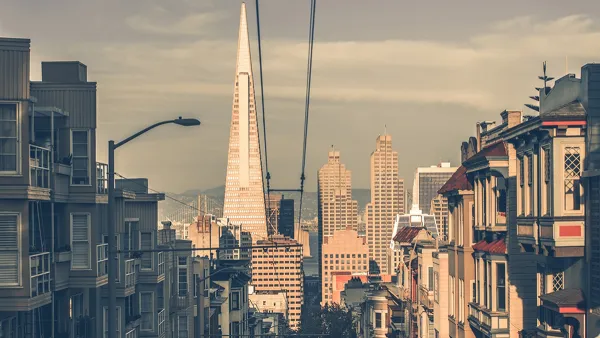
Opinion: High-Rises Won't Sink San Francisco
The weight of large buildings may not be a major threat to coastal cities, despite recent claims.
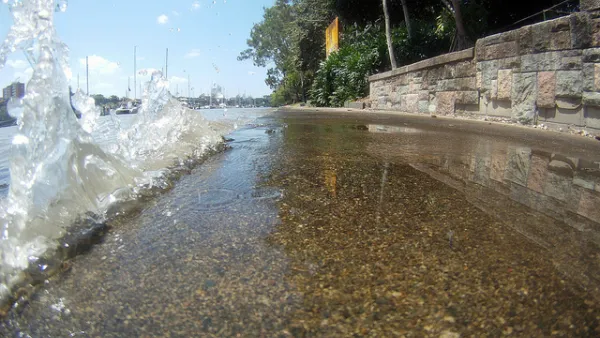
The Cost of Sea-Level Rise Measured in Tens of Billions in California
A new report summarizes the impact rising sea levels would have on California residents, businesses, and infrastructure. The effects would be catastrophic for the San Francisco Bay Area.

Planetizen Federal Action Tracker
A weekly monitor of how Trump’s orders and actions are impacting planners and planning in America.

The state-sanctioned urbicide of Austin
People don’t kill cities. Freeways do.

US to reduce Colorado River water deliveries to Mexico
A new Colorado Treaty amendment reduces Mexico’s Colorado River water allocation by 250,000 acre feet.

Mamdani overhauls NYC's Vision Zero plan with 100 new policy goals
The overhaul aims to reduce traffic deaths and make streets safer for pedestrians, cyclists and drivers through lower speed limits, new safety infrastructure and more.

Amtrak not solely to blame for New Jersey commuter rail's unreliability, report finds
A new study from the Garden State Initiative found that NJ Transit’s budget grew 20% across a 4 year period, but reliability declined significantly over the same period.

EPA erases limits on planet-warming pollution from power plants
Under Monday’s plan, power plants would still have some limits on how much mercury, arsenic and other contaminants they can emit.

FREE Course: Walkable City 1: Why Walkability?
After describing his path towards focusing on walkability as the essence of good planning, Jeff Speck marches through his five principal reasons for making more walkable places.
Reinventing Malls: Planning Alchemy—Turning Gray Fields Into Gold
The course focuses on the opportunities and imperatives that shape reinvention of mall sites.

Eagle County Government
Harvard University Graduate School of Design
Nashville Planning Department
The Architects Foundation
University of Cincinnati Online
The Pocatello Development Authority
The Urban Renewal Agency of the City of Pocatello
Journal of the American Planning Association