Streetcars are a better option than Vancouver's proposed 2.8 billion subway, says Prof. Patrick Condon of the Design Centre for Sustainability at UBC.


"He comes to that conclusion in his study "A Cost Comparison of Transportation Modes," co-authored with Kari Dow, a master's student in landscape architecture at UBC. The modes compared include the modern tram (rail vehicles operating on existing right-of-ways); light rail transit (operating on separate right-of-ways); the heavier, automated SkyTrain (a mostly elevated rapid-rail transit system); the electric trolley bus; longer and shorter diesel buses; the Prius hybrid car; and the Ford Explorer SUV.
When Prof. Condon and Ms. Dow measured each for economic and environmental efficiency, they produced some surprising comparisons.
For energy use and cost per passenger mile, the tram and LRT bested the rest. Put four people in a Prius, though, and it's only a bit worse than a loaded diesel bus.
Carbon output? The tram, trolley bus, SkyTrain and LRT all run on electricity, so their outputs were vastly lower than the diesel buses and autos, especially given B.C.'s hydro power.
But here's the zinger: Add up all costs for each form of transportation - capital, operating and energy - and guess which is most expensive per passenger mile? SkyTrain - even more than the gas-hogging SUV and nearly twice the winner, which is - you guessed it - the tram."
Read the full story: Rethinking the need for speed
MTA looks to bring AI-assisted, multilingual announcement system to subways
Some of the transit agency’s audio systems haven’t been upgraded in 40 years.
NYC's sweltering subway tunnels might soon provide heat to nearby buildings
The MTA is studying how a Thermal Energy Network could capture extreme excess heat from subway platforms to warm nearby municipal buildings.
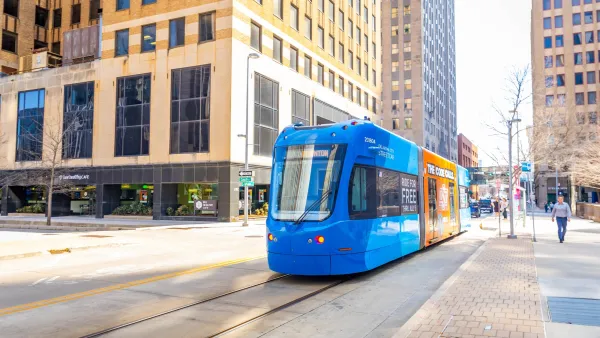
OKC streetcar will stay fare-free after ridership shot up 74%
The downtown streetcar saw a surge in ridership after it eliminated fares in January.

Desperate measures: Advocates weigh draining Lake Powell to fill Colorado River
Draining the reservoir could reduce evaporation losses by a couple hundred thousand acre-feet.

Eastern Nebraska is running out of electricity
Data centers and electrification are straining eastern Nebraska’s grid, throttling economic development.

Malls are becoming the midtowns of the future
Mall and office park redevelopments are a generational opportunity to create new nodes of urbanity.

NYC breaks ground on anti-flooding infrastructure project
New York City's new system will reduce stormwater flows to local sewers by 90%.

One Kentucky town’s secret to affordable housing
The Smoketown Community Land Trust has already built seven affordable homes for community members.

Houston gains petal-shaped cooling infrastructure to make streets more ‘delightful’
The city has installed the pavilions along 15 blocks in Houston.

FREE Course: Walkable City 1: Why Walkability?
After describing his path towards focusing on walkability as the essence of good planning, Jeff Speck marches through his five principal reasons for making more walkable places.
Reinventing Malls: Planning Alchemy—Turning Gray Fields Into Gold
The course focuses on the opportunities and imperatives that shape reinvention of mall sites.

City of Rosemead
Rutgers University, Edward J. Bloustein School of Planning and Public Policy
One Hundred Miles
University of Michigan School for Environment and Sustainability (SEAS)
Hunter College, City University of New York (CUNY)
The Architects Foundation
City of Cambridge
Montrose County
The Pocatello Development Authority