Cycling is on the rise in London, where thousands of commuters fill the streets every morning and the number of trips has more than doubled since 2000.


"The phenomenon of cycle congestion is afflicting a growing number of junctions in inner London. Cyclists jostle for space in the green cycle boxes at the head of traffic lights; they race each other to be first through the narrow gap in the cycle path; they even argue over the last available space in the cycle rack."
"The cyclist may still be an endangered species in most of Britain, but London is in the grip of an unprecedented cycling boom. The number of cycle journeys in the capital has doubled since 2000 to more than half a million a day. In the morning peak in the City, 40 per cent of the vehicles are now bikes."
"The success of Britain's Olympic cycling team has spilt over on to the street, with thousands of people commuting on single-speed bikes designed for velodromes."
Read the full story: Olympic success provokes a chain reaction as millions turn to bikes
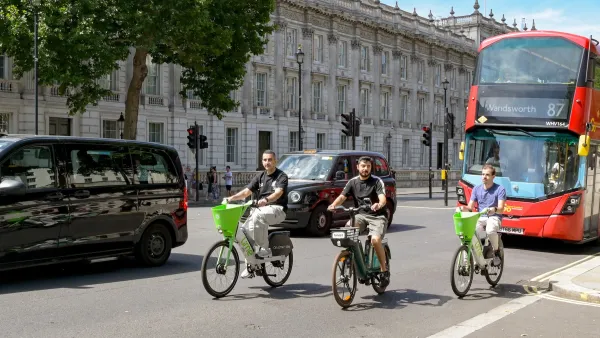
Bike use in London grew by 43% since 2019, but car use remains roughly the same
The city's efforts to reduce car use have stalled despite ambitious programs like congestion pricing and low-traffic neighborhoods.

Beavers save London Tube station from flooding
A small group of beavers is increasing biodiversity and creating cost-free flood mitigation infrastructure.
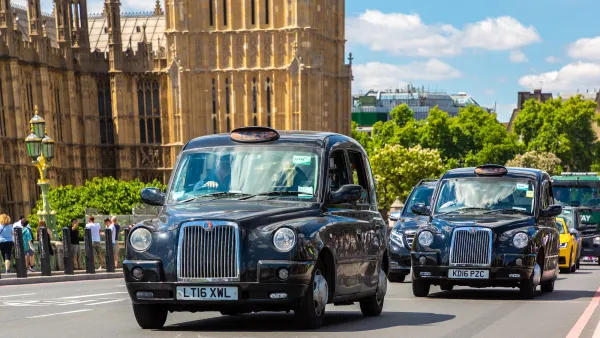
Can Robotaxis Handle London's Famously Tangled Streets?
Black Cab drivers say autonomous cars won’t be able to handle London’s unique conditions.

Planetizen Federal Action Tracker
A weekly monitor of how Trump’s orders and actions are impacting planners and planning in America.

California plans to bury El Niño’s downpour
If the state plays its cards right, it may be able to store a billion acre-feet of El Niño’s water in aquifers.

Desperate measures: Advocates weigh draining Lake Powell to fill Colorado River
Draining the reservoir could reduce evaporation losses by a couple hundred thousand acre-feet.

Los Angeles just elected an urban planner as its mayor
Transportation analysts are optimistic that Raman will be more aggressive in addressing transit issues than Bass.

Mamdani’s pied-à-terre tax survives legal challenge
A panel of judges found that the plaintiffs failed to demonstrate injury as a result of New York City's implementation of the tax.

Eastern Nebraska is running out of electricity
Data centers and electrification are straining eastern Nebraska’s grid, throttling economic development.

FREE Course: Walkable City 1: Why Walkability?
After describing his path towards focusing on walkability as the essence of good planning, Jeff Speck marches through his five principal reasons for making more walkable places.
Reinventing Malls: Planning Alchemy—Turning Gray Fields Into Gold
The course focuses on the opportunities and imperatives that shape reinvention of mall sites.

City of Rosemead
Rutgers University, Edward J. Bloustein School of Planning and Public Policy
One Hundred Miles
University of Michigan School for Environment and Sustainability (SEAS)
Hunter College, City University of New York (CUNY)
The Architects Foundation
City of Cambridge
Montrose County
The Pocatello Development Authority