A newly-designed nuclear "battery" utilizing 50-year old technology promises to revolutionize nuclear power with sealed, shed-sized reactors suitable for powering thousands of households.


"Nuclear power plants smaller than a garden shed and able to power 20,000 homes will be on sale within five years. The miniature reactors will be factory-sealed, contain no weapons-grade material, have no moving parts and will be nearly impossible to steal because they will be encased in concrete and buried underground.
The US government has licensed the technology to Hyperion, a New Mexico-based company which said last week that it has taken its first firm orders and plans to start mass production within five years. 'Our goal is to generate electricity for 10 cents a watt anywhere in the world,' said John Deal, chief executive of Hyperion. 'They will cost approximately $25m [£13m] each. For a community with 10,000 households, that is a very affordable $250 per home.'
The reactors, only a few metres in diameter, will be delivered on the back of a lorry to be buried underground. They must be refuelled every 7 to 10 years. Because the reactor is based on a 50-year-old design that has proved safe for students to use, few countries are expected to object to plants on their territory. An application to build the plants will be submitted to the Nuclear Regulatory Commission next year.
'You could never have a Chernobyl-type event - there are no moving parts,' said Deal. 'You would need nation-state resources in order to enrich our uranium. Temperature-wise it's too hot to handle. It would be like stealing a barbecue with your bare hands.'"
Read the full story: Mini nuclear plants to power 20,000 homes

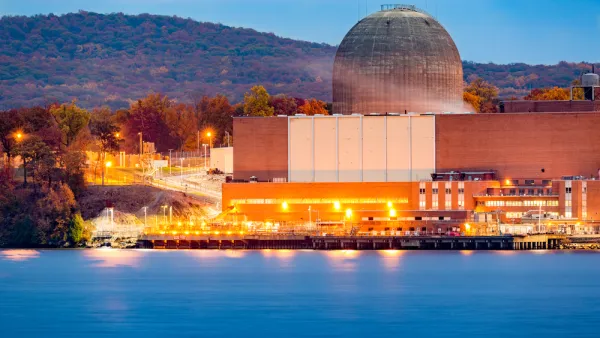
Google Inks Nuclear Power Deal
Tech giants are seeking out renewable energy to fuel power-hungry data centers and AI applications.
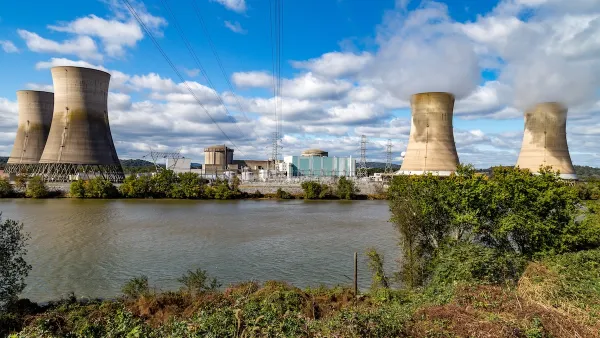
Three Mile Island Nuclear Plant Could Power Microsoft Data Centers
The proposal to restart one unit of the infamous plant, which suffered a partial meltdown in 1979, still requires federal, state, and local approvals.

Small-Scale Nuclear Power Dealt Major Setback
The company that made history in January when its 'small modular nuclear reactor' became the first in the nation to receive certification from the Nuclear Regulatory Commission has canceled it due to financial reasons.

Planetizen Federal Action Tracker
A weekly monitor of how Trump’s orders and actions are impacting planners and planning in America.

‘Going backwards:’ Baltimore mayor, students rally against state's transit funding plan
Maryland's proposed six-year plan provides no funding for Baltimore’s BMORE bus program and reduces its road maintenance funding.
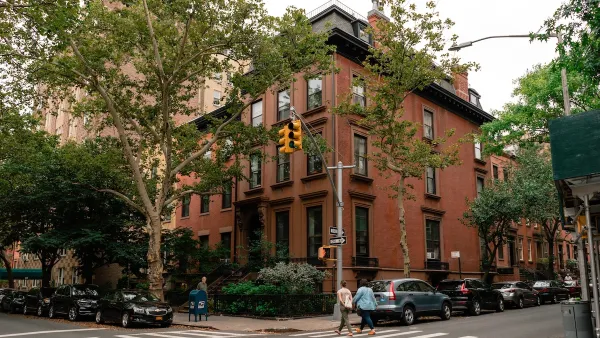
Mamdani sent nearly 6,000 pied-à-terre tax warnings to homes that didn’t qualify
A judge has ordered the administration to cancel thousands of pied-à-terre tax notices after it sent 35% of them erroneously.

Alaska takes public comment on new long-term plan for roads, bridges and more
Alaska's draft Statewide Transportation Improvement Program includes over $1 billion for the Alaska Marine Highway System.

A Colorado neighborhood is the testing ground for the future of home energy
A start up may have found a way to quickly bring geothermal energy to new communities.

Mamdani sent nearly 6,000 pied-à-terre tax warnings to homes that didn’t qualify
A judge has ordered the administration to cancel thousands of pied-à-terre tax notices after it sent 35% of them erroneously.

FREE Course: Walkable City 1: Why Walkability?
After describing his path towards focusing on walkability as the essence of good planning, Jeff Speck marches through his five principal reasons for making more walkable places.
Reinventing Malls: Planning Alchemy—Turning Gray Fields Into Gold
The course focuses on the opportunities and imperatives that shape reinvention of mall sites.

City of Thousand Oaks
City of Wisconsin Rapids
Harvard University Graduate School of Design
The Architects Foundation
University of Cincinnati Online
Northern Illinois Transit Authority (NITA)
The Pocatello Development Authority
The Urban Renewal Agency of the City of Pocatello