Stimulus packages are nothing more than an "economic sugar rush", according to columnist David Brooks. He argues that the country needs to create a larger-scale transportation-based infrastructure project to really bail out the economy.


"In times like these, the best a sensible leader can do is to take the short-term panic and channel into a program that is good on its own merits even if it does nothing to stimulate the economy over the next year. That's why I'm hoping the next president takes the general resolve to spend gobs of money, and channels it into a National Mobility Project, a long-term investment in the country's infrastructure."
"Major highway projects take about 13 years from initiation to completion - too long to counteract any recession. But at least they create a legacy that can improve the economic environment for decades to come."
"A major infrastructure initiative would create jobs for the less-educated workers who have been hit hardest by the transition to an information economy. It would allow the U.S. to return to the fundamentals. There is a real danger that the U.S. is going to leap from one over-consuming era to another, from one finance-led bubble to another. Focusing on infrastructure would at least get Americans thinking about the real economy, asking hard questions about what will increase real productivity, helping people who are expanding companies rather than hedge funds."
Read the full story: David Brooks: A national mobility project

Transit Agencies Begin to See Stimulus Funds
The Obama administration has begun awarding grants of millions to transit agencies across the country for everything from bus upgrades to photovoltaic canopies and agency building upgrades. Check out the breakdown by agency here.
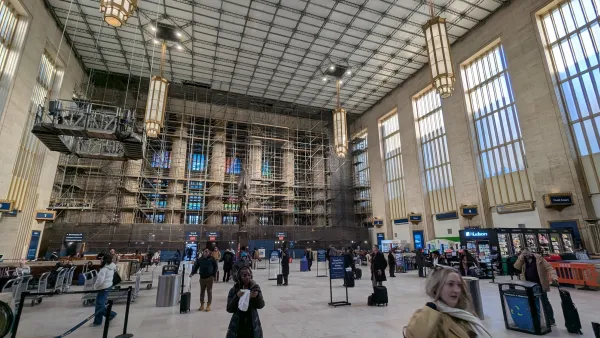
Pennsylvania 12-year transportation plan commits $13B for transit
The state's new mid-range transportation strategy includes nearly $17 billion for roads and bridges and $367 million for multimodal projects.
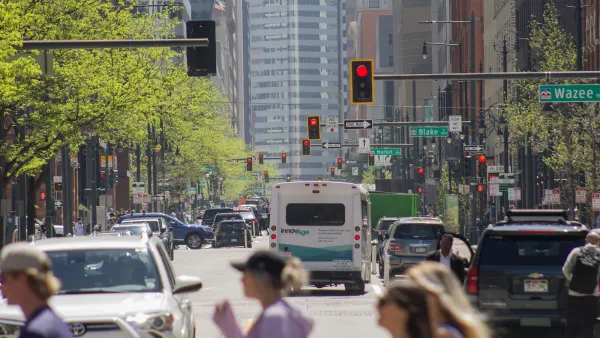
Congestion Costing Reality Check, Part 1: Congestion evaluation best practices
Widely cited studies claim that traffic congestion is a huge and growing problem. They exaggerate. Let’s examine how to correctly calculate congestion costs and roadway expansion benefits.

Planetizen Federal Action Tracker
A weekly monitor of how Trump’s orders and actions are impacting planners and planning in America.

Amtrak, CN end decades-long dispute with eight-year agreement
The new operating agreement establishes an updated framework for the companies to work together, including processes to resolve disputes.

Judges permit Denver to divert 77,000 acre feet from the Colorado River for reservoir expansion
Overuse and climate change have caused the Colorado River’s water levels to plummet.

NYC DOT wants faster, more permanent street upgrades
The city is examining ways to build more concrete infrastructure without getting entangled in 'decades-long' projects.

'Something we’ve never seen before:' rising utility rates could strain city finances nationwide
Data centers, climate change and other factors have caused utility rates in the United States to increase by 38% since 2020.

Trump to overrule local leaders, lease millions of acres of America’s Pacific Island territories’ seafloors to mining companies
International law says that the Indigenous people of America’s territories have a right to prior and informed consent regarding projects that impact their countries.

FREE Course: Walkable City 1: Why Walkability?
After describing his path towards focusing on walkability as the essence of good planning, Jeff Speck marches through his five principal reasons for making more walkable places.
Reinventing Malls: Planning Alchemy—Turning Gray Fields Into Gold
The course focuses on the opportunities and imperatives that shape reinvention of mall sites.

Harvard University Graduate School of Design
KFH Group Inc.
Greater Baltimore Committee
The Architects Foundation
University of Cincinnati Online
The Pocatello Development Authority
The Urban Renewal Agency of the City of Pocatello