The Urban Land Institute reports on their new study, which predicts the real estate market will hit bottom in 2009 and 'flounder' through 2010.


"During this period, ongoing drops in property values, foreclosures, delinquencies, and a limping economy will continue to crimp property cash flows.
'Commercial real estate faces its worst year since the wrenching 1991–1992 industry depression,' conclude industry experts interviewed for the report, which projects losses of 15 percent to 20 percent in real estate values from the mid-2007 peak. 'Only when property financing gets restructured will pricing recorrect so we can find the floor, and this transition could wipe out companies and people,' says one respondent interviewed for the report.
'The industry is facing multiple disconnects,' said ULI Senior Resident Fellow for Real Estate Finance Stephen Blank. 'Many property owners are drowning in debt, lenders are not lending, and for many (industry professionals), property income flows are declining. There is an unprecedented avoidance of risk. Only when financing gets restructured will pricing reconcile, giving the industry a point from which to start digging out of this hole.'"
Read the full story: Emerging Trends in Real Estate 2009
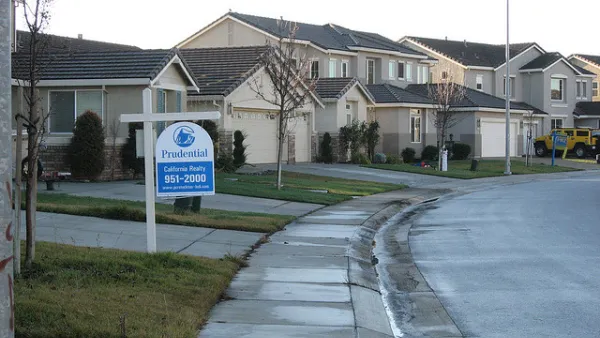
Subprime Loans Are Back—Now They're Called Nonprime Loans
Some say that "nonprime" loans will create the same financial ruins as their "subprime" predecessors. Others say the housing market needs ways for more people to buy homes and drive the industry.
The Last Days of the Home Affordable Modification Program
The Washington Post takes stock of the Home Affordable Modification Program (HAMP) in its final days, finding a program hampered by bad faith from large banks and bad oversight by the Treasury Department.
The Case for Making Federal Housing Programs Like HAMP and HARP Permanent
There have been a number of federal and state programs to address the housing and foreclosure crisis. While these programs have helped a lot of people and continue to do so, many people that are qualified still have trouble completing these programs.

Planetizen Federal Action Tracker
A weekly monitor of how Trump’s orders and actions are impacting planners and planning in America.

California plans to bury El Niño’s downpour
If the state plays its cards right, it may be able to store a billion acre-feet of El Niño’s water in aquifers.

Desperate measures: Advocates weigh draining Lake Powell to fill Colorado River
Draining the reservoir could reduce evaporation losses by a couple hundred thousand acre-feet.

Not in my parking spot: LA renters oppose ADU development in their garages
Some tenants advocates say taking away residents’ parking spaces harms senior citizens and people with disabilities who rely on their cars to navigate the city.

NITA’s first budget outlines $5 billion operating plan
The plan also proposes a $9.73 billion capital program for 2027 through 2031.

In Texas, data centers are swallowing promised parkland
Residents who moved to Taylor, Texas for a rural community now have to contend with three data centers in their backyard.

FREE Course: Walkable City 1: Why Walkability?
After describing his path towards focusing on walkability as the essence of good planning, Jeff Speck marches through his five principal reasons for making more walkable places.
Reinventing Malls: Planning Alchemy—Turning Gray Fields Into Gold
The course focuses on the opportunities and imperatives that shape reinvention of mall sites.

City of Rosemead
Rutgers University, Edward J. Bloustein School of Planning and Public Policy
One Hundred Miles
Hunter College, City University of New York (CUNY)
The Architects Foundation
University of Cincinnati Online
City of Cambridge
Montrose County
The Pocatello Development Authority