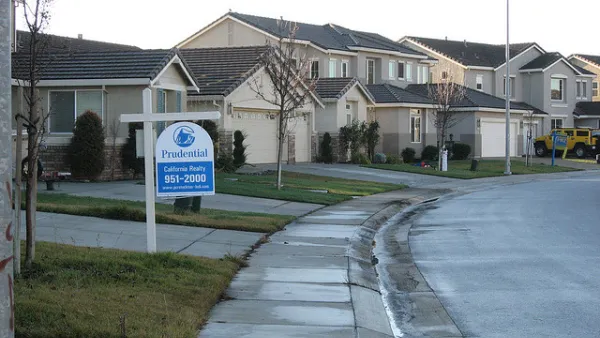
While the mortgage crisis has hit hard in California and other prosperous regions, the cities that are sliding fastest into decline are still in the Rust Belt, with disappearing populations and bleak job prospects.


"The turmoil of the mortgage market granted a temporary reprieve from hearing about the woes of America's Rust Belt. That doesn't mean things are better. Despite a decade of national prosperity, the former manufacturing backbone of the U.S. is in rougher shape than ever, still searching for some way to replace its long-stilled smokestacks.
Where's it worst? Ohio, according to our analysis, which racked up four of the 10 cities on our list: Youngstown, Canton, Dayton and Cleveland. The runner-up is Michigan, with two cities - Detroit and Flint - making the ranking.
These, and four other metropolitan statistical areas, as defined by the U.S. Census Bureau, face fleeing populations, painful waves of unemployment and barely growing economies. By our measure, they've struggled the worst of any areas in the nation in the 21st century. And they face even bleaker futures."
Read the full story: The fastest dying cities in the United States

Subprime Loans Are Back—Now They're Called Nonprime Loans
Some say that "nonprime" loans will create the same financial ruins as their "subprime" predecessors. Others say the housing market needs ways for more people to buy homes and drive the industry.
The Last Days of the Home Affordable Modification Program
The Washington Post takes stock of the Home Affordable Modification Program (HAMP) in its final days, finding a program hampered by bad faith from large banks and bad oversight by the Treasury Department.
The Case for Making Federal Housing Programs Like HAMP and HARP Permanent
There have been a number of federal and state programs to address the housing and foreclosure crisis. While these programs have helped a lot of people and continue to do so, many people that are qualified still have trouble completing these programs.

Planetizen Federal Action Tracker
A weekly monitor of how Trump’s orders and actions are impacting planners and planning in America.

California plans to bury El Niño’s downpour
If the state plays its cards right, it may be able to store a billion acre-feet of El Niño’s water in aquifers.

Desperate measures: Advocates weigh draining Lake Powell to fill Colorado River
Draining the reservoir could reduce evaporation losses by a couple hundred thousand acre-feet.

Metra may invest $9.1 billion in regional rail
The agency released a draft of a study examining potential ways to offer more frequent train service.

California city breaks ground on transit connector
The project includes three mobility hubs and a pedestrian bridge.

After public outcry, Massachusetts city releases housing development tracker
Cambridge’s tracker currently shows 250 housing projects in various stages of development.

FREE Course: Walkable City 1: Why Walkability?
After describing his path towards focusing on walkability as the essence of good planning, Jeff Speck marches through his five principal reasons for making more walkable places.
Reinventing Malls: Planning Alchemy—Turning Gray Fields Into Gold
The course focuses on the opportunities and imperatives that shape reinvention of mall sites.

City of Rosemead
Rutgers University, Edward J. Bloustein School of Planning and Public Policy
One Hundred Miles
Hunter College, City University of New York (CUNY)
The Architects Foundation
University of Cincinnati Online
City of Cambridge
Montrose County
The Pocatello Development Authority