In British Columbia, a proposal to require all new buildings to be carbon-neutral is being considered. The rule would require that buildings have no carbon footprint by 2020.


"The proposal is tucked inside the report from the B.C. Climate Action Team released last week, a document that the government commissioned but is not obliged to accept. But the move to carbon-neutral housing would cause a revolution in how housing stock will be built. In its purest form, it would see housing constructed with built-in power supplies - either solar panels, wind turbines or geothermal sources."
"New designs that limit energy requirements, such as shaded windows, and energy-efficient appliances are part of the equation. The proposal to the province also urges the government to build some flexibility into the carbon-neutral requirement by allowing communities to build green energy sources to power individual residences."
"The official estimates that building a carbon-neutral house will cost anywhere from 5 per cent to 20 per cent more than conventional models. With the average house price in Greater Vancouver hovering around $556,000, the added expense could top $100,000."
Read the full story: Green report pushes for carbon-neutral construction
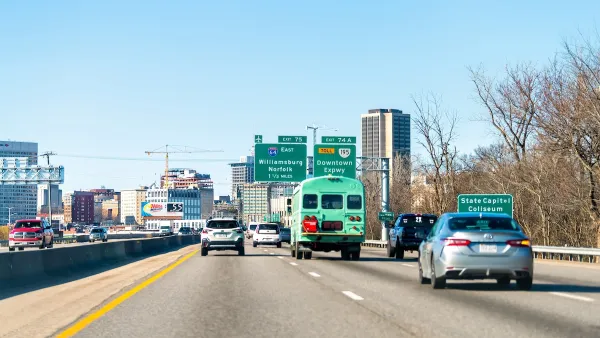
'This is going to be painful:’ Virginia stares down $1.7 billion funding gap for highway maintenance
The state may address the deficit by shifting $290 million from its construction budget to maintenance projects.
Raised interest rates may kill financially vulnerable construction projects
The chief economist at ConstructConnect warns that if construction project owners are negatively impacted by the raised rates, it could result in delayed payments to contractors.
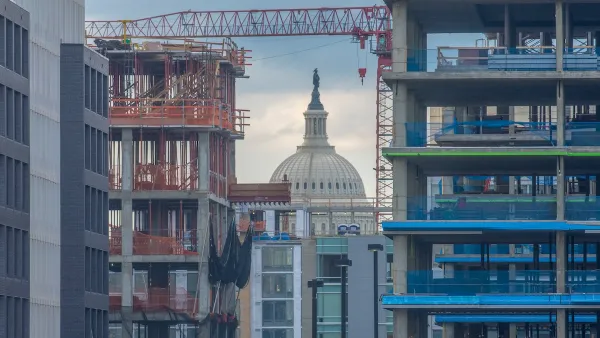
92% of DC Construction Groups Struggle to Hire Workers Amid ICE Raids
Contractors are being forced to delay project timelines as more workers stay home to avoid ICE dragnets.

Planetizen Federal Action Tracker
A weekly monitor of how Trump’s orders and actions are impacting planners and planning in America.

California plans to bury El Niño’s downpour
If the state plays its cards right, it may be able to store a billion acre-feet of El Niño’s water in aquifers.

Desperate measures: Advocates weigh draining Lake Powell to fill Colorado River
Draining the reservoir could reduce evaporation losses by a couple hundred thousand acre-feet.

US buildings threatened, destroyed by fires set to triple by 2060
Researchers found a high fire risk for socioeconomically vulnerable neighborhoods in the American West.

LA residents may be allowed to paint their own crosswalks
Councilwoman Katy Yaroslavsky put out a motion instructing the Los Angeles Department of Public Transportation to study the feasibility of allowing volunteers to paint crosswalks.

Dallas moves to overhaul its zoning code
The city's zoning reform will allow more multi-family and mixed-use developments.

FREE Course: Walkable City 1: Why Walkability?
After describing his path towards focusing on walkability as the essence of good planning, Jeff Speck marches through his five principal reasons for making more walkable places.
Reinventing Malls: Planning Alchemy—Turning Gray Fields Into Gold
The course focuses on the opportunities and imperatives that shape reinvention of mall sites.

City of Rosemead
Rutgers University, Edward J. Bloustein School of Planning and Public Policy
One Hundred Miles
Hunter College, City University of New York (CUNY)
The Architects Foundation
University of Cincinnati Online
City of Cambridge
Montrose County
The Pocatello Development Authority