The practice of secret bidding that goes on between cities vying for business to locate in their town has been going on since the 1920s- and there's one man responsible for it all.


"Today, when a private company is considering relocating to a new city, there's a carefully orchestrated process involving tax incentives, site consultants and complicated, confidential negotiations. But the site-location game wasn't always that way. Interestingly, just about every aspect of the process as it exists today can be traced to one man who started it all: Felix Fantus.
An industrial real estate salesman in Chicago, Fantus had been wooing manufacturing companies to relocate to the Windy City since 1919. In an effort to attract these factories, Fantus compiled information on land, buildings, wages, local taxes, transportation and utilities. It was a service he had been giving away for free. His son-in-law thought Fantus ought to charge for the information, and in 1939 the Fantus Factory Relocating Service - and the entire site-location industry - was born."
Read the full story: The Man Behind the Plan

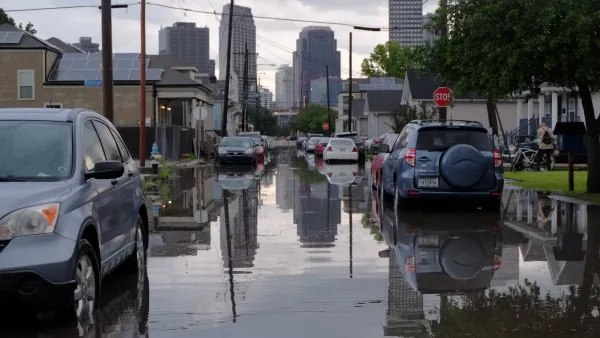
Study: New Orleans sea level rise is at 'point of no return'
Research shows that the city could be surrounded by water by the end of this century.
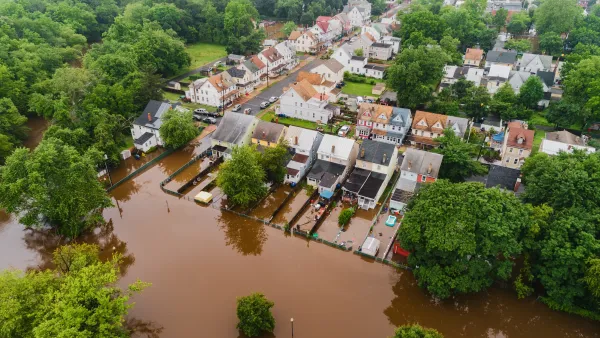
New Jersey Buyout Program Turns Flood-Prone Properties Into Green Buffer Zones
For 30 years, The Blue Acres program has offered homeowners in high-risk flood zones the chance to relocate, preserving land as open space.
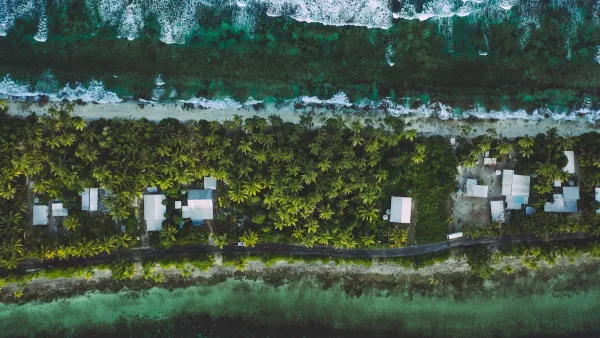
Sea Level Rise is Drowning This Pacific Island Nation; They Have a Plan
The nation of Tuvalu has created an ambitious plan to relocate its entire population and preserve key cultural and historic resources as rising seas threaten to wipe it out within three decades.

Planetizen Federal Action Tracker
A weekly monitor of how Trump’s orders and actions are impacting planners and planning in America.

Amtrak, CN end decades-long dispute with eight-year agreement
The new operating agreement establishes an updated framework for the companies to work together, including processes to resolve disputes.

Northwest rail fans eager for Sept. 30 debut of Amtrak’s Airo fleet
Get ready for that new train smell and more seats. But they won’t go faster or run more frequently on the Cascades route in Washington and Oregon.

Boston sues Trump administration over revoked infrastructure grant
The Trump administration withdrew the infrastructure grant because less than 1% of the money would go to electric vehicle charging infrastructure.

NYC to turn city-owned property into thousands of homes
The city has scheduled a public hearing regarding the development for October.

Buses travel at 5mph along this route in NYC. The Bronx's first-ever busway looks to change that
Prior to the busway, buses on the Bx36 route traveled as slowly as 5 miles per hour.

FREE Course: Walkable City 1: Why Walkability?
After describing his path towards focusing on walkability as the essence of good planning, Jeff Speck marches through his five principal reasons for making more walkable places.
Reinventing Malls: Planning Alchemy—Turning Gray Fields Into Gold
The course focuses on the opportunities and imperatives that shape reinvention of mall sites.

City of Thousand Oaks
City of Wisconsin Rapids
Harvard University Graduate School of Design
The Architects Foundation
University of Cincinnati Online
The Pocatello Development Authority
The Urban Renewal Agency of the City of Pocatello