This piece from WorldChanging looks at the trend of dying indoor malls, and some creative ideas for reviving or reusing them.


"As malls across the country start to fade into obsolescence, what is to become of these massive structures? After spending some time searching out the most creative alternatives to abandonment and massive landfilling of these former monuments to chain-store consumerism, I've found that the future of shopping malls is hopeful and creative."
"These mixed-use centers reflect the principles of New Urbanism, a movement that formed as a reaction to sprawl. New Urbanists promote the creation of human-scale, walkable communities with reduced reliance on parking lots, emphasized access to public transit, and public spaces designed to invite and benefit the community. At the Rochester Hills Mall, pictured below, a central commons area acts as a meeting point and playground, and a spot to host festivals throughout the year."
Read the full story: The Future of Shopping Malls: An Image Essay
New Jersey affordable housing requirements spur infill development across the state
A 50-year-old law continues to reshape development around housing goals.
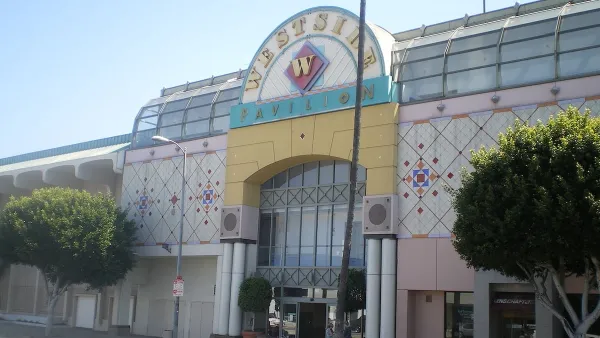
LA Mall Garage Converted to 200 Housing Units
As indoor malls continue to struggle, more of them are being converted to housing and other uses.
Six Positive Innovations in Housing From 2024
The year saw some encouraging developments in housing and zoning policies that could alleviate the housing crisis and offer renters and homebuyers more diverse options.

Planetizen Federal Action Tracker
A weekly monitor of how Trump’s orders and actions are impacting planners and planning in America.

California plans to bury El Niño’s downpour
If the state plays its cards right, it may be able to store a billion acre-feet of El Niño’s water in aquifers.

Desperate measures: Advocates weigh draining Lake Powell to fill Colorado River
Draining the reservoir could reduce evaporation losses by a couple hundred thousand acre-feet.

Chicago voters approve permanent festival grounds, penalty for vacant property owners
Currently, major summer and fall festivals take over public parks for weeks at a time, drawing criticism from nearby residents

NYC votes to cut outdoor dining red tape, speed up permitting
New York City also voted to allow the Department of Transportation to begin work on urgent projects before notifying elected officials.

California appears to reject Prop. 45
The proposition would have expanded the projects that qualify for a streamlined environmental review, effectively paring down the California Environmental Quality Act.

FREE Course: Walkable City 1: Why Walkability?
After describing his path towards focusing on walkability as the essence of good planning, Jeff Speck marches through his five principal reasons for making more walkable places.
Reinventing Malls: Planning Alchemy—Turning Gray Fields Into Gold
The course focuses on the opportunities and imperatives that shape reinvention of mall sites.

City of Rosemead
Rutgers University, Edward J. Bloustein School of Planning and Public Policy
One Hundred Miles
Hunter College, City University of New York (CUNY)
The Architects Foundation
University of Cincinnati Online
City of Cambridge
Montrose County
The Pocatello Development Authority