Integrated inner-city public schools were the first to see this phenomenon more than 20 years ago -- classrooms that were predominately children of color. This was attributed to White Flight: the abandoning of the inner city by middle class Caucasians. Not only are minority youth populations the majority of the public school enrollments throughout the country, they are also now a majority of several United States cities and counties.


"Foreshadowing the nation's changing makeup, one in four American counties have passed or are approaching the tipping point where black, Hispanic and Asian children constitute a majority of the under-20 population, according to analyses of census figures released Thursday.
Racial and ethnic minorities now account for 43 percent of Americans under 20. Among people of all ages, minorities make up at least 40 percent of the population in more than one in six of the nation's 3,141 counties.
The latest population changes by race, ethnicity and age, as of July 1, 2007, were generally marginal compared with the year before. But they confirm the breadth of the nation's diversity, and suggest that minorities - now about a third of the population - might constitute a majority of all Americans even sooner than projected by census demographers, in 2050."
Read the full story: Minorities Often a Majority of the Population Under 20
Gentrification and the Bay Area's Controversial Growth Management Plan
Is gentrification the inevitable result of land use planning that reduces greenhouse gas emissions by favoring infill development over auto-dependent sprawl? The Urban Displacement Project looks at the unintended effects of Plan Bay Area.
Salt Lake City and Utah Grow More Diverse
Long a majority-white city, Salt Lake City is gradually becoming more diverse.
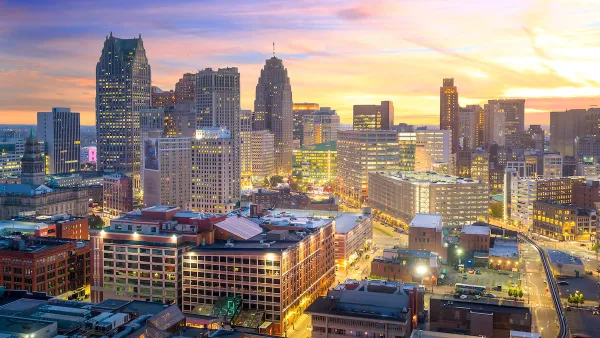
Detroit and Michigan on the Upswing
It's been 66 years since the Motor City last grew its population. Census data released last month revealed an increase of nearly 2,000 people last year, nearly half the state's population growth.

Desperate measures: Advocates weigh draining Lake Powell to fill Colorado River
Draining the reservoir could reduce evaporation losses by a couple hundred thousand acre-feet.

Eastern Nebraska is running out of electricity
Data centers and electrification are straining eastern Nebraska’s grid, throttling economic development.

Move over, LA: St. Louis gears up for Olympics, invests millions in downtown redevelopment
The Missouri city will host the 2028 Olympic soccer group stage and knockout matches.

California, Hawaii, Rhode Island approve housing propositions
Hawaii and Rhode Island each approved their sole proposition, while California approved two of its three.

Officials claim feds 'rushed' Amtrak environmental review
Amtrak plans to move their Chicago maintenance facility from an industrial area to a residential one.

NYC breaks ground on anti-flooding infrastructure project
New York City's new system will reduce stormwater flows to local sewers by 90%.

FREE Course: Walkable City 1: Why Walkability?
After describing his path towards focusing on walkability as the essence of good planning, Jeff Speck marches through his five principal reasons for making more walkable places.
Reinventing Malls: Planning Alchemy—Turning Gray Fields Into Gold
The course focuses on the opportunities and imperatives that shape reinvention of mall sites.

City of Rosemead
Rutgers University, Edward J. Bloustein School of Planning and Public Policy
One Hundred Miles
University of Michigan School for Environment and Sustainability (SEAS)
Hunter College, City University of New York (CUNY)
The Architects Foundation
City of Cambridge
Montrose County
The Pocatello Development Authority