The National Bridge Inventory completed in the wake of the I-35W collapse in Minneapolis has revealed numerous gaps in data and delayed inspections at the State level.


"When the I-35W bridge collapsed a year ago in Minneapolis, federal officials immediately requested an emergency inspection of every similar bridge in the nation. There was just one problem: No one knew how many there were.
At first, officials thought there were 756 steel deck truss bridges like the one that fell. That's how many they found in the official federal database of bridges, the National Bridge Inventory, which gets its records from the states. Then state engineers found 32 more to add to the list.
By the time the survey was finished, the count of bridges of the same type as the Minneapolis span was down to 479, or 277 fewer than initially reported."
Read the full story: Bridge collapse revealed holes in federal data
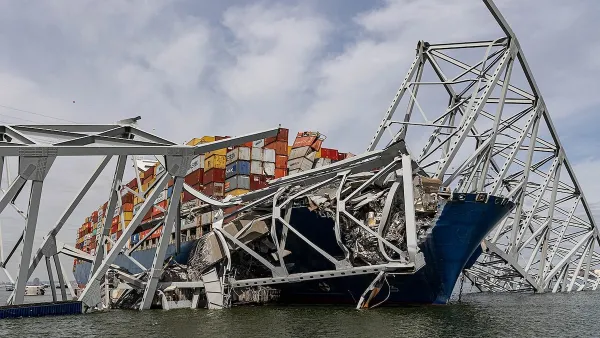
Baltimore Traffic Suffering From Absence of Key Bridge
The loss of a key route to the Port of Baltimore is causing major delays and long detours on alternate routes.
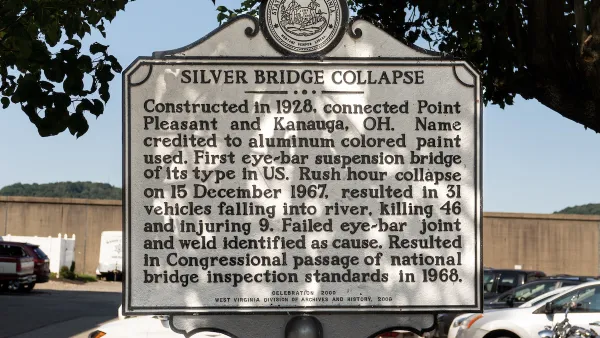
The Spectre of Shoddy Infrastructure
How a mythical creature is keeping the historical memory of the Silver Bridge collapse alive.
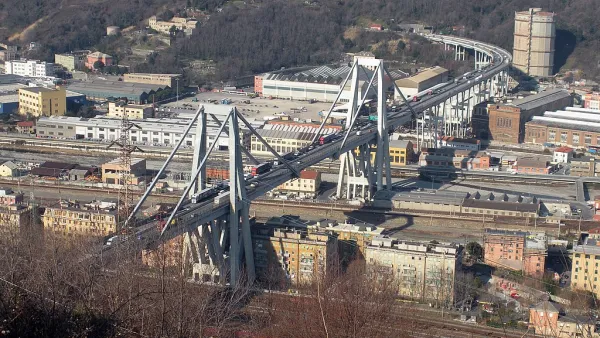
Government Blames Deadly Bridge Collapse on Toll Company
At least 39 people died when the Ponte Morandi bridge collapsed in Genoa, Italy during a storm on Tuesday. The cable-stayed bridge is part of a viaduct on the A10 toll road that goes to France, operated and maintained by Autostrada per l'Italia.

Planetizen Federal Action Tracker
A weekly monitor of how Trump’s orders and actions are impacting planners and planning in America.

California plans to bury El Niño’s downpour
If the state plays its cards right, it may be able to store a billion acre-feet of El Niño’s water in aquifers.

Desperate measures: Advocates weigh draining Lake Powell to fill Colorado River
Draining the reservoir could reduce evaporation losses by a couple hundred thousand acre-feet.

LA residents may be allowed to paint their own crosswalks
Councilwoman Katy Yaroslavsky put out a motion instructing the Los Angeles Department of Public Transportation to study the feasibility of allowing volunteers to paint crosswalks.

Dallas moves to overhaul its zoning code
The city's zoning reform will allow more multi-family and mixed-use developments.

Not in my parking spot: LA renters oppose ADU development in their garages
Some tenants advocates say taking away residents’ parking spaces harms senior citizens and people with disabilities who rely on their cars to navigate the city.

FREE Course: Walkable City 1: Why Walkability?
After describing his path towards focusing on walkability as the essence of good planning, Jeff Speck marches through his five principal reasons for making more walkable places.
Reinventing Malls: Planning Alchemy—Turning Gray Fields Into Gold
The course focuses on the opportunities and imperatives that shape reinvention of mall sites.

City of Rosemead
Rutgers University, Edward J. Bloustein School of Planning and Public Policy
One Hundred Miles
Hunter College, City University of New York (CUNY)
The Architects Foundation
University of Cincinnati Online
City of Cambridge
Montrose County
The Pocatello Development Authority