Developers often see naming streets as their way of making a mark, naming streets after daughters, alma maters, or the family dog. But they often find themselves tangled up in regulations and the limits of their own creativity.


"For every new neighborhood built these days, there's a developer struggling to name its streets. Counties often prohibit duplication, where you cannot have, for example, a Pine Street and a Pine Lane. Each proposed name is vetted by officials with planning, public works and the local 911 call center. Developers say they'll submit 100 names for 25 streets, because most get rejected.
'It's very difficult to come up with new names,' said Jim Anderson, director of Raleigh operations for Crosland, a builder of homes, apartments and retail centers. 'There's a very low success rate.'
"So developers create theme neighborhoods. Out in Knightdale, past meadows, horses, stables and barns, you'll come upon the Churchill community. It is modeled after Churchill Downs, home of the Kentucky Derby, and streets are named for race winners such as Secretariat, Smarty Jones and Sunday Silence.
'We don't have a Seattle Slew,' Anderson said, referencing the 1977 Triple Crown-winning thoroughbred. 'It got killed because there was a Seattle Street [already].'"
FULL STORY: Developers strive for Clever Way to Name Street

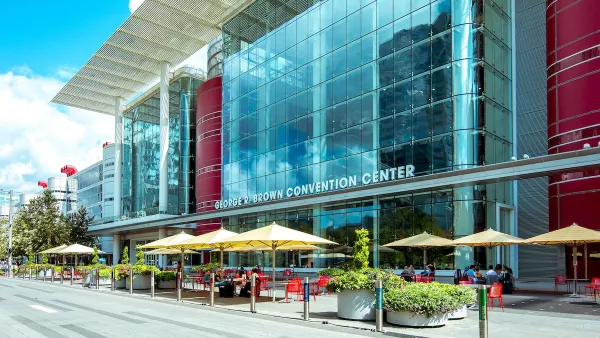
Houston 'Abandons' Street for Convention Center Expansion
The city plans to eliminate multiple blocks of public streets as part of an expansion project that some residents say didn’t take into account local connectivity.
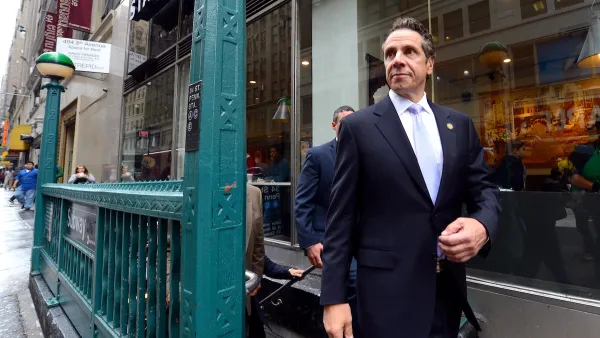
Cuomo Is the Candidate of Both NIMBYs and Developers. What Gives?
In the New York City mayoral race, odd bedfellows align to preserve the housing status quo.
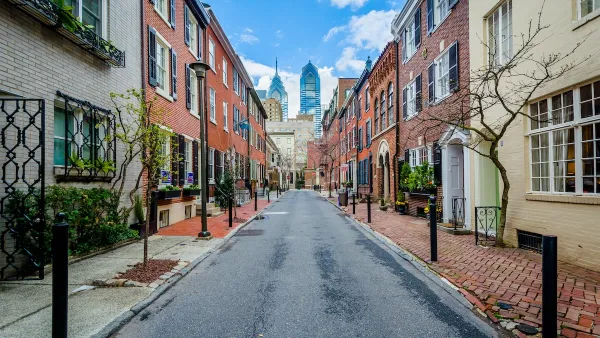
The Philadelphia Loan Program Transforming the Demographics of Development
The Jumpstart loan program is helping Black and female residents become developers.

Planetizen Federal Action Tracker
A weekly monitor of how Trump’s orders and actions are impacting planners and planning in America.

The state-sanctioned urbicide of Austin
People don’t kill cities. Freeways do.

US to reduce Colorado River water deliveries to Mexico
A new Colorado Treaty amendment reduces Mexico’s Colorado River water allocation by 250,000 acre feet.

LA Metro’s ultimatum: no extra buses for LA28 if federal funding isn’t imminently secured
If Metro does not provide additional buses, LA28 organizers will have to find a new way to manage Olympic traffic. LA28’s budget does not include a line item for transit.

Colorado’s Largest Data Center Could Rise Next to Homes — Without a Public Hearing
The proposed campus would consume 11 times the power of Denver International Airport; as it has across the country, opposition mounts.

5 New England states march closer to 800 megawatt wind energy project
Securing federal approval for the project may be complicated under the Trump administration, which has historically been hostile towards domestic wind power.

FREE Course: Walkable City 1: Why Walkability?
After describing his path towards focusing on walkability as the essence of good planning, Jeff Speck marches through his five principal reasons for making more walkable places.
Reinventing Malls: Planning Alchemy—Turning Gray Fields Into Gold
The course focuses on the opportunities and imperatives that shape reinvention of mall sites.

Eagle County Government
Harvard University Graduate School of Design
Nashville Planning Department
The Architects Foundation
University of Cincinnati Online
The Pocatello Development Authority
The Urban Renewal Agency of the City of Pocatello
Journal of the American Planning Association