A recent conference in Austin, Texas, of real estate appraisers explored how they should incorporate green-building techniques and features into their assessment of properties.


"Sustainable elements, such as high-efficient heating and air systems, provide energy cost savings. Lower operating costs in turn mean the building can become more valuable to an owner or a potential buyer.
'We are starting to see some empirical evidence that investors are willing to pay more for a green building than a non-green one,' says Amorin. 'I think we're at the precipice of a big change in commercial real estate.' Once building owners realize that a growing number of companies want to be in green structures, the money will flow in that direction and the cost of non-green buildings will start to decline, Amorin predicts.
Some of the questions discussed at the seminar included:
Are green building investments going to pay off in the long term?
How can the market and appraisers establish a reliable value of green buildings when there are a limited number of properties for comparison?"
Read the full story: Appraisers look at measuring the value of green
Tornado Clears Way for LEED Platinum Building
The 5-4-7 Arts Center in Greensburg, Kansas gets a LEED platinum designation- evidence that the town, which was 95% destroyed by a tornado in May, 2006, is making good on its sustainable rebuilding plan.
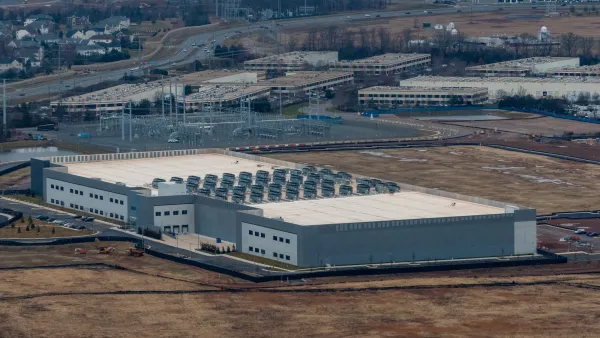
Data center developer offers over $4M per acre to buy out homeowners
Data center builders are outbidding home builders for land, prompting concerns about competition with housing.
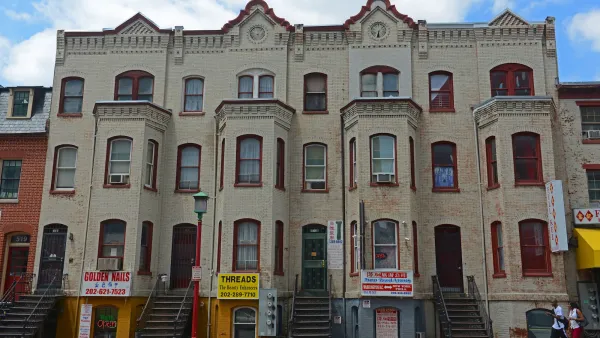
Is this the first wave of de-gentrification?
Valencia, Temescal, H Street and the fickle fortunes of the gentrified neighborhood.

Planetizen Federal Action Tracker
A weekly monitor of how Trump’s orders and actions are impacting planners and planning in America.

Washington state to charge fee to drivers with fuel-efficient cars
Revenue from the fee will go towards supporting the state’s highways.

Illinois considers spending $1 billion in taxpayer money on data center
A quantum computing campus and data center are currently under construction in Chicago.

Did data centers change how voters cast their ballots?
Texas, Ohio, and Georgia all flipped party control. But in rural counties, the effect of local data centers was mixed.

Amtrak invests in eight new Airo trainsets
The new trainsets will begin serving passengers in 2031.

HUD to end aid for mixed-immigration-status households
The new rule is projected to impact 80,000 people, nearly half of whom are children.

FREE Course: Walkable City 1: Why Walkability?
After describing his path towards focusing on walkability as the essence of good planning, Jeff Speck marches through his five principal reasons for making more walkable places.
Reinventing Malls: Planning Alchemy—Turning Gray Fields Into Gold
The course focuses on the opportunities and imperatives that shape reinvention of mall sites.

City of Charlotte
City of Rosemead
Rutgers University, Edward J. Bloustein School of Planning and Public Policy
University of Michigan School for Environment and Sustainability (SEAS)
Hunter College, City University of New York (CUNY)
The Architects Foundation
University District Partnership