In a deal with a large sugar farming operation, the state of Florida will buy up 187,000 acres of land near the Everglades -- a move environmentalists are applauding.


"The dream of a restored Everglades, with water flowing from Lake Okeechobee to Florida Bay, moved a giant step closer to reality on Tuesday when the nation's largest sugarcane producer agreed to sell all of its assets to the state and go out of business."
"Under the proposed deal, Florida will pay $1.75 billion for United States Sugar, which would have six years to continue farming before turning over 187,000 acres north of Everglades National Park, along with two sugar refineries, 200 miles of railroad and other assets."
"It would be Florida's biggest land acquisition ever, and the magnitude and location of the purchase left environmentalists and state officials giddy."
"The details of the deal, which is scheduled to be completed over the next few months, and does not require legislative approval, may define how long the honeymoon lasts. Previous acquisitions took longer to integrate than initially expected and because United States Sugar's fields are not all contiguous, complicated land swaps with other businesses may be required."
FULL STORY: Florida Buying Big Sugar Tract for Everglades

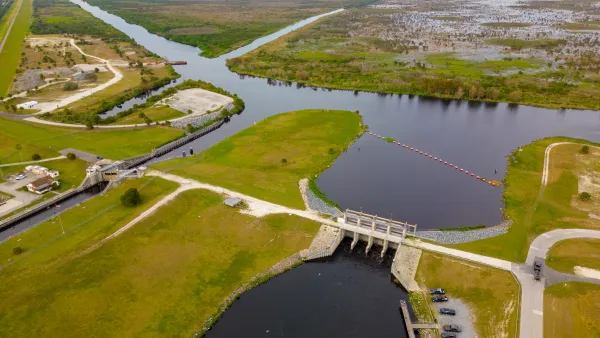
New Plan for Lake Okeechobee Targets Toxic Algae
The new Everglades strategy marks a “cultural shift” for the U.S. Army Corps of Engineers: rather than focusing primarily on flood control, the new plan seeks to balance the needs of the entire watershed, including limiting the spread of toxic algae.
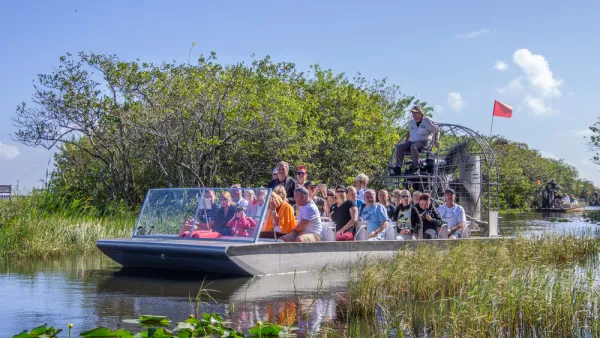
Everglades Restoration To Receive $1.1 Billion in Federal Funds
An 'unprecedented' investment of more than one billion dollars will go toward efforts to restore and conserve the fragile and troubled South Florida ecosystem.
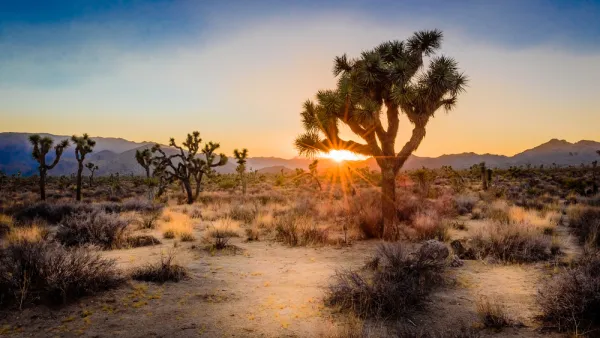
Desert Species, Endangered by Climate Change and Renewable Energy, Create Controversy
The wind strewn and sunny parts of California are home to many species threatened both by climate change and renewable energy facilities like wind and solar power facilities. What is an environmentalist to do?

Planetizen Federal Action Tracker
A weekly monitor of how Trump’s orders and actions are impacting planners and planning in America.

The state-sanctioned urbicide of Austin
People don’t kill cities. Freeways do.

US to reduce Colorado River water deliveries to Mexico
A new Colorado Treaty amendment reduces Mexico’s Colorado River water allocation by 250,000 acre feet.

5 New England states march closer to 800 megawatt wind energy project
Securing federal approval for the project may be complicated under the Trump administration, which has historically been hostile towards domestic wind power.

Baltimore to break ground on $50 million Transit Priority Project
The project will bring faster bus trips, safer streets and better bike connections to Baltimore.

Airbnb launches $250 million 'last-dollar financing' housing accelerator, makes first investment in Austin
The company will put $6.4 million towards affordable housing development in Texas’ capital.

FREE Course: Walkable City 1: Why Walkability?
After describing his path towards focusing on walkability as the essence of good planning, Jeff Speck marches through his five principal reasons for making more walkable places.
Reinventing Malls: Planning Alchemy—Turning Gray Fields Into Gold
The course focuses on the opportunities and imperatives that shape reinvention of mall sites.

Eagle County Government
Harvard University Graduate School of Design
Nashville Planning Department
The Architects Foundation
University of Cincinnati Online
The Pocatello Development Authority
The Urban Renewal Agency of the City of Pocatello
Journal of the American Planning Association