In this op-ed piece, Kevin C. Phelan and Yanni Tsipis argue that Boston's 'Big Dig' has only fought half the battle, calling for a more proactive approach to building over the city's other auto sewer, the Massachusetts Turnpike.


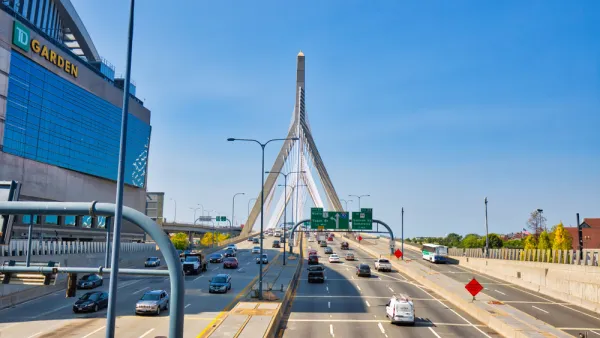
"Boston learned hard lessons about the costs of serving its downtown core with a modern expressway system as the Central Artery and Massachusetts Turnpike Extension sliced through the historic fabric of the city's neighborhoods.
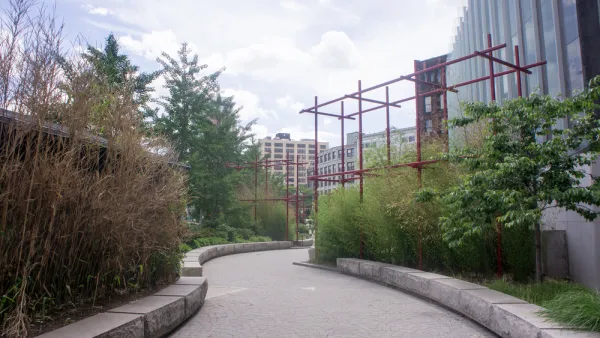
In response, Boston forged a powerful confluence of engineering talent, political will, and federal funding that turned the Central Artery from a blight to a blessing, creating 27 acres of public open space downtown and opening dozens more acres in South Boston to new economic development. Most important, with the car mostly underground, it no longer blights the urban landscape downtown, and the Rose Kennedy Greenway stands as a magnificent exemplar of the kind of 21st-century city building that can occur when the automotive sins of the past are buried. Now Boston must turn its sights on the elimination of the Massachusetts Turnpike Extension."
Read the full story: Eliminating Boston's other big blight
Massachusetts Converts HOV Lane to General Purpose Lane
Road planners looking to increase capacity without adding lanes are focusing on managing existing lanes more effectively. Massachusetts has gone the opposite direction. The Conservation Law Foundation plans to hold them accountable.
The 'Big Dig' Was a Big Catalyst
Over ten years after the Big Dig finally completed construction, more and more people in Boston are willing to say the project was worth all the trouble.
Ten Years Later: Evaluating the Big Dig
Ten years after the completion of the Central Artery and Tunnel project—or the Big Dig, as it's more commonly known—has the project become more justifiable?

Planetizen Federal Action Tracker
A weekly monitor of how Trump’s orders and actions are impacting planners and planning in America.

California plans to bury El Niño’s downpour
If the state plays its cards right, it may be able to store a billion acre-feet of El Niño’s water in aquifers.

Desperate measures: Advocates weigh draining Lake Powell to fill Colorado River
Draining the reservoir could reduce evaporation losses by a couple hundred thousand acre-feet.

Los Angeles just elected an urban planner as its mayor
Transportation analysts are optimistic that Raman will be more aggressive in addressing transit issues than Bass.

Mamdani’s pied-à-terre tax survives legal challenge
A panel of judges found that the plaintiffs failed to demonstrate injury as a result of New York City's implementation of the tax.

Eastern Nebraska is running out of electricity
Data centers and electrification are straining eastern Nebraska’s grid, throttling economic development.

FREE Course: Walkable City 1: Why Walkability?
After describing his path towards focusing on walkability as the essence of good planning, Jeff Speck marches through his five principal reasons for making more walkable places.
Reinventing Malls: Planning Alchemy—Turning Gray Fields Into Gold
The course focuses on the opportunities and imperatives that shape reinvention of mall sites.

City of Rosemead
Rutgers University, Edward J. Bloustein School of Planning and Public Policy
One Hundred Miles
University of Michigan School for Environment and Sustainability (SEAS)
Hunter College, City University of New York (CUNY)
The Architects Foundation
City of Cambridge
Montrose County
The Pocatello Development Authority