After MNDOT closed the Highway 43 bridge connecting Winona, MN to western Wisconsin, locals worried about the economic fallout from an extended closure. Within a week, a ferry and bus system was put in place.


"With a sweeping river view that included both the closed Hwy. 43 bridge and a dilapidated steamboat replica perched on a levee, several hundred Wisconsin residents made their way across the Mississippi River via a pair of excursion boats that were brought to Winona to help keep the city -- and its economy -- moving.
The boats are part of an elaborate transit plan designed to help the estimated 2,500 Wisconsin residents who work in Winona get to their jobs in the wake of last week's abrupt closure of the Hwy. 43 bridge. The Minnesota Department of Transportation shut the 1941 bridge to all traffic after finding corrosion on some of the gusset plates. Flaws in such plates are suspected in the deadly collapse of the Interstate 35W bridge last summer in Minneapolis.
With the nearest crossings 35 miles from Winona and gas nearly $4 a gallon, the closure has hit commuters from Wisconsin hard, so four park-and-ride lots have been established up and down the river in towns where mass transit is something you see on TV."
Thanks to Barry
Read the full story: Winona's ferries help to keep local economy afloat
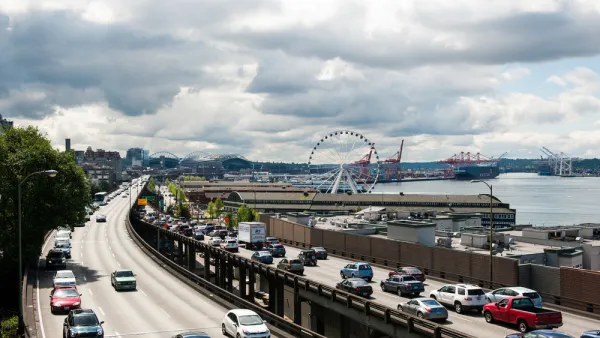
A State-by-State Wish List for Federal Infrastructure Funding
States have a laundry list of major projects they'd like to see funded if the trillion-dollar infrastructure package passes.
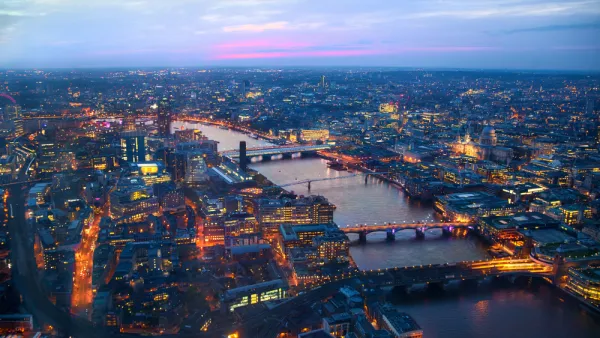
London Bridges Going Up
London Mayor, Sidiq Kahn, authorizes two new bridges and a tunnel in eastern part of the city.
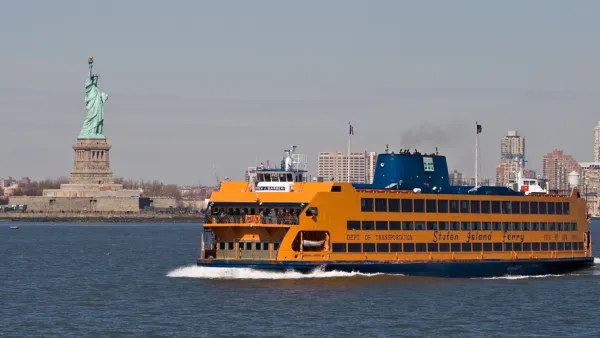
Details of New York's Ferry Service 'Gamble'
An ambitious and aggressive plan to launch new ferry service connecting all five boroughs in New York is scheduled to launch in January 2017.

Planetizen Federal Action Tracker
A weekly monitor of how Trump’s orders and actions are impacting planners and planning in America.

California plans to bury El Niño’s downpour
If the state plays its cards right, it may be able to store a billion acre-feet of El Niño’s water in aquifers.

Desperate measures: Advocates weigh draining Lake Powell to fill Colorado River
Draining the reservoir could reduce evaporation losses by a couple hundred thousand acre-feet.

Housing is the top priority of Seattle’s sole new councilmember
Jenks campaigned on building 1,000 new units of affordable housing.

New tax cuts may slash $1.5 billion in funding for Miami transit, public parks
Amendment 3 will save Miami-Dade residents homeowners $2,700 in 2028.

Arizona, Wisconsin, Pennsylvania hope to finally advance climate goals post-midterms
The three states have spent years under Republican or divided control.

FREE Course: Walkable City 1: Why Walkability?
After describing his path towards focusing on walkability as the essence of good planning, Jeff Speck marches through his five principal reasons for making more walkable places.
Reinventing Malls: Planning Alchemy—Turning Gray Fields Into Gold
The course focuses on the opportunities and imperatives that shape reinvention of mall sites.

City of Rosemead
Rutgers University, Edward J. Bloustein School of Planning and Public Policy
One Hundred Miles
University of Michigan School for Environment and Sustainability (SEAS)
Hunter College, City University of New York (CUNY)
The Architects Foundation
City of Cambridge
Montrose County
The Pocatello Development Authority