The city is already struggling to fund its planned $5 billion subway extension. But planners think adding a spur through West Hollywood could convince federal officials to chip in more funding for the project.


"Metro planners presented West Hollywood with good news on Monday night.
To their own surprise, the proposed subway expansion makes better sense to planners when a Santa Monica Boulevard route is added to the traditionally better-preferred Wilshire Boulevard route.
A crowd of 75 attendees listened in rapture while Long Range Transportation planners explained how a Santa Monica spur running from the current Hollywood/Highland Red Line Station hooking up with a Wilshire line south of West Hollywood would not only increase ridership significantly, but also provides enough in travel time improvements to give Congress reason to fund the subway expansion.
"What was surprising to us," David Mieger, project manager said, "is that adding Santa Monica Boulevard to the Wilshire route, in compliment to one another, it works [from a feasibility, cost and ridership perspective]."
The representatives, who are shepherding through to completion a massive public comment process designed to flesh out Metro's Draft 2008 Long Range Transportation Plan (LRTP), noted that huge increases in new boardings at existing stations, plus projected new boardings in new stations dotting the area, saw the cost per user travel-hour leap to a level of efficiency that would convince the federal government to fund the larger part of a project supposed to cost over $8.5 billion."
Read the full story: WeHo’s Subway Inches Toward Reality

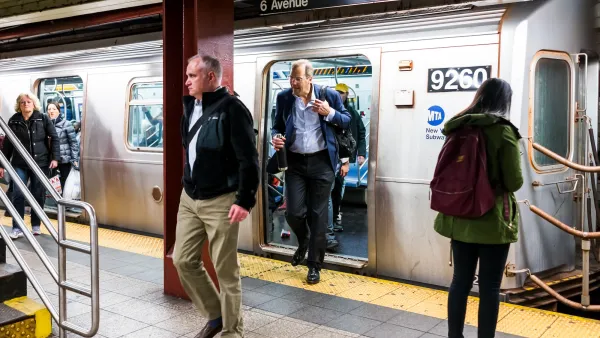
NYC to Upgrade 1/3 of its Subway Car Fleet
The MTA is seeking proposals for up to 2,390 new subway cars to upgrade its aging fleet.
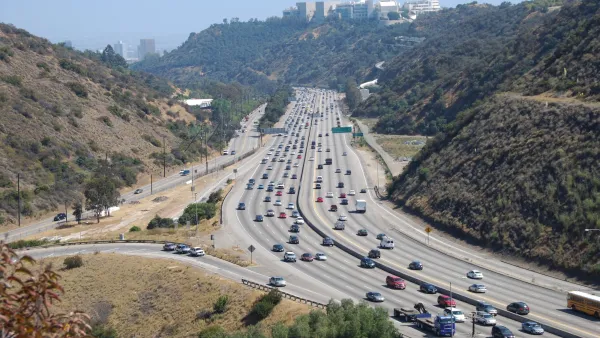
LA Metro Board Approves New Subway for One of Nation’s Busiest Freeway Corridors
The new subway could cut the hour-long trip between west Los Angeles and the San Fernando Valley to 20 minutes.
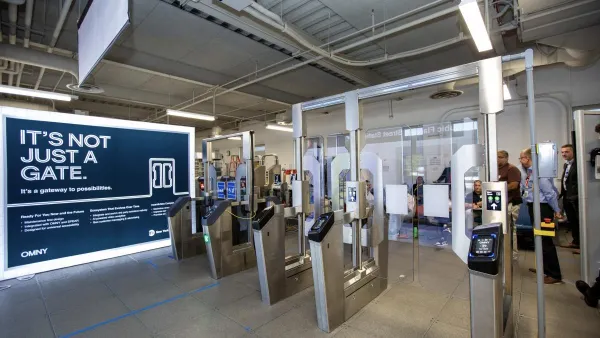
New York MTA Installs ‘Smart’ Fare Gates to Stop Turnstile Hoppers
New fare gates use sensors and higher panels to prevent people from passing without paying, but the tech had a “bumpy rollout” on its first day.

Planetizen Federal Action Tracker
A weekly monitor of how Trump’s orders and actions are impacting planners and planning in America.

‘Going backwards:’ Baltimore mayor, students rally against state's transit funding plan
Maryland's proposed six-year plan provides no funding for Baltimore’s BMORE bus program and reduces its road maintenance funding.

Detroit to transform waterfront with $2.2 billion investment
Developers will convert about 18 acres of unused parking lot space into civic spaces.

Metrolink finishes first expansion in 20 years
The transit agency is now one of very few in the United States to connect two major airports.

Central Park has seen three deadly crashes since June. It banned cars 8 years ago.
100,000 bikers, pedestrians and horseback riders compete for space on the loop daily, sometimes resulting in deadly collisions.

SF residents can no longer use potential shadows to block housing developments
The SHADE act also halves the allotted time for certain appeals before projects can progress.

FREE Course: Walkable City 1: Why Walkability?
After describing his path towards focusing on walkability as the essence of good planning, Jeff Speck marches through his five principal reasons for making more walkable places.
Reinventing Malls: Planning Alchemy—Turning Gray Fields Into Gold
The course focuses on the opportunities and imperatives that shape reinvention of mall sites.

planning NEXT
City of Thousand Oaks
City of Wisconsin Rapids
The Architects Foundation
University of Cincinnati Online
Northern Illinois Transit Authority (NITA)
The Pocatello Development Authority
The Urban Renewal Agency of the City of Pocatello