Access to water is becoming increasingly tight in many parts of the world. This article from Wired looks at three thirsty regions and what they are doing to counteract the shortage.


"Aquifers under Beijing, Delhi, Bangkok, and dozens of other rapidly growing urban areas are drying up. The rivers Ganges, Jordan, Nile, and Yangtze - all dwindle to a trickle for much of the year. In the former Soviet Union, the Aral Sea has shrunk to a quarter of its former size, leaving behind a salt-crusted waste."
"Water has been a serious issue in the developing world for so long that dire reports of shortages in Cairo or Karachi barely register. But the scarcity of freshwater is no longer a problem restricted to poor countries. Shortages are reaching crisis proportions in even the most highly developed regions, and they're quickly becoming commonplace in our own backyard, from the bleached-white bathtub ring around the Southwest's half-empty Lake Mead to the parched state of Georgia, where the governor prays for rain. Crops are collapsing, groundwater is disappearing, rivers are failing to reach the sea. Call it peak water, the point at which the renewable supply is forever outstripped by unquenchable demand."
"Even economically advanced regions face unavoidable pressures - on their industrial output, the quality of life in their cities, their food supply. Wired visited three such areas: the American Southwest, southeastern England, and southeastern Australia. The difficulties these places face today are harbingers of the dawning era of peak water, and their struggles to find solutions offer a glimpse of the challenge ahead."
Read the full story: Peak Water: Aquifers and Rivers Are Running Dry. How Three Regions Are Coping

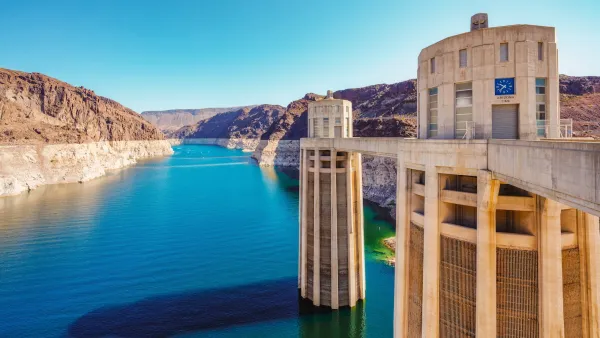
Federal proposal calls for mandatory water cuts to Arizona, California and Nevada
The Bureau of Reclamation stepped in after states failed to come to an agreement over Colorado River water use reductions.
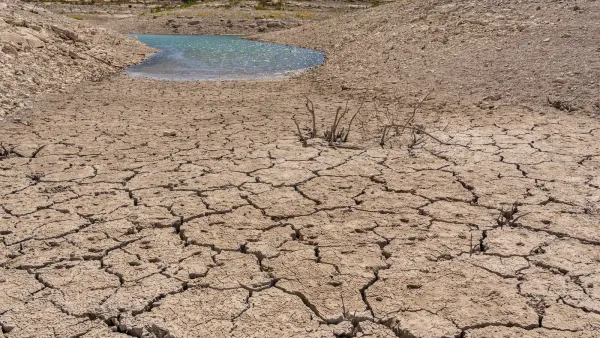
Drought is affecting all but 5 US states
Almost all of the United States faces moderate to severe drought at the start of an El Niño summer.
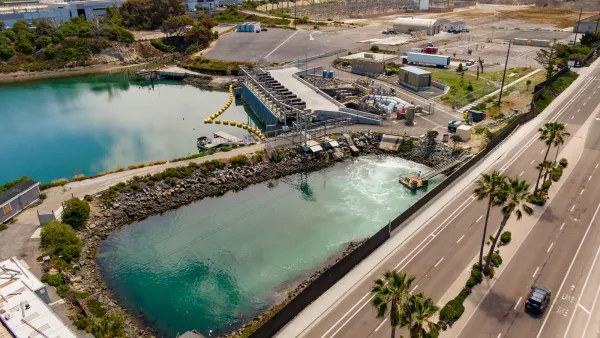
New agreement would let Arizona, Nevada use water from California desalination plant
The plan will help reduce strain on Lake Mead during extreme drought periods.

Planetizen Federal Action Tracker
A weekly monitor of how Trump’s orders and actions are impacting planners and planning in America.

Amtrak, CN end decades-long dispute with eight-year agreement
The new operating agreement establishes an updated framework for the companies to work together, including processes to resolve disputes.

Northwest rail fans eager for Sept. 30 debut of Amtrak’s Airo fleet
Get ready for that new train smell and more seats. But they won’t go faster or run more frequently on the Cascades route in Washington and Oregon.

Brightline Florida files for bankruptcy
The transit company is over $5 billion in debt.

St. Louis Metro to test if single-car trains can reduce operating costs, maintain rider satisfaction
The pilot program will run from October to spring 2027, and begin with one single-car train operating on Metrolink’s Red and Blue lines.

Pennsylvania is building data centers in abandoned mines
Housing data centers in mines provides an alternative to destroying local forests and may spare residents from data centers’ noise and air pollution.

FREE Course: Walkable City 1: Why Walkability?
After describing his path towards focusing on walkability as the essence of good planning, Jeff Speck marches through his five principal reasons for making more walkable places.
Reinventing Malls: Planning Alchemy—Turning Gray Fields Into Gold
The course focuses on the opportunities and imperatives that shape reinvention of mall sites.

City of Thousand Oaks
City of Wisconsin Rapids
Harvard University Graduate School of Design
The Architects Foundation
University of Cincinnati Online
The Pocatello Development Authority
The Urban Renewal Agency of the City of Pocatello