City councilors in Washington D.C. have proposed a plan to throw out exemptions that allowed hundreds of landlords to evict residents with little or no notice so they could convert buildings to high priced condos.


"Vowing to crack down on abusive landlords, the council members said they will propose ending the blanket use of "vacancy exemptions," which allow landlords who empty their buildings to convert to condominiums without tenant approval or paying thousands of dollars in fees."
"The council members are considering whether developers who turn long-vacant, blighted properties into affordable housing could continue to claim exemptions."
"'The exemption is just too great an incentive for landlords to force tenants out of their homes by coercion or just by letting the building become uninhabitable,' Cheh said. 'The temptation appears too great. I don't want the law to provide that incentive anymore.'"
"The District has one of the strongest tenant-rights laws in the nation. It allows renters to vote on whether apartments convert to condominiums and requires landlords to pay a fee on the sale of new condominium units to help displaced families find homes. Vacant buildings are exempt."
"In the past four years, landlords emptied more than 200 buildings across the city. Using vacancy exemptions, they have drawn $328 million in condominium sales so far while saving $16 million in conversion fees, The Washington Post reported in a series of articles published this week."
FULL STORY: Landlords' Exemption Might Be Repealed

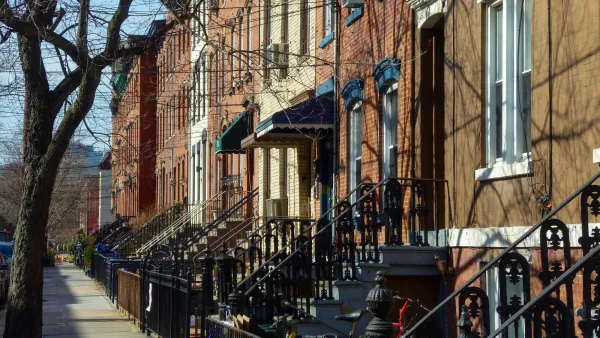
New Jersey Court Ruling Clarifies Fair Eviction Law
The decision specifies the amount tenants must pay to avoid eviction.

Tech Tools Help Tenants Push Back Against Problematic Landlords
Shelterforce found more than a dozen examples of tenant-serving technology that help renters identify landlords, respond to eviction, fight back against housing discrimination, and more.

Good Cause Eviction Policies Don’t Hamper Construction, New Research Shows. Legislators Are Still Concerned.
Multiple states have ongoing pushes for good cause eviction protections. A frequent obstacle: a now disproven claim by developers.

Planetizen Federal Action Tracker
A weekly monitor of how Trump’s orders and actions are impacting planners and planning in America.

The state-sanctioned urbicide of Austin
People don’t kill cities. Freeways do.

US to reduce Colorado River water deliveries to Mexico
A new Colorado Treaty amendment reduces Mexico’s Colorado River water allocation by 250,000 acre feet.

Guerilla urbanists are building DIY bus stop benches in Chicago
A before-and-after of one of the bus stops with a new bench. The new benches are not officially sanctioned or permitted, but the residents who placed them hope they will be the start of a network of DIY benches across the city.

Mamdani overhauls NYC's Vision Zero plan with 100 new policy goals
The overhaul aims to reduce traffic deaths and make streets safer for pedestrians, cyclists and drivers through lower speed limits, new safety infrastructure and more.

Amtrak not solely to blame for New Jersey commuter rail's unreliability, report finds
A new study from the Garden State Initiative found that NJ Transit’s budget grew 20% across a 4 year period, but reliability declined significantly over the same period.

FREE Course: Walkable City 1: Why Walkability?
After describing his path towards focusing on walkability as the essence of good planning, Jeff Speck marches through his five principal reasons for making more walkable places.
Reinventing Malls: Planning Alchemy—Turning Gray Fields Into Gold
The course focuses on the opportunities and imperatives that shape reinvention of mall sites.

Eagle County Government
Harvard University Graduate School of Design
Nashville Planning Department
The Architects Foundation
University of Cincinnati Online
The Pocatello Development Authority
The Urban Renewal Agency of the City of Pocatello
Journal of the American Planning Association