A plan to use light rail to move visitors in the park is facing a challenge from Arizona politicians.


"Nearly everyone agrees that Grand Canyon traffic congestion must be reduced, but the gridlock likely won't end anytime soon now that plans for a $100 million light rail system have been put on hold. The plan called for an 8.5-mile rail line to carry tourists to the park's South Rim, where up to 6,000 drivers compete for 2,400 parking spaces on busy summer days. The proposal was approved by the National Park Service in 1997 and scheduled to be put out for bid last November. But Rep. John Shadegg and Sen. Jon Kyl, both Arizona Republicans, put the brakes on the bidding in favor of more study. Shadegg said buses should be considered again, arguing the decision for the rail plan was based on inflated visitor projections and outdated technology."
Thanks to Christian Peralta
Read the full story: Grand Canyon Rail Plan Put on Hold

Planetizen Federal Action Tracker
A weekly monitor of how Trump’s orders and actions are impacting planners and planning in America.

Washington state to charge fee to drivers with fuel-efficient cars
Revenue from the fee will go towards supporting the state’s highways.
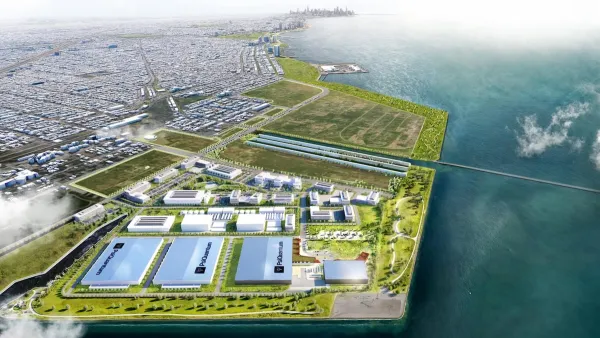
Illinois considers spending $1 billion in taxpayer money on data center
A quantum computing campus and data center are currently under construction in Chicago.

Senate passes bill overhauling permitting
The bill still needs to pass the House.

Did data centers change how voters cast their ballots?
Texas, Ohio, and Georgia all flipped party control. But in rural counties, the effect of local data centers was mixed.

Amtrak invests in eight new Airo trainsets
The new trainsets will begin serving passengers in 2031.

FREE Course: Walkable City 1: Why Walkability?
After describing his path towards focusing on walkability as the essence of good planning, Jeff Speck marches through his five principal reasons for making more walkable places.
Reinventing Malls: Planning Alchemy—Turning Gray Fields Into Gold
The course focuses on the opportunities and imperatives that shape reinvention of mall sites.

City of Charlotte
City of Rosemead
Rutgers University, Edward J. Bloustein School of Planning and Public Policy
University of Michigan School for Environment and Sustainability (SEAS)
Hunter College, City University of New York (CUNY)
The Architects Foundation
University District Partnership