Two notable large-scale projects in downtown L.A. have not broken ground on time, which many see as a sign of the end of downtown's real estate boom.


"A fickle economy, rising construction costs, and skittish buyers are just a few of the factors that have slowed the frenzied development in downtown Los Angeles to a crawl. But as two of the area's largest planned projects-Frank Gehry and the Related Companies' $3 billion Grand Avenue Project and the $1 billion Park Fifth condo towers-failed to break ground as expected during the last few months, and as several smaller projects went under, hushed conversations between architects, developers, and real estate agents persist in the shadows of half-finished skyscrapers: Is downtown's rally over?"
"'I have the feeling that this is not a good time to be building skyscrapers, in LA or anywhere,' said Peter Slatin of the real estate website TheSlatinReport.com (and AN contributor). 'It's risky to start building into a market that's starting to decline without knowing how long the decline will last.' According to the National Association of Realtors, U.S. condo sales were down by about 11 percent in 2007, while residential construction dropped by almost 17 percent. According to most projections the numbers aren't expected to improve this year."
Read the full story: Downtown Downturn?
New Funding Resuscitates L.A.'s Grand Avenue Project
The highly anticipated mixed-use Grand Avenue project in downtown L.A. has just secured $100 million in funding. This new funding is expected to kickstart the project's construction, which has been delayed for months.
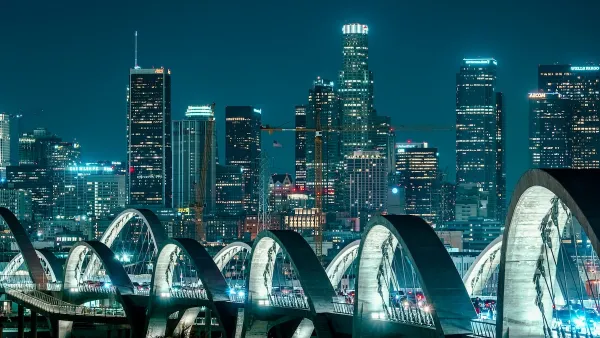
Downtown Los Angeles Gears Up for Growth
A new report highlights Downtown L.A.’s ongoing revival through major housing projects, adaptive reuse, hospitality growth, and preparations for global events in the years ahead.
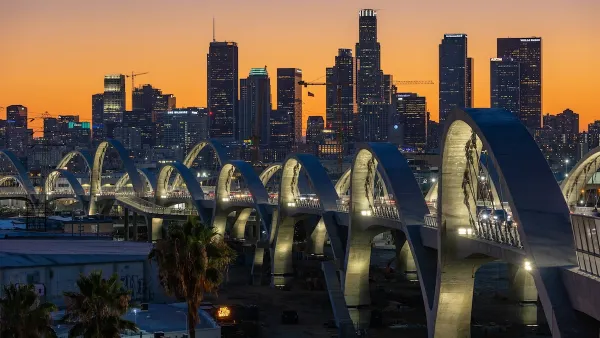
Downtown Los Angeles on the Rise: A Promising 2025
Fueled by new developments, cultural investments, and a growing dining scene, downtown Los Angeles is poised for significant growth in 2025, despite challenges from recent wildfires and economic uncertainties.

Planetizen Federal Action Tracker
A weekly monitor of how Trump’s orders and actions are impacting planners and planning in America.

Eastern Nebraska is running out of electricity
Data centers and electrification are straining eastern Nebraska’s grid, throttling economic development.

Study reveals best places in the U.S. for cycling, walking
New research from Streetlight Data examines bicycle and pedestrian miles per capita in the 100 largest U.S. cities by population.

DSA members accuse Mamdani of 'abandoning values' over housing redevelopment
New York City's mayor plans to replace about 2,000 units of public housing with private, mixed-income housing.

All sides of BRT debate unhappy with CDOT’s most recent move
The Colorado Department of Transportation is no longer considering center-running bus lanes for Colorado Boulevard.

Massachusetts bogs generate both power, and cranberries
Putting solar panels above farmland is one way Massachusetts is advancing toward its goal of net-zero carbon emissions by 2050.

FREE Course: Walkable City 1: Why Walkability?
After describing his path towards focusing on walkability as the essence of good planning, Jeff Speck marches through his five principal reasons for making more walkable places.
Reinventing Malls: Planning Alchemy—Turning Gray Fields Into Gold
The course focuses on the opportunities and imperatives that shape reinvention of mall sites.

City of Rosemead
Rutgers University, Edward J. Bloustein School of Planning and Public Policy
One Hundred Miles
University of Michigan School for Environment and Sustainability (SEAS)
Hunter College, City University of New York (CUNY)
The Architects Foundation
City of Cambridge
The Pocatello Development Authority
The Urban Renewal Agency of the City of Pocatello