This article from Utne Reader looks at a green housing complex that aimed at an atypical market: low-income residents.


"Viking Terrace's green upgrades, which were completed last summer, offer its melting pot of low-income and formerly homeless residents access to a world commonly reserved for companies and individuals with the financial means to go green. Affordable housing developments like this one are springing up across the country, showing that green homes can and should be built for everyone, not just because they're good for the environment, but also because they're healthier, more comfortable, and-yes-more affordable."
"Popular conceptions of green building peg the movement as the domain of hippies or hipsters. A "green" house is either an off-the-grid backwoods cabin built by an aging boomer who organically grows his own out back, or else a futuristic, airy rectangle inhabited by a thirtysomething yuppie with the disposable income to spend on a solar-powered iPod. In both cases, living green comes across as a lifestyle whose extra costs are worth paying for the sake of the earth, not to mention one's own conscience."
"But if you ask the people at Viking Terrace what green building has meant to them, you'll get answers that don't seem particularly ecoconscious."
Read the full story: Low Rent High Tech

Eastern Nebraska is running out of electricity
Data centers and electrification are straining eastern Nebraska’s grid, throttling economic development.

Move over, LA: St. Louis gears up for Olympics, invests millions in downtown redevelopment
The Missouri city will host the 2028 Olympic soccer group stage and knockout matches.
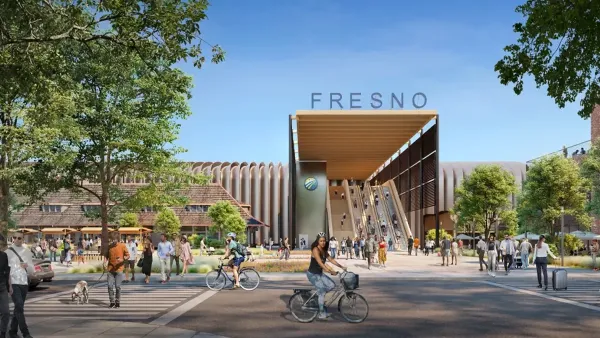
California High-Speed Rail Authority picks trainset manufacturer
The California High-Speed Rail Authority aims to start servicing passengers by 2033.

NYC renovations for dangerous, ‘mercilessly crammed’ street delayed until 2027
Construction was supposed to begin this fall.

San Diego’s Midway Rising project gets greenlight from city council
The project looks to become the largest affordable housing development in California's history.

Bill to overhaul energy permitting clears Senate
The Bipartisan American Affordability and Jobs Act of 2026 still needs to pass the House of Representatives.

FREE Course: Walkable City 1: Why Walkability?
After describing his path towards focusing on walkability as the essence of good planning, Jeff Speck marches through his five principal reasons for making more walkable places.
Reinventing Malls: Planning Alchemy—Turning Gray Fields Into Gold
The course focuses on the opportunities and imperatives that shape reinvention of mall sites.

City of Rosemead
Rutgers University, Edward J. Bloustein School of Planning and Public Policy
One Hundred Miles
University of Michigan School for Environment and Sustainability (SEAS)
Hunter College, City University of New York (CUNY)
The Architects Foundation
City of Cambridge
The Pocatello Development Authority
The Urban Renewal Agency of the City of Pocatello