China's rapid development is creating a demand for electricity that far outpaces the ability of suppliers to insert alternative energy sources -- those with fewer greenhouse gas emissions -- into the supply chain.


"These are the realities faced by companies seeking to make themselves more environmentally friendly in China, where coal is king. Coal-fired plants are quick and cheap to build and easy to run. While the Chinese government has set goals for increasing the use of a long list of alternative energies - including wind, biomass, hydroelectric, solar and nuclear - they all face obstacles, from bureaucracy to bottlenecks in manufacturing."
"Providing new coal power plants remains the path of least resistance under China's regulations. Alternative technologies have supply bottlenecks and lack trained labor. Even inefficient state-built coal-fired plants are difficult to replace with more efficient coal technologies because the newer replacements require larger sites."
Read the full story: China’s Green Energy Gap


Planetizen Federal Action Tracker
A weekly monitor of how Trump’s orders and actions are impacting planners and planning in America.

‘Going backwards:’ Baltimore mayor, students rally against state's transit funding plan
Maryland's proposed six-year plan provides no funding for Baltimore’s BMORE bus program and reduces its road maintenance funding.
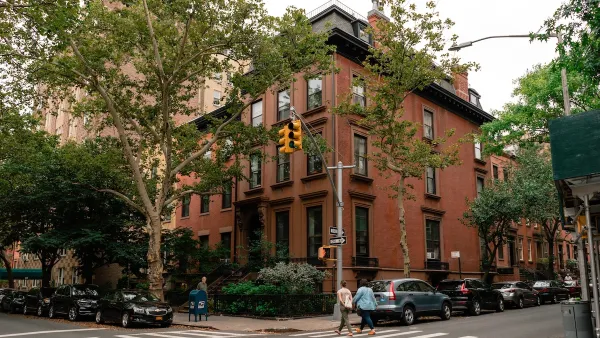
Mamdani sent nearly 6,000 pied-à-terre tax warnings to homes that didn’t qualify
A judge has ordered the administration to cancel thousands of pied-à-terre tax notices after it sent 35% of them erroneously.

Mamdani sent nearly 6,000 pied-à-terre tax warnings to homes that didn’t qualify
A judge has ordered the administration to cancel thousands of pied-à-terre tax notices after it sent 35% of them erroneously.

Detroit to transform waterfront with $2.2 billion investment
Developers will convert about 18 acres of unused parking lot space into civic spaces.

‘Going backwards:’ Baltimore mayor, students rally against state's transit funding plan
Maryland's proposed six-year plan provides no funding for Baltimore’s BMORE bus program and reduces its road maintenance funding.

FREE Course: Walkable City 1: Why Walkability?
After describing his path towards focusing on walkability as the essence of good planning, Jeff Speck marches through his five principal reasons for making more walkable places.
Reinventing Malls: Planning Alchemy—Turning Gray Fields Into Gold
The course focuses on the opportunities and imperatives that shape reinvention of mall sites.

City of Thousand Oaks
City of Wisconsin Rapids
Harvard University Graduate School of Design
The Architects Foundation
University of Cincinnati Online
Northern Illinois Transit Authority (NITA)
The Pocatello Development Authority
The Urban Renewal Agency of the City of Pocatello