“We underwrite fun,” says Naomi McCleary, Manager of arts for the Waitakere City Council, one of the municipalities that make up the Auckland (New Zealand) metropolitan region. She is referring to the practice of involving artists in the thinking and creation of public places, buildings, streets, bridges; they take an equal seat at the table from conception to completion. According to Ms. McCleary, the results are remarkable. Fun is a partner of beauty and happiness, it is a means toward the creation of objects and places that are beautifully usable. Around the world it is possible to find municipalities that are underwriting this kind of fun, but for every found opportunity, we have several more that are lost.


"We underwrite fun," says Naomi McCleary, Manager of arts for the Waitakere City Council, one of the municipalities that make up the Auckland (New Zealand) metropolitan region. She is referring to the practice of involving artists in the thinking and creation of public places, buildings, streets, bridges; they take an equal seat at the table from conception to completion. According to Ms. McCleary, the results are remarkable. Fun is a partner of beauty and happiness, it is a means toward the creation of objects and places that are beautifully usable. Around the world it is possible to find municipalities that are underwriting this kind of fun, but for every found opportunity, we have several more that are lost.
At this moment, I am traveling in Turkey, a county full of natural and man made beauty. But it is also a country, like most others, that is rapidly sacrificing beauty to expediency. The world over, we are rapidly killing off our horizons for the convenience, and necessity of the cellular telephone and its ubiquitous tower. For countries like this one that have never enjoyed fully reliable land line service, the cell phone is a readily achievable opportunity to bring reliable telephone service to everyone across the country.
But beware the infrastructure.
 |
 |
In Foça, if you could see beyond the tangle of towers, you would see a panoramic view of the Aegean Sea. And we are no less guilty in the U.S., though perhaps we are sillier. Who is fooled – or amused or inspired - by that towering pine? Why is that preferable to the honesty, at least, of the tower that tells you what it is doing? Why can't we expect to be informed and educated and dazzled by our structures? What if the design of cellular towers was the result of the finest in structural innovation or of the most creative whimsy? Dare to imagine a combination of the two. We could be delighted by a continuous search for which tower exhibits the most fun.
Expecting art and design in every public action will not quiet the discussion about appropriate sites or views for cell towers, wind turbines or satellite dishes. Perhaps though, the quality of the discussion, as well as the quality of the product, holds the promise of capturing imaginations.
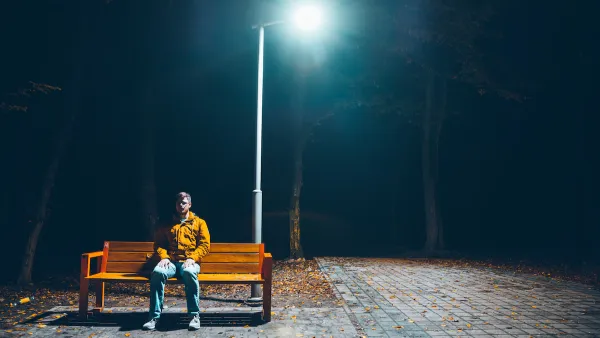
Can Urban Design Truly Impact Loneliness?
Some theorists want to design cities to reduce loneliness and isolation. Others want to accommodate them.

How Cities Can Avoid Perpetuating Segregation
Residents of big cities, known as the ‘melting pots’ of America, have fewer interactions with people outside their socioeconomic group than those in smaller communities, according to new research.
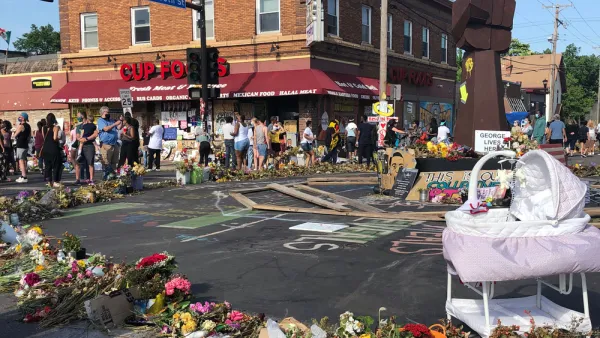
The Racial Reckoning in Public Spaces
Following George Floyd’s murder in 2020, there was an explosion of anti-racist street art across the country. “When we allow ourselves to release our emotions, oftentimes what is produced out of that is art.”

Planetizen Federal Action Tracker
A weekly monitor of how Trump’s orders and actions are impacting planners and planning in America.

Washington state to charge fee to drivers with fuel-efficient cars
Revenue from the fee will go towards supporting the state’s highways.
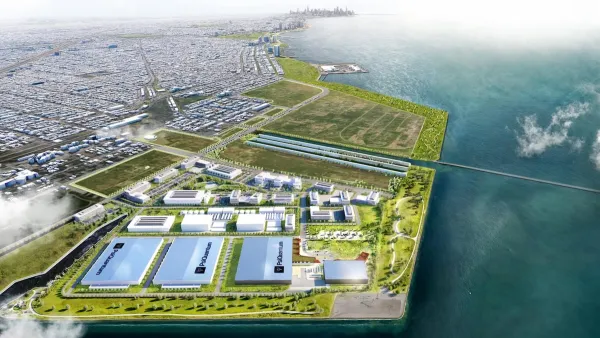
Illinois considers spending $1 billion in taxpayer money on data center
A quantum computing campus and data center are currently under construction in Chicago.

‘Demolition of our heritage:’ Some US tribes speak out against BAAJA
A coalition of indigenous groups in the United States are concerned about provisions in the bill that may weaken their ability to halt large energy projects.

How LA’s new mayor plans to tackle affordable housing crisis
Mayor-elect Nithya Raman has proposed overhauling the city’s permitting process.

Interactive map reveals Pennsylvania's abandoned oil, gas wells — many on residential property
It is difficult for residents to know if a well is near their home, or if it poses a threat to them.

FREE Course: Walkable City 1: Why Walkability?
After describing his path towards focusing on walkability as the essence of good planning, Jeff Speck marches through his five principal reasons for making more walkable places.
Reinventing Malls: Planning Alchemy—Turning Gray Fields Into Gold
The course focuses on the opportunities and imperatives that shape reinvention of mall sites.

City of Charlotte
City of Rosemead
Rutgers University, Edward J. Bloustein School of Planning and Public Policy
University of Michigan School for Environment and Sustainability (SEAS)
Hunter College, City University of New York (CUNY)
The Architects Foundation
University District Partnership

