As a virtual world where anything goes grows up, it's problems are not so different from real world communities.


"[Second Life is] a virtual world in which Internet users act out parallel fantasy lives. They date. They build houses. They work. Some players support themselves in real life by selling goods or services in the game. Some see the space as a utopia free of real-world constraints, where they can build their vision of a perfect realm from scratch. The website is facing the problem that many would-be utopias faced before it..."
"It's not unusual for original members to feel a loss of control when their community grows, said Michael Macy, a sociology professor at Cornell University who studies online worlds. It's like a poky mining town that suddenly finds itself in the middle of a gold rush...Land sharks try to drive users off certain properties, and mafias have been known to harass users."
"Some early users in particular point to corporations as the culprits...Big companies such as Toyota and Adidas have opened stores in the game, where players can buy virtual products for their make-believe characters."
Read the full story: Virtual loses its virtues


Planetizen Federal Action Tracker
A weekly monitor of how Trump’s orders and actions are impacting planners and planning in America.

Northwest rail fans eager for Sept. 30 debut of Amtrak’s Airo fleet
Get ready for that new train smell and more seats. But they won’t go faster or run more frequently on the Cascades route in Washington and Oregon.
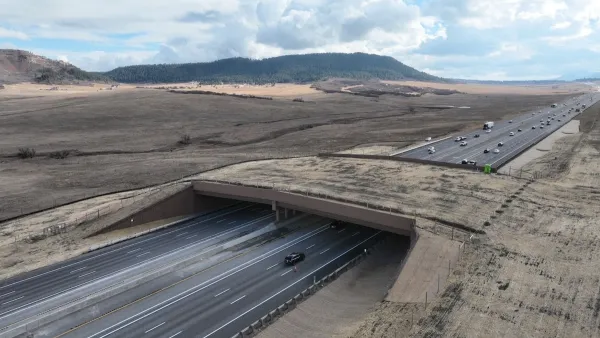
Record-breaking wildlife overpass in Colorado brings 91% reduction in animal collisions
Prior to the overpass, vehicles were hitting one deer per day on Colorado’s Interstate 25.

Detroit to transform waterfront with $2.2 billion investment
Developers will convert about 18 acres of unused parking lot space into civic spaces.

‘Going backwards:’ Baltimore mayor, students rally against state's transit funding plan
Maryland's proposed six-year plan provides no funding for Baltimore’s BMORE bus program and reduces its road maintenance funding.

Trump wants to cancel nearly 98% of funding for HUD housing support program
Multiple housing groups are suing the administration in an effort to preserve the funding.

FREE Course: Walkable City 1: Why Walkability?
After describing his path towards focusing on walkability as the essence of good planning, Jeff Speck marches through his five principal reasons for making more walkable places.
Reinventing Malls: Planning Alchemy—Turning Gray Fields Into Gold
The course focuses on the opportunities and imperatives that shape reinvention of mall sites.

City of Thousand Oaks
City of Wisconsin Rapids
Harvard University Graduate School of Design
The Architects Foundation
University of Cincinnati Online
Northern Illinois Transit Authority (NITA)
The Pocatello Development Authority
The Urban Renewal Agency of the City of Pocatello