Google Earth has "injected new life" into the geographic information systems industry.


"Google Earth wasn't really intended for scientists...But now the scientific community is discovering how useful the software is for their own work...Earth played an unexpectedly useful role in the wake of last summer's disastrous flooding in New Orleans following Hurricane Katrina...
Epidemiologists, meteorologists and urban planners have also discovered the magic of Google's model of the globe. For them, one of the program's most attractive features is the ability to graphically depict many different types of data on the digital planet..
[Geographic information systems are] frighteningly cumbersome. Their biggest drawback is that they spit out vast numbers of individual maps without providing a look at the whole picture -- they don't provide a digital globe rotating directly in front of the viewer's eyes...Google Earth's popularity among ordinary users is injecting new life into the entire industry...
..The California-based firm ESRI, a market leader in the field, plans to launch a completely revised version of its ArcGIS program in a few weeks. The new version will also feature a virtual globe accessible through the Internet."
Thanks to Cartography
Read the full story: How Google Earth Is Changing Science


Planetizen Federal Action Tracker
A weekly monitor of how Trump’s orders and actions are impacting planners and planning in America.

Northwest rail fans eager for Sept. 30 debut of Amtrak’s Airo fleet
Get ready for that new train smell and more seats. But they won’t go faster or run more frequently on the Cascades route in Washington and Oregon.
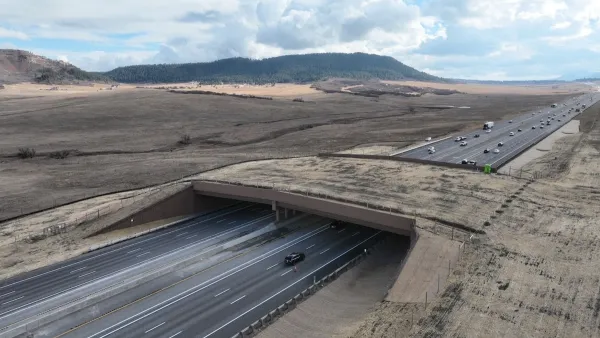
Record-breaking wildlife overpass in Colorado brings 91% reduction in animal collisions
Prior to the overpass, vehicles were hitting one deer per day on Colorado’s Interstate 25.

Detroit to transform waterfront with $2.2 billion investment
Developers will convert about 18 acres of unused parking lot space into civic spaces.

‘Going backwards:’ Baltimore mayor, students rally against state's transit funding plan
Maryland's proposed six-year plan provides no funding for Baltimore’s BMORE bus program and reduces its road maintenance funding.

Trump wants to cancel nearly 98% of funding for HUD housing support program
Multiple housing groups are suing the administration in an effort to preserve the funding.

FREE Course: Walkable City 1: Why Walkability?
After describing his path towards focusing on walkability as the essence of good planning, Jeff Speck marches through his five principal reasons for making more walkable places.
Reinventing Malls: Planning Alchemy—Turning Gray Fields Into Gold
The course focuses on the opportunities and imperatives that shape reinvention of mall sites.

City of Thousand Oaks
City of Wisconsin Rapids
Harvard University Graduate School of Design
The Architects Foundation
University of Cincinnati Online
Northern Illinois Transit Authority (NITA)
The Pocatello Development Authority
The Urban Renewal Agency of the City of Pocatello