The Victoria and Albert Museum in London opens a comprehensive exhibit on the history of modernism, including a concise history, timeline, and capsule biographies.


"This major exhibition at the V&A is the first to explore Modernism in the designed world from a truly international perspective and in terms of all the arts.
At the beginning of the twenty-first century our relationship to Modernism is complex. The built environment that we live in today was largely shaped by Modernism. The buildings we inhabit, the chairs we sit on, the graphic design that surrounds us have all been created by the aesthetics and the ideology of Modernist design. We live in an era that still identifies itself in terms of Modernism, as post-Modernist or even post-post-Modernist."
[Editor's note: The exhibit website includes a history of modernism, timeline, capsule biographies and other features.]
Read the full story: Modernism: Designing A New World 1914-1939


Planetizen Federal Action Tracker
A weekly monitor of how Trump’s orders and actions are impacting planners and planning in America.

Data reveals that NYC’s bet on congestion pricing has paid off
After almost two years of the program, reports show positive impacts on traffic and air quality and no disruptions to parking.
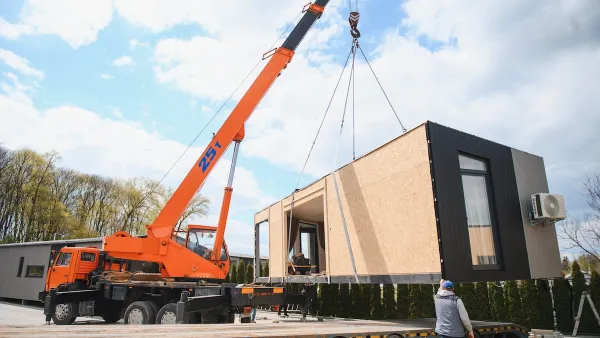
HUD modernizes 50-year-old manufactured housing framework
The Next Generation Manufactured Housing Action Plan establishes new energy-efficiency standards for manufactured homes, and new guidelines for anchoring them.

Boston connects suburbs to the city with 5 free bus routes
The city will launch the new routes in 2027, and offer them for at least three years.

Who pays when a remote Alaska village can no longer stay?
A year after ex-Typhoon Halong, the struggle for two communities to find safer ground has become part of a national debate over who should bear the costs of the climate crisis.

Florida could lose billions in funding for infrastructure, parks
If Amendment 3 passes, Miami-Dade would lose about $445 million annually by fiscal year 2028-29.

FREE Course: Walkable City 1: Why Walkability?
After describing his path towards focusing on walkability as the essence of good planning, Jeff Speck marches through his five principal reasons for making more walkable places.
Reinventing Malls: Planning Alchemy—Turning Gray Fields Into Gold
The course focuses on the opportunities and imperatives that shape reinvention of mall sites.

Rutgers University, Edward J. Bloustein School of Planning and Public Policy
One Hundred Miles
County of Mendocino
The Architects Foundation
University of Cincinnati Online
Montrose County
Northern Illinois Transit Authority (NITA)
The Pocatello Development Authority