Chicago and Indiana have made billions by partnering with private financers on infrastructure assets. Attorneys David Narefsky and John Schmidt explain how California can reap similar benefits.


Public-private financing is emerging as one of the most innovative and efficient ways to pay for and maintain major public infrastructure projects. Few people understand these partnerships better than David Narefsky and John Schmidt, both of Meyer, Brown, Rowe, and Maw LLP. They helped broker what are, to date, the two largest public-private deals in the country -- the Chicago Skyway and the Indiana Toll Road -- which have garnered billions for their public clients.
Metro Investment Report interviews with Mr. Narefsky and Mr. Schmidt about both the finer points of public-private financing and its potential to support California’s ambitious investment plans, and provides a contrasting point of view to a recent article by William Fulton in the California Planning and Development Report, "How To Make Massive Infrastructure Improvements With No Money".
Thanks to David Abel
Read the full story: Public-Private Financings Are Providing Billions for Infrastructure


Planetizen Federal Action Tracker
A weekly monitor of how Trump’s orders and actions are impacting planners and planning in America.

Data reveals that NYC’s bet on congestion pricing has paid off
After almost two years of the program, reports show positive impacts on traffic and air quality and no disruptions to parking.
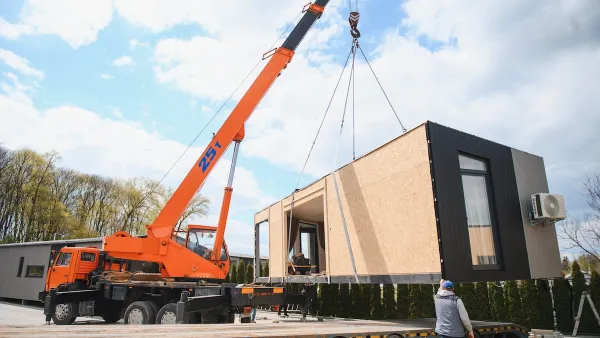
HUD modernizes 50-year-old manufactured housing framework
The Next Generation Manufactured Housing Action Plan establishes new energy-efficiency standards for manufactured homes, and new guidelines for anchoring them.

Texas suburbs are popping up around old oil wells. Some are starting to leak
Several plugged wells in Texas have failed in recent years, endangering those who unknowingly settled nearby.

This Chicago neighborhood is using planning to increase life expectancy
The Garfield Park Quality-Of-Life Plan aims to bring residents everything from easier access to fresh food to revitalized commercial corridors.

Boston connects suburbs to the city with 5 free bus routes
The city will launch the new routes in 2027, and offer them for at least three years.

FREE Course: Walkable City 1: Why Walkability?
After describing his path towards focusing on walkability as the essence of good planning, Jeff Speck marches through his five principal reasons for making more walkable places.
Reinventing Malls: Planning Alchemy—Turning Gray Fields Into Gold
The course focuses on the opportunities and imperatives that shape reinvention of mall sites.

Rutgers University, Edward J. Bloustein School of Planning and Public Policy
One Hundred Miles
County of Mendocino
The Architects Foundation
University of Cincinnati Online
Montrose County
Northern Illinois Transit Authority (NITA)
The Pocatello Development Authority