As urban schools decline, those who can afford it head for ever-expanding, land-consuming 'burbs. The flight of the affluent drains urban schools of funding. We can break the cycle, says Dan Akst.


"It's hard to predict how many middle-class families would choose urban life if they didn't have to worry about the schools, but it's fair to assume the proportion would be substantial. The childless bourgeoisie are a fixture of urban life in most major cities, and the couples who move out to some new subdivision when they have kids are stock figures as well. Duke University economist Thomas Nechyba, who has created a theoretical model of the relationship between school choice and housing decisions, finds in his simulation that giving all parents school vouchers substantially boosted household income in poor school districts. The reason? Many affluent people moved back."
Thanks to Andy Slabaugh
Read the full story: Choose You Can Use


Planetizen Federal Action Tracker
A weekly monitor of how Trump’s orders and actions are impacting planners and planning in America.

Data reveals that NYC’s bet on congestion pricing has paid off
After almost two years of the program, reports show positive impacts on traffic and air quality and no disruptions to parking.
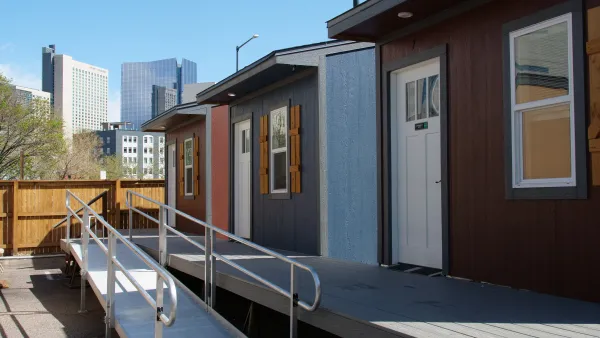
Denver is solving homelessness. Why aren't the rest of us?
Since 2023, Denver's street homeless population has decreased by 64%, proving that effective tools exist to support those in need of housing.

Will sprawl save California?
California residents will vote on Proposition 45 in November, which would make it easier to build large housing developments on the outskirts of the state’s cities.

Texas suburbs are popping up around old oil wells. Some are starting to leak
Several plugged wells in Texas have failed in recent years, endangering those who unknowingly settled nearby.

This Chicago neighborhood is using planning to increase life expectancy
The Garfield Park Quality-Of-Life Plan aims to bring residents everything from easier access to fresh food to revitalized commercial corridors.

FREE Course: Walkable City 1: Why Walkability?
After describing his path towards focusing on walkability as the essence of good planning, Jeff Speck marches through his five principal reasons for making more walkable places.
Reinventing Malls: Planning Alchemy—Turning Gray Fields Into Gold
The course focuses on the opportunities and imperatives that shape reinvention of mall sites.

Rutgers University, Edward J. Bloustein School of Planning and Public Policy
One Hundred Miles
County of Mendocino
The Architects Foundation
University of Cincinnati Online
Montrose County
Northern Illinois Transit Authority (NITA)
The Pocatello Development Authority