Will New Orleans and the devastated region around it be rebuilt on the hollow premise of cheap oil and suburban sprawl?


"The dirty secret of the American economy for at least a decade now is that it has come to be based on the creation of suburban sprawl and the activities associated with it -- the building of cul-de-sac McMansions, highway retail pods, car sales, real estate sales, the creation of false liquidity in the form of easy mortgages and the deployment of that debt into tradable instruments. The sprawl-building industry comprises over 40 percent of what we do in this country. If you subtract it from the U.S. economy, there isn't much left besides hair cutting and open heart surgery.
...Much of the stuff just outside New Orleans, and along the Gulf Coast, was largely post-war suburban fabric -- housing subdivisions, collector boulevards with their complements of fry pits, malls, muffler shops and big box out-parcels. We'd hope that the states of Alabama, Mississippi, and Louisiana will not undertake to rebuild them they way they were. But the existing template reflects a pattern of property ownership that is not easily changed. The New Urbanists have a good record of retrofitting some of these things. For instance they have had some success in turning "dead" malls into mixed use town centers. But some of this stuff, in particular single-family housing developments, do not lend themselves very well to reform."
Thanks to AlterNet Headlines
Read the full story: The Long Emergency Ahead


Planetizen Federal Action Tracker
A weekly monitor of how Trump’s orders and actions are impacting planners and planning in America.

Chicago breaks ground on $3 billion megadevelopment
The new neighborhood, titled Foundry Park, will one day host 3,700 residences.
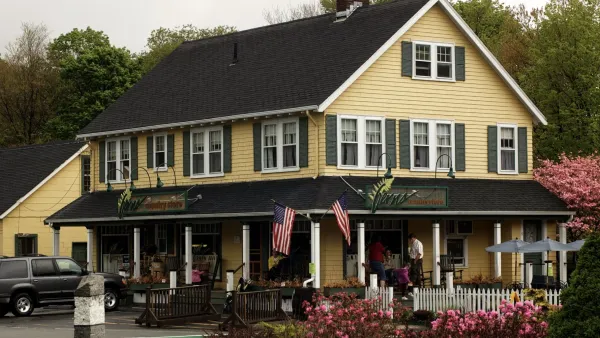
This MA town is drowning in its own sewage — and residents like it that way
Susan Murcott, a waste water expert, said if Carlisle didn't address their leaking sewage, the problem could turn “deadly.”

Iowa taxpayers are paying thousands to clean manure out of their water
While the Clean Water Act makes states responsible for regulating factory farms that discharge pollutants, Iowa has turned a blind eye to the polluting farms.

Amtrak cuts ribbon on Seattle Airo maintenance facility
The $250 million, nearly 100,000-square-foot building can house an entire Cascades Airo trainset.

To power data centers, Google seeks autonomous control of thousands of homes’ electricity
The tech company has signed a deal to indirectly pay Mid-Atlantic residents to reduce their power demand when the grid is strained.

FREE Course: Walkable City 1: Why Walkability?
After describing his path towards focusing on walkability as the essence of good planning, Jeff Speck marches through his five principal reasons for making more walkable places.
Reinventing Malls: Planning Alchemy—Turning Gray Fields Into Gold
The course focuses on the opportunities and imperatives that shape reinvention of mall sites.

City of Rosemead
Rutgers University, Edward J. Bloustein School of Planning and Public Policy
One Hundred Miles
The Architects Foundation
University of Cincinnati Online
Montrose County
The Pocatello Development Authority
The Urban Renewal Agency of the City of Pocatello