Nevada already has three dozen data centers; several dozen more are planned.


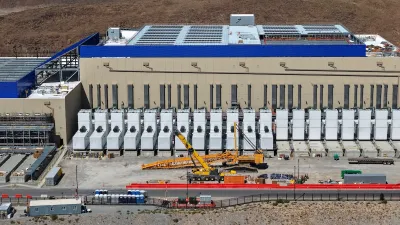
Nevada is the driest state in the U.S. — and a hotspot for data centers. Several dozen are planned for the state; by 2036, they could be using 13,000 acre-feet, or 4 billion gallons of water, per year, according to a report from the Desert Research Institute. Taking indirect water use into account, the data centers could use an additional 22,000 acre-feet per year, writes Robert Freedman for Facilities Dive.
Right now, these numbers are just estimates: “‘Ultimately, direct water demand will depend on cooling technology and the extent to which newer, more highly efficient cooling systems (e.g. direct-to-chip and immersion) are adopted,’ the report says. Indirect water use, which mainly goes to power electricity generation, will depend in part on how much more energy use will be needed based on the efficiency of the data centers’ direct water use,” Facilities Dive reports.
There are already over three dozen data centers in Nevada; In 2024, they consumed 22% of the state’s electricity generation capacity. The report estimates that by 2036, data centers will use 100% of the state’s 2024 electricity generation.
Read the full story: New data centers could draw 4B gallons of water a year out of Nevada, the driest US state: study
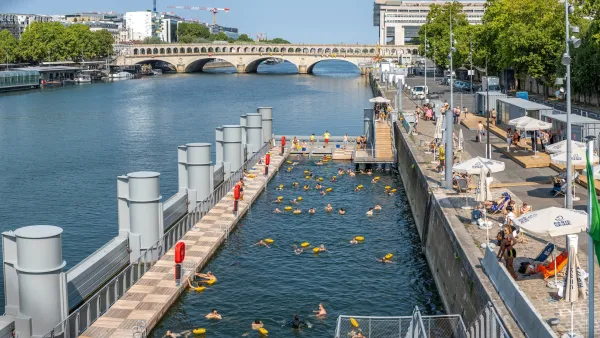
Paris is using Seine water to cool buildings
An underground network of pipes has been cooling public buildings since the 1990s.
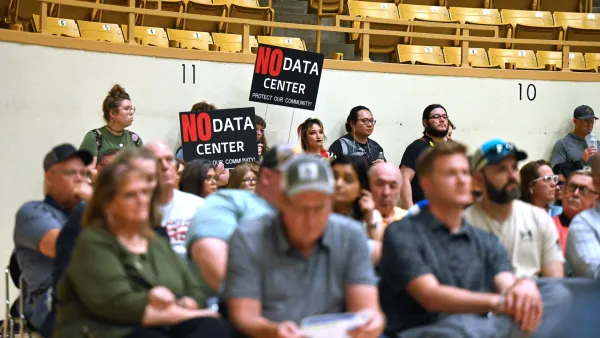
Poll: 75% of Americans oppose data centers near their homes
As they proliferate across the country, data centers face growing backlash from communities concerned about their rapid growth and unknown impacts.
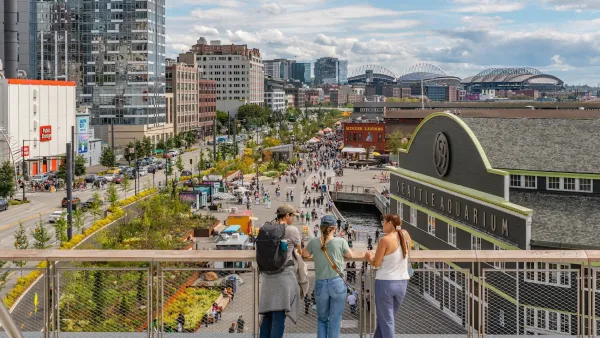
Seattle bans data centers for a year
The city council approved the measure after five 'mystery' projects raised concerns among residents and city leaders.

Washington state to charge fee to drivers with fuel-efficient cars
Revenue from the fee will go towards supporting the state’s highways.

Illinois considers spending $1 billion in taxpayer money on data center
A quantum computing campus and data center are currently under construction in Chicago.

Trump to blast ‘hydrocarbon highway’ through ‘world’s longest art gallery’
Environmental and historic preservation groups are suing to stop the project.

NYC, state sue feds over mixed-immigration-status housing assistance rule
The state’s lawsuit argues that the rule change violates the Administrative Procedure Act.

Michigan to turn neighborhood into virtual power plant
Residents will soon be able to divert their excess energy to the grid in exchange for compensation.

Data center, mining project swarm to long-awaited Alaska railroad line
The state-owned railroad approved final plans for the spur line this week; the project is expected to cost $311 million, mostly funded by the federal government

FREE Course: Walkable City 1: Why Walkability?
After describing his path towards focusing on walkability as the essence of good planning, Jeff Speck marches through his five principal reasons for making more walkable places.
Reinventing Malls: Planning Alchemy—Turning Gray Fields Into Gold
The course focuses on the opportunities and imperatives that shape reinvention of mall sites.

City of Charlotte
City of Rosemead
Rutgers University, Edward J. Bloustein School of Planning and Public Policy
University of Michigan School for Environment and Sustainability (SEAS)
Hunter College, City University of New York (CUNY)
The Architects Foundation
University District Partnership