Denver’s Regional Transportation District’s parking lots have vacancy rates around 80%.


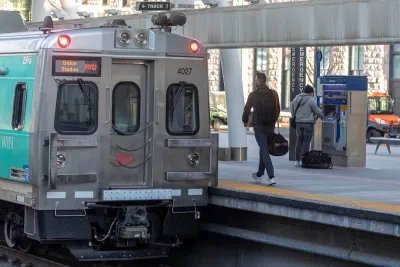
Denver may transform its empty transit parking lots into housing. City council candidate June Churchill is advocating for the city to use the Regional Transportation District’s parking lots, which have vacancy rates around 80%, as a venue for housing development. Churchill argues that housing near rail stations could increase ridership, and would provide residents with easy access to transit.
“Churchill explained that a flat 1% sales tax provides most of RTD's budget, but the revenue does not keep pace with operating costs and falls when consumer spending weakens. Property-related income could provide a steadier source of money to help cover that shortfall,” Morgan Taylor writes for Yahoo News.
According to Churchill’s plan, Denver could supply RTD with housing infrastructure and density bonuses. In return, RTD would promise to provide frequent transit service, with Churchill hoping the extra revenue could support trains arriving every 15 minutes.
Read the full story: Denver transit lots sit 80% empty, candidate says — but housing could help pay for more trains
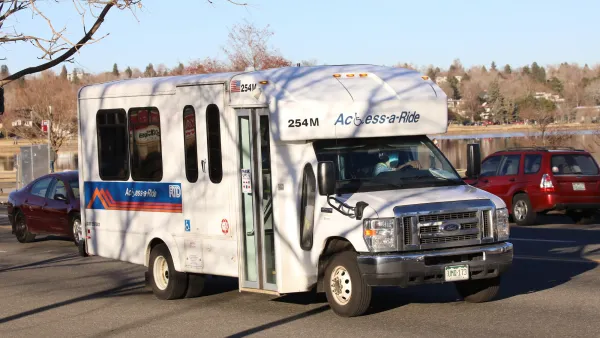
Denver Advocates Sue RTD for Charging People With Disabilities for On-demand Transit
The suit argues the agency is violating the rights of Americans with disabilities while lowering fares for other riders.
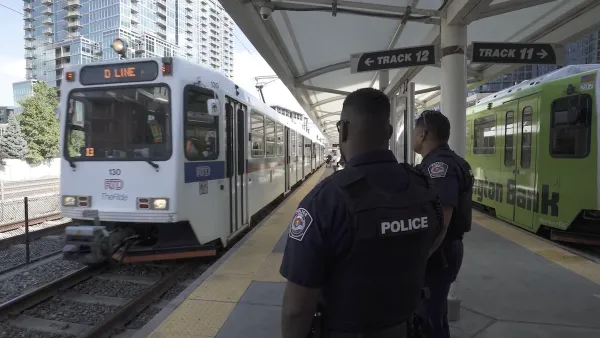
Denver Launches Transit Detective Bureau
The new transit detective bureau will investigate crimes that occur on RTD property.
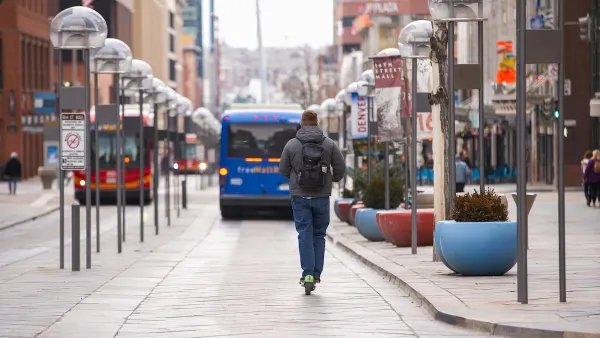
Denver Transit Agency Will Subsidize First Mile of Shared Scooter Trips
A pilot program seeks to address the problem of transit access by paying for the first mile of trips to and from two light rail stations.

Planetizen Federal Action Tracker
A weekly monitor of how Trump’s orders and actions are impacting planners and planning in America.

Eastern Nebraska is running out of electricity
Data centers and electrification are straining eastern Nebraska’s grid, throttling economic development.

Study reveals best places in the U.S. for cycling, walking
New research from Streetlight Data examines bicycle and pedestrian miles per capita in the 100 largest U.S. cities by population.

Denver city council candidate hopes to transform transit lots into housing
Denver’s Regional Transportation District’s parking lots have vacancy rates around 80%.

Trump administration formally announces intend to sell federal land
The department’s strategic plan does not specify which lands it might sell to states or tribes.

Officials look to alter BART extension as price goes through the roof
Tariffs and the war with Iran are behind the rising cost.

FREE Course: Walkable City 1: Why Walkability?
After describing his path towards focusing on walkability as the essence of good planning, Jeff Speck marches through his five principal reasons for making more walkable places.
Reinventing Malls: Planning Alchemy—Turning Gray Fields Into Gold
The course focuses on the opportunities and imperatives that shape reinvention of mall sites.

City of Charlotte
City of Rosemead
Rutgers University, Edward J. Bloustein School of Planning and Public Policy
University of Michigan School for Environment and Sustainability (SEAS)
Hunter College, City University of New York (CUNY)
The Architects Foundation
City of Cambridge
The Pocatello Development Authority
The Urban Renewal Agency of the City of Pocatello