University-led innovation districts give cities growth that outlasts political cycles.


While cities are often governed in four-year terms, the investments that make them globally competitive, in talent, research and innovation, take decades to pay off. In an increasingly short-term political environment, universities are uniquely situated to help lead the long-term economic development that regional economies require. Bridging that gap requires institutions that stay put while officeholders change. Universities can be some of our most powerful city-building institutions, and innovation districts offer one of the clearest ways to turn that potential into action.
Universities are already driving long-term regional growth, and for good reason: they are rooted in place. Their campuses and workforces cannot be relocated, and many have outlasted a century of economic and political cycles. They provide stable employment for almost 6 million workers, according to the Federal Reserve Bank of Philadelphia. That is roughly 4% of U.S. jobs, and a substantially higher share in cities large and small.
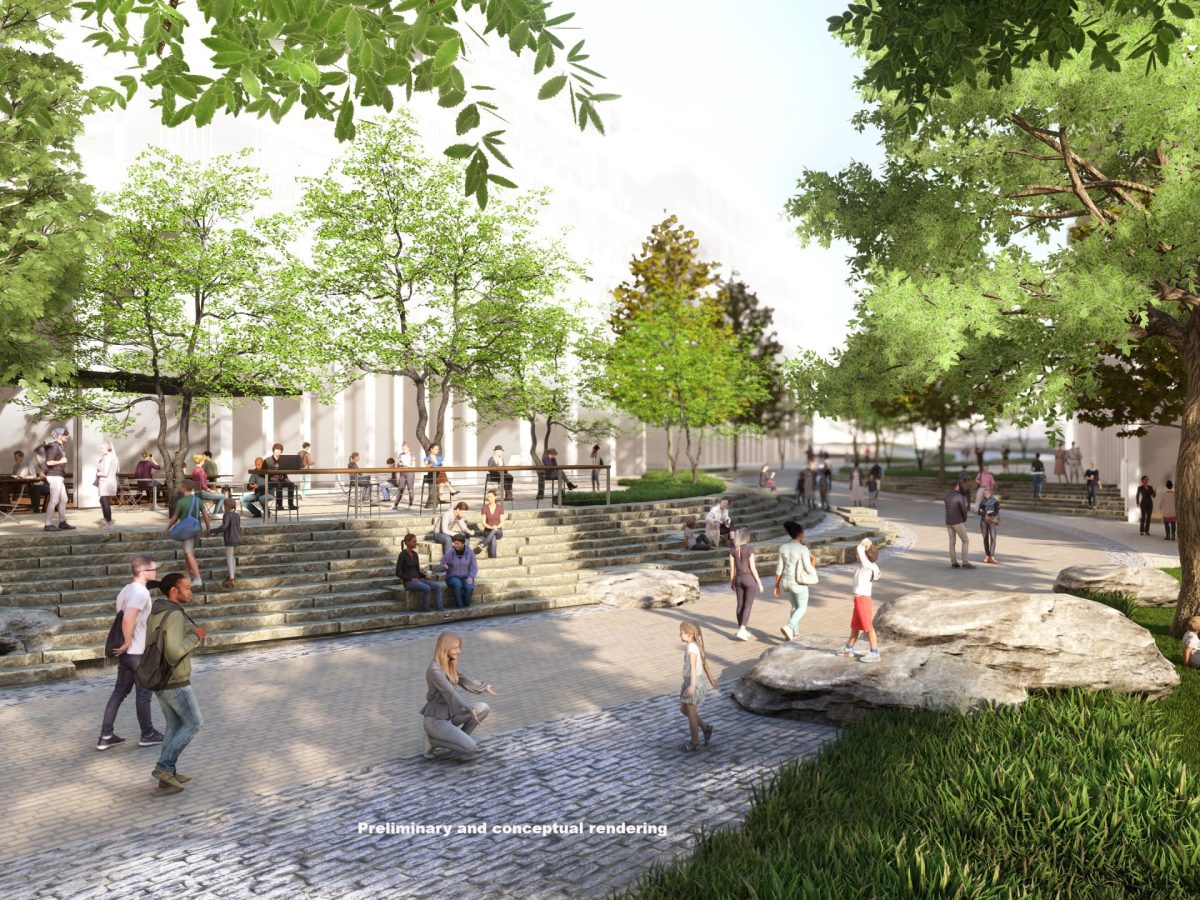
However, public confidence in higher education has fallen sharply over the past decade, and universities face real pressure over cost, value and their role in public life. That is exactly why this moment matters. Universities have the opportunity to leverage innovation districts — compact, walkable neighborhoods where a university and established companies sit alongside startups, labs, housing, shops and public space — as a way to show their value in terms every community understands. An innovation district is not a research park behind a fence. They make it easier for ideas to travel across a street instead of a highway, creating jobs, housing and gathering places that many cities still lack.
Universities bridge divides, build partnerships
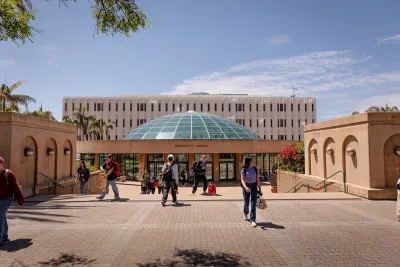
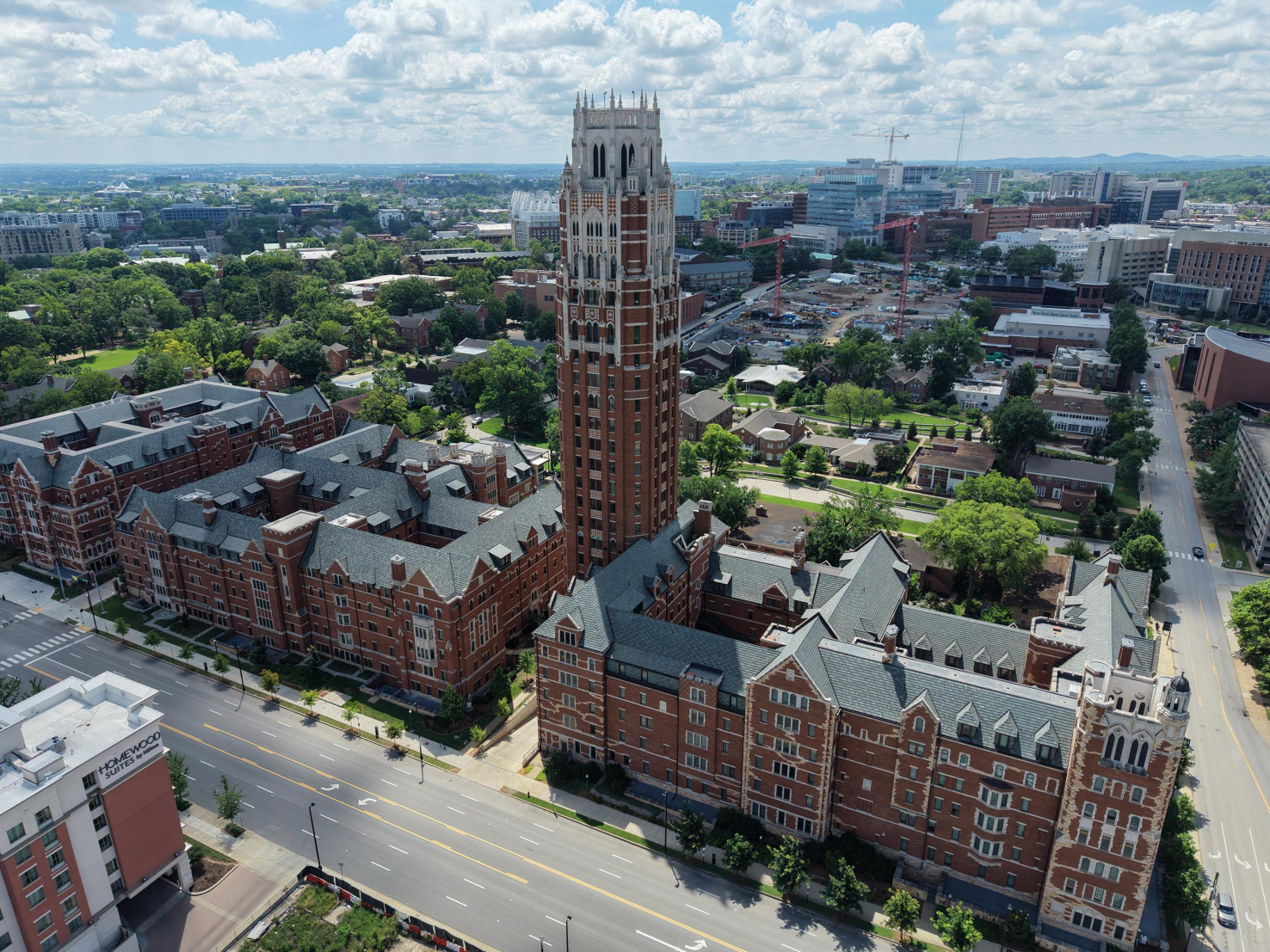
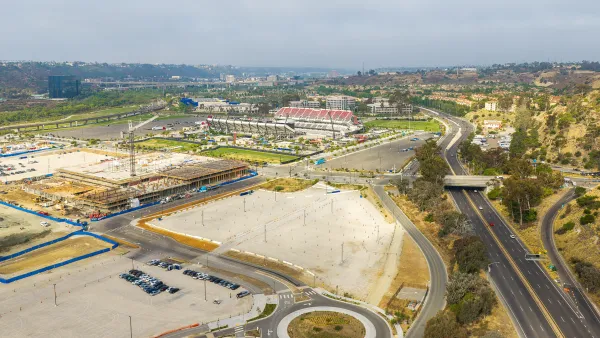
University-sponsored districts often bridge partisan divides. At HR&A Advisors, an economic development and real estate advisory firm, we’ve worked with Vanderbilt University and San Diego State University on their innovation districts. Both districts are working with their partners in government. In September, the Nashville City Council unanimously approved Vanderbilt’s Innovation Neighborhood, a 40-acre district planned as home to thousands of jobs and residents. In San Diego, SDSU won voter approval to redevelop 230 acres in Mission Valley as a new hub for research and innovation, alongside housing and parks.
Just as important, both universities are building partnerships beyond their campus: SDSU is working with the San Diego Community College District on workforce training in a shared facility, while Vanderbilt helped launch the Nashville Innovation Alliance, a public-private partnership that brings together the region’s innovation organizations. Different cities and political contexts, but a similar formula: university leadership, broad public support and partnerships that extend beyond campus.
The payoff can be substantial. A Cornell Tech report found that the innovation district and its New York City–based alumni and startups generated $768 million in economic impact and supported 2,800 jobs in a single year. Its alumni and startups alone are on track to reach $1.5 billion a year and 7,000 jobs by 2030. Three-quarters of the students who move to New York for Cornell Tech stay in the region after graduating. Those are the kinds of results that make long-term investment easier to support, regardless of party.
The best districts treat development as seriously as academia
University leaders do not measure success by election results or profit. They measure it by their long-term ability to attract talent, advance research and prepare graduates for productive careers. But success is not guaranteed. The innovation districts that work tap into the region’s real strengths and the university’s expertise, finding the common ground that attracts entrepreneurs and corporations and closing the gaps that make it hard to compete with Silicon Valley, Boston and other established centers. In Nashville, that meant first identifying which industries could grow and create high-paying jobs, then planning the district around them. At SDSU, a clear vision and business plan helped the university bring on a development partner and lay the groundwork for its first building.

The best districts treat development as seriously as the academic mission. Universities have to navigate public approval processes, real estate cycles and developer negotiations while balancing academic goals against financial sustainability. And they need durable partnerships among universities, government, business and philanthropy that can keep the work moving as elected leaders change. The strongest districts also deliver benefits the surrounding community can see and use, from housing and workforce pathways to public space. Most importantly, successful districts are not built by copying Silicon Valley or Boston; they are built around what a region can credibly be best at.
Innovation districts think in generations
While most big projects are judged at the ribbon-cutting, innovation districts work on a different clock. They grow the companies, jobs and skills a region will rely on for a generation, and its biggest returns rarely arrive within an elected official’s single term in office.
That is why universities, which think in decades, are so well positioned to lead, and why elected officials at every level, chambers, economic development groups and foundations should stand with them as public trust in these institutions falters. Thinking big also means looking beyond the main quad. Vanderbilt found opportunity on underused campus land; SDSU looked to Mission Valley. The strongest districts connect that land to the surrounding community while creating long-term value for the university itself.
—
Kate Wittels is a Partner and Thomas Jansen is a Principal at HR&A Advisors, an economic development and real estate advisory firm.
San Diego State intergenerational housing project will bring 250 homes for older adults to campus
The project is part of the university's Mission Valley campus that includes 4,600 housing units.
Transitioning from Tourism to Tech: San Diego's Path to Recovery
TPR caught up with San Diego City Councilmember and candidate for mayor Barbara Bry to discuss her Roadmap to Recovery plan, as well as her priorities for housing, density, and economic development post-COVID.

Learning loss and urban schools, part 2
Did test scores in progressive cities drop more post-COVID than test scores in moderate ones?

California plans to bury El Niño’s downpour
If the state plays its cards right, it may be able to store a billion acre-feet of El Niño’s water in aquifers.

Desperate measures: Advocates weigh draining Lake Powell to fill Colorado River
Draining the reservoir could reduce evaporation losses by a couple hundred thousand acre-feet.

Eastern Nebraska is running out of electricity
Data centers and electrification are straining eastern Nebraska’s grid, throttling economic development.

Houston gains petal-shaped cooling infrastructure to make streets more ‘delightful’
The city has installed the pavilions along 15 blocks in Houston.

After years of opposition to light rail, this L.A. city wants a $200 million station
Cerritos officials want the Southeast Gateway Line, a planned 14.5-mile light rail route through Los Angeles County, to stop in their city.

SpaceXAI may be fined $6 million for data center lacking water permits
A Mississippi agency also responds after a federal judge criticized the state’s Clean Air Act enforcement.

FREE Course: Walkable City 1: Why Walkability?
After describing his path towards focusing on walkability as the essence of good planning, Jeff Speck marches through his five principal reasons for making more walkable places.
Reinventing Malls: Planning Alchemy—Turning Gray Fields Into Gold
The course focuses on the opportunities and imperatives that shape reinvention of mall sites.

City of Rosemead
Rutgers University, Edward J. Bloustein School of Planning and Public Policy
One Hundred Miles
University of Michigan School for Environment and Sustainability (SEAS)
Hunter College, City University of New York (CUNY)
The Architects Foundation
City of Cambridge
Montrose County
The Pocatello Development Authority

