An official said the program may receive additional funding when a federal reauthorization bill passes.


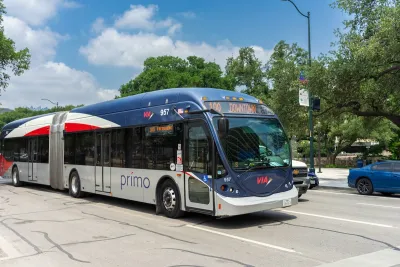
The Texas Transportation Commission's 2027 Unified Transportation Program invests $95 billion in projects, down 6.5% from the 2026 plan's $101.6 billion investment. Joe Kiery, vice president of operations at the Ports-to-Plains Alliance, said TxDOT reduced funding for the 2027 plan because the federal government has not yet passed a reauthorization bill, leaving the state in the dark about how much federal funding transportation will receive.
“Because the agency doesn’t know how much federal funding will be coming, [Kiery] said officials had to budget conservatively. It’s possible a federal reauthorization bill could pass and provide even more funding, he said,” Mella McEwen writes for Midland Reporter-Telegram.
The 2027 UTP funding will cover fiscal years 2027-2036. Funding for development and routine maintenance brings the total amount invested in the 2027 plan to $138 billion.
Read the full story: TxDOT reduces 2027 UTP spending on uncertainty about federal funds

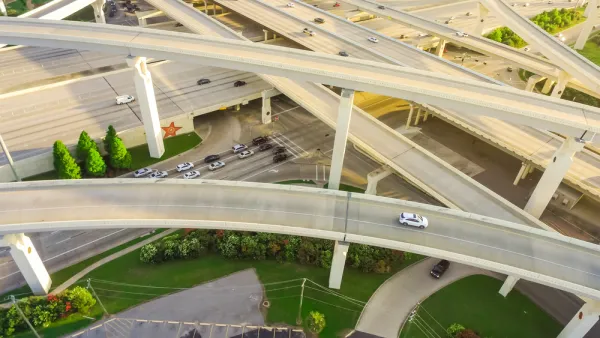
TxDOT Could Spend $600 Million to Improve Highway Safety
Texas leads the nation in automobile-related deaths, and the state is considering spend a large amount of money to lower the number of fatalities on the state's highways.
Texas Considering a $70.2 Billion Highway Spending Program
Texas transportation officials will spend the month considering the state's Unified Transportation Program, which could greenlight construction on some $70.2 billion in highway construction between 2017 and 2026.
Texas Roads Crisis: DOT Proposes To Let Counties Maintain Roads
Following-up on the depavement of 83 miles of "farm-to-market" roads, TxDOT now proposes a much larger budget-saving measure: "Turn back" control of 2,000 miles of these state roadways to counties and cities. TxDOT also wants to focus on urban roads.

Planetizen Federal Action Tracker
A weekly monitor of how Trump’s orders and actions are impacting planners and planning in America.

Chicago breaks ground on $3 billion megadevelopment
The new neighborhood, titled Foundry Park, will one day host 3,700 residences.

This MA town is drowning in its own sewage — and residents like it that way
Susan Murcott, a waste water expert, said if Carlisle didn't address their leaking sewage, the problem could turn “deadly.”

With no reauthorization bill in sight, Texas slashes $6.6 billion from transportation budget
An official said the program may receive additional funding when a federal reauthorization bill passes.

Chicago’s new transit authority has ‘unprecedented’ land development power
The Northern Illinois Transit Authority is allowed to buy and develop land for reasons unrelated to transit, a power that is fairly unique among transit authorities.

Iowa taxpayers are paying thousands to clean manure out of their water
While the Clean Water Act makes states responsible for regulating factory farms that discharge pollutants, Iowa has turned a blind eye to the polluting farms.

FREE Course: Walkable City 1: Why Walkability?
After describing his path towards focusing on walkability as the essence of good planning, Jeff Speck marches through his five principal reasons for making more walkable places.
Reinventing Malls: Planning Alchemy—Turning Gray Fields Into Gold
The course focuses on the opportunities and imperatives that shape reinvention of mall sites.

City of Rosemead
Rutgers University, Edward J. Bloustein School of Planning and Public Policy
One Hundred Miles
The Architects Foundation
University of Cincinnati Online
Montrose County
The Pocatello Development Authority
The Urban Renewal Agency of the City of Pocatello