Counties and states must make conscious decisions about when, where and how they measure data center noise if they want to meaningfully improve residents’ lives.



Measuring and restricting data center noise is something planners across the globe will soon have to contend with — and it's easier said than done. Nowhere is that clearer than Virginia, which is home to over one-third of the world’s hyperscale data centers, and is learning in real time how seemingly insignificant factors can throw off noise measurements.
In April, a Loudoun County, Virginia supervisor told Loudoun Now that the county's average noise readings at the home next to the Vantage data center campus in Sterling, Virginia, had never exceeded 55 dB(A) — slightly quieter than a normal conversation. A resident living about half a mile away told the same reporter that on an 87-degree day she measured between 70 and 80 decibels. The two figures come from different places, and neither disproves the other. Between them sit four decisions that every noise ordinance makes, usually without saying so, and that every planner should understand: which frequencies count, which samples count, how they are averaged and where the meter stands.
Those decisions are being written into law now. On Sept. 18, Virginia Governor Abigail Spanberger directed the state Department of Environmental Quality to expedite data center noise regulations, which the state budget requires by the end of 2029. But until then, Virginia's localities are writing their own standards, and planners in other states will soon face the same drafting choices.
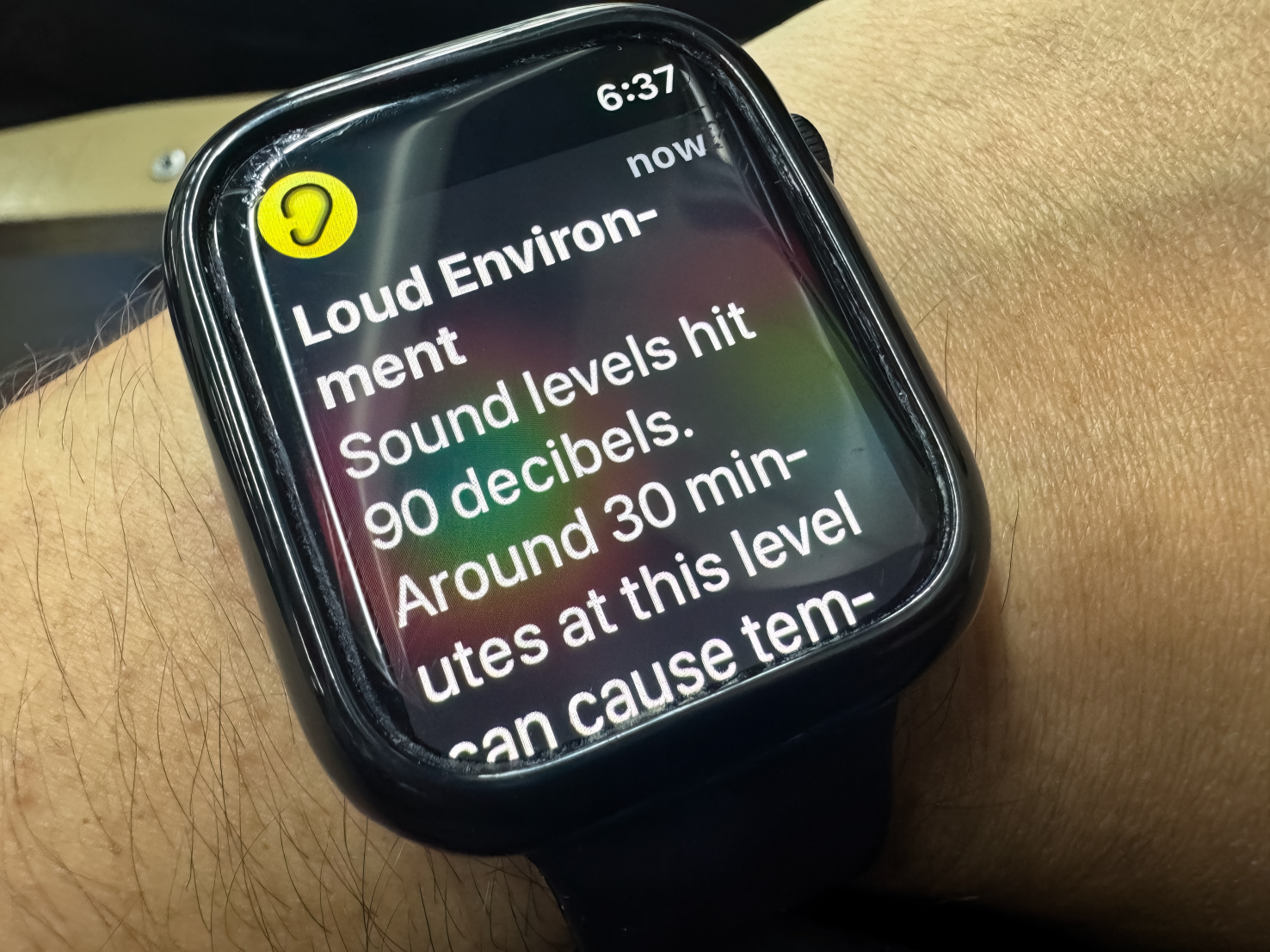
My census of 76 noise instruments across 43 Virginia jurisdictions, published with my study Below the Curve, finds that of the 75 adopted as law, 42 contain no numeric decibel limit at all. Only eight have any provision on tonal sound, and 10 have any provision on low frequencies. Where numbers do exist, the measurement choices around them often decide more than the numbers do.
Which frequencies count
Where noise ordinance codes name a metric, it is usually the A-weighted decibel, written dB(A). The A-weighting filter was designed around the ear's response to quiet sound, and since hearing is weak in the bass, it discounts low frequencies heavily: by 26 decibels at 63 hertz and by 39 at 31.5 hertz. That low range is where the steady hum from fans and chillers registers.
Walls filter sound too, and they strip high frequencies far faster than low ones. In Virginia, Prince William County's consultant tabulated that a typical wood-frame house with windows slightly open cuts about 11 decibels at 31.5 hertz and about 30 at 8,000 hertz. Indoors, the sound is roughly 19 decibels more weighted toward the bass, so an A-weighted reading at the property line measures the wrong spectrum in the wrong place.
C-weighting retains much more of that bass, but A-weighting remains the usual basis for local noise limits. Prince William County’s 2025 ordinance added a C-weighted limit for “steady tonal sound,” its term for a droning hum, whine or buzz, of 73 decibels by day and 68 at night. For planners, a practical first step is to measure both: a substantial gap between the C- and A-weighted readings can flag low-frequency sound that warrants closer investigation.
Which samples count, and how they are averaged
Loudoun's zoning ordinance spells out its compliance procedure. Staff take at least three 15-second samples on a Type 1 meter, the precision grade of sound level meter, and only when the data center "can be clearly heard and identified by the operator without any extraneous sounds such as passing traffic or bird songs." The surviving samples are averaged arithmetically, in decibels. Because decibels are logarithmic, that average gives a loud sample less weight than its acoustic energy carries. Nothing in the procedure requires a reading at peak cooling load, which comes on the hottest afternoons, when the rule against background sound is likely to exclude the most samples. Henry County, Virginia’s August ordinance, by contrast, reportedly requires its pre-approval acoustical analysis to cover "representative worst-case operating conditions, including peak cooling demand and routine emergency generator testing."

Loudoun's own noise page concedes it has no rules specific to tonal or low-frequency noise. Its Phase 2 open-house materials promise new methods to measure both, ahead of a Board hearing in July 2027.
Where the meter stands, and what the rule excuses
Loudoun measures at the point on the receiving lot line nearest the source, 5 feet above grade. That gives officials a defined outdoor measurement point. Distance and barriers affect the reading there, while a house changes the balance of frequencies that reaches a resident. Because walls reduce high frequencies more than bass, a property-line reading and a bedroom reading describe different exposures.
Germany measures inside the home. Its federal noise rule, TA Lärm, screens low-frequency noise from a protected room with the windows closed: where the C-weighted level exceeds the A-weighted level by more than 20 decibels and the noise is clearly perceptible, detailed assessment follows.
American proposals set lower triggers: 10 decibels in a Maryland bill heard this year and 15 in a draft ordinance in Franklin County, Indiana. None of the three numbers means much until it states where the meter stands. Planners should identify the exposure they intend to regulate, specify where it will be measured and set the threshold for that location
Loudoun exempts generator testing from its decibel limits, leaving only a seasonal hours rule. Prince William names backup generators in its definition of steady tonal sound, then exempts generator exercising from that standard two subsections later.
Numbers travel without their tests
This summer, Chesapeake's planning staff drafted a data center ordinance that borrowed Prince William's 73/68 dB(C) limit and its definition of steady tonal noise. The drafts left behind the two provisions that decide whether the limit has been exceeded: a steadiness test, under which a reading over the limit may not swing more than 3 decibels either way, and the slow-response meter setting, which smooths brief spikes in noise. The ordinance the City Council adopted in August sets no decibel limit; its only reference to sound is the state's new sound-profile disclosure for large facilities. The city is writing its decibel limits during an eight-month pause on data center applications.
There is little national model to lift. The American Planning Association, the National Association of Counties and the National League of Cities have published none; the few model ordinances with numeric data center noise limits come from advocacy groups and York County, Pennsylvania's planning commission. Virginia localities have already adopted most of the provisions that follow. The examples below show how to connect a noise limit to the measurement and enforcement procedures that give it practical effect.
What lawmakers should write instead
Put the measurement in the ordinance. State the weighting, the meter response, the averaging method and interval and the measurement location in the text of the code, not in an administrative manual. An energy average over a stated interval, the Leq in Prince William's table, counts a loud minute at its acoustic weight.
Add a low-frequency screen. A C-minus-A trigger is cheap to administer, since Type 1 meters commonly report both weightings. Decide whether the measurement is taken at the property line or inside the dwelling, and write the threshold for that specific position.
Make the measured ambient the design standard. Loudoun already requires a pre-construction noise study at site plan review and another within a year of occupancy. Rockingham County's July 2026 amendment goes further: it requires a baseline study by a qualified acoustical engineer, a model prediction at full load and mitigation designed so that levels do not exceed the ambient sound the study measured. It is the only Virginia ordinance I found that makes the measured baseline the target the design must meet. It states no compliance test after construction.
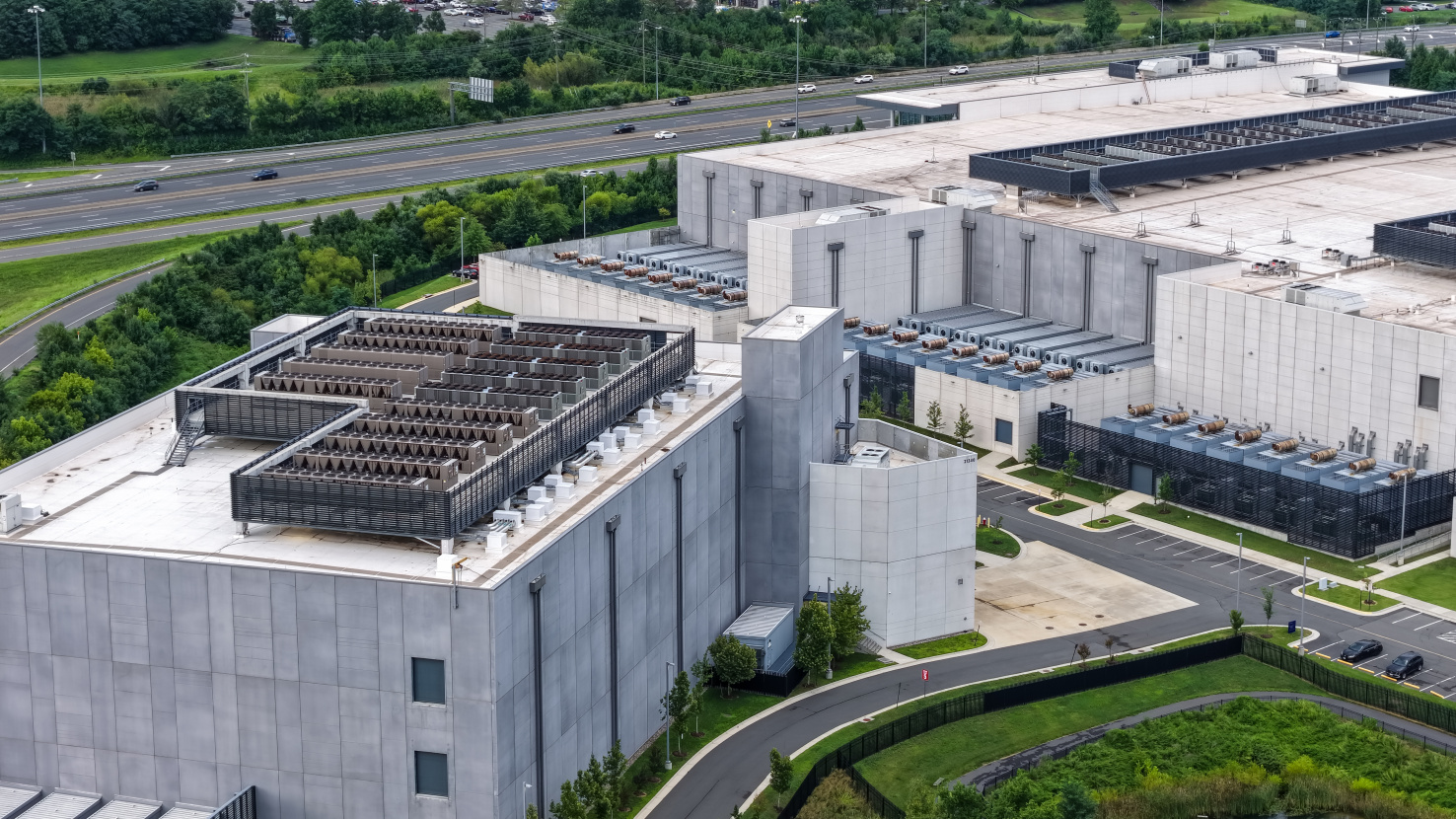
Make the testing the locality's. Henry County's ordinance, as reported, requires testing within 90 days of full operation and every year for the life of the facility, without saying who hires the tester. Warrenton, Virginia’s 2023 special use permit for an Amazon campus answers that: yearly testing by a credentialed acoustician the town hires and the applicant pays for, with the certificate of occupancy suspended if a failure goes uncured for 48 hours. Nothing has been built there and the zoning is in litigation, but the conditions as written.
Keep the named equipment inside the standard. If backup generators are a reason for the standard, generator testing belongs inside it, with hours and a limit.
Virginia's state rule on data center noise limits is more than three years away, and the budget item behind it does not say how to measure. Loudoun's Board postponed its vote on pausing data center applications to Nov. 17, and Chesapeake's pause runs into March. Virginia Beach voted in August to pause consideration of new data center permits for 12 months or until it updates its zoning. Until the state acts, cities and counties' local ordinances will govern every approved campus.
—
Tommy N. Turner is an independent researcher who documents the fiscal, water and land-use effects of data center expansion in Virginia; his noise study and ordinance census are at doi.org/10.5281/zenodo.23145782. He serves on the advisory board of an Alfred P. Sloan Foundation study at Emory University on data centers and the Southern energy buildout, which did not fund or review this article.

'I can't live in this:' Mississippi town besieged by power plant noise
A plant powering Elon Musk’s xAI data centers is subjecting Southaven, Mississippi residents to ceaseless noise.

This rural Oklahoma town doesn’t want a data center. It may not be able to stop the project
With the project outside city limits and little county oversight of unincorporated land, officials are considering measures to gain local control.
Pennsylvania is building data centers in abandoned mines
Housing data centers in mines provides an alternative to destroying local forests and may spare residents from data centers’ noise and air pollution.

Planetizen Federal Action Tracker
A weekly monitor of how Trump’s orders and actions are impacting planners and planning in America.

Chicago breaks ground on $3 billion megadevelopment
The new neighborhood, titled Foundry Park, will one day host 3,700 residences.

This MA town is drowning in its own sewage — and residents like it that way
Susan Murcott, a waste water expert, said if Carlisle didn't address their leaking sewage, the problem could turn “deadly.”

Amtrak cuts ribbon on Seattle Airo maintenance facility
The $250 million, nearly 100,000-square-foot building can house an entire Cascades Airo trainset.

To power data centers, Google seeks autonomous control of thousands of homes’ electricity
The tech company has signed a deal to indirectly pay Mid-Atlantic residents to reduce their power demand when the grid is strained.

From robotaxis to robotrains: LA, DC weigh driverless transit
If approved, the projects will take years to implement and face financial and technical hurdles.

FREE Course: Walkable City 1: Why Walkability?
After describing his path towards focusing on walkability as the essence of good planning, Jeff Speck marches through his five principal reasons for making more walkable places.
Reinventing Malls: Planning Alchemy—Turning Gray Fields Into Gold
The course focuses on the opportunities and imperatives that shape reinvention of mall sites.

City of Rosemead
Rutgers University, Edward J. Bloustein School of Planning and Public Policy
One Hundred Miles
The Architects Foundation
University of Cincinnati Online
Montrose County
The Pocatello Development Authority
The Urban Renewal Agency of the City of Pocatello

