Metra’s groundbreaking train feature modern seats and a futuristic battery car.


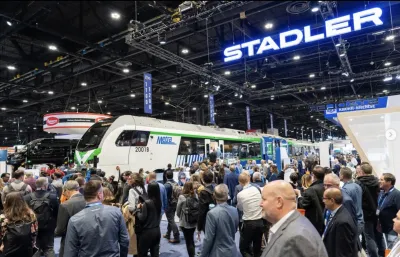
Rail fans and Metra commuters got to explore North America’s first battery-powered train on Oct. 14. The train featured luggage racks, modern seats and a battery car that with “a narrow, brightly lit hallway similar to a spaceship interior from ‘2001: A Space Odyssey,’” David Struett writes for the Chicago Sun Times.
“The trains have a 70-mile capacity, are quieter and cause fewer ground vibrations than the diesel locomotives now used. That’s a benefit to the South Side homes close to the tracks, [Metra CEO Jim Derwinski] said. Metra is spending $234 million to purchase this train, and seven more expected to be delivered by the end of 2028, according to Metra spokesperson Michael Gillis,” The Chicago Sun Times reports.
Metra expects the train to go into service in March 2028, taking passengers from Rock Island to Blue Island, a 15-mile journey. In the future, the battery-powered trains’ smaller size could make them ideal for providing off-peak service.
Read the full story: Public gets first peek at Metra's future battery-powered trains, a North American first

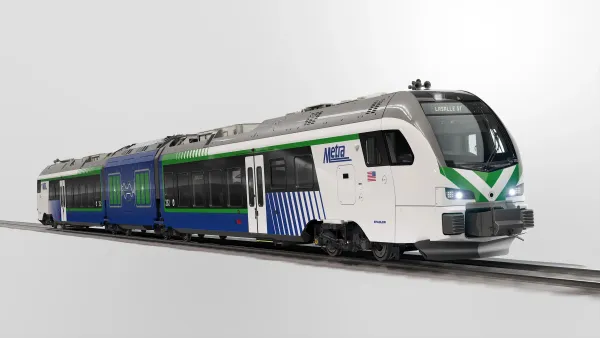
Chicago to showcase country’s first battery-operated passenger train
Metra estimates the trains will be ready for passenger use around the start of 2028.
The Vast Majority of Riders Suspended by Chicago Transit Agencies are Black or Latino
The agencies are allowed to ban riders who are accused of violent or threatening behavior.

Chicago Transit Agencies on Brink of Major Crisis
Without additional funding, regional transit agencies will be forced to cut services by 40 percent.

Planetizen Federal Action Tracker
A weekly monitor of how Trump’s orders and actions are impacting planners and planning in America.

Data reveals that NYC’s bet on congestion pricing has paid off
After almost two years of the program, reports show positive impacts on traffic and air quality and no disruptions to parking.

HUD modernizes 50-year-old manufactured housing framework
The Next Generation Manufactured Housing Action Plan establishes new energy-efficiency standards for manufactured homes, and new guidelines for anchoring them.

Small single-family homes are illegal in most of MA. Voters can change that
Most land zoned for single-family housing in Massachusetts requires at least 40,000 square feet of land per house.

Public steps inside U.S.’s first battery-powered train
Metra’s groundbreaking train feature modern seats and a futuristic battery car.

Companies show off AI technology, new innovation hubs at APTA Expo
Nearly 700 companies attended the American Public Transportation Association’s Expo last week, which happens once every three years.

FREE Course: Walkable City 1: Why Walkability?
After describing his path towards focusing on walkability as the essence of good planning, Jeff Speck marches through his five principal reasons for making more walkable places.
Reinventing Malls: Planning Alchemy—Turning Gray Fields Into Gold
The course focuses on the opportunities and imperatives that shape reinvention of mall sites.

One Hundred Miles
County of Mendocino
planning NEXT
The Architects Foundation
University of Cincinnati Online
Montrose County
Northern Illinois Transit Authority (NITA)
The Pocatello Development Authority