Fifty years ago, Arlington said no to a stop on the MBTA Red Line connecting it to Boston. Now, the town wants a second chance.


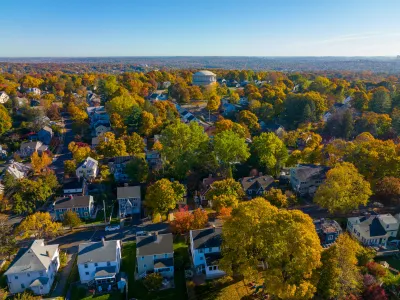
In the late 1970s Arlington, Massachusetts did something that seems almost unthinkable today: out of fear of traffic and big city problems, it said no to a stop on the MBTA Red Line subway that would connect it to Boston by mass transit.
Now, craving and end to congestion woes, the town is rethinking the errors of its past and taking steps to revisit its past opportunity, Boston.com reports. For example, Arlington has repealed laws that were put in place to prevent mass transit stops — like a law banning transit facilities within 75 yards of Catholic church property, including its high schools — and is earmarking $50,000 in the 2027 budget for a feasibility study about picking up the Red Line project.
“The people who were in Arlington in 1978 don’t have a right to set our priorities,” Paul Schlichtman, leader of an advocacy group called Extend the Red Line, told Boston.com. “The town has changed. People changed. Their needs have changed.”
Read the full story: A changed Arlington reconsiders the Red Line

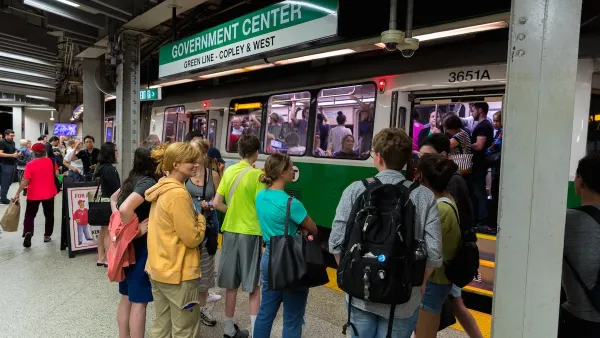
Boston has spent millions making the Green Line more accessible — and there’s no end in sight
While the city has invested millions into expanding and adding platforms to the Green Line to make it more accessible, new train cars set to arrive next year will be too tall for disabled passengers to board without raising the current platforms.
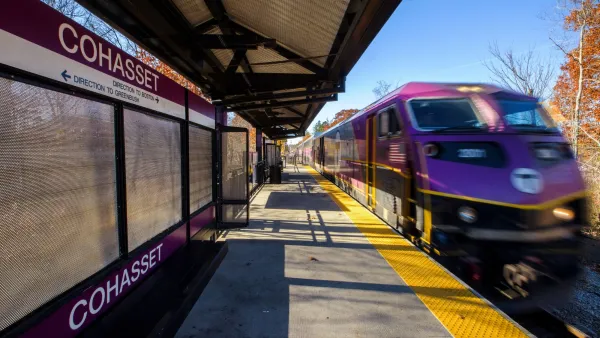
MBTA extends commuter rail discounts and lowers express bus fare to keep passengers riding into the fall
Boston-area commuters can access half-price monthly passes through November.
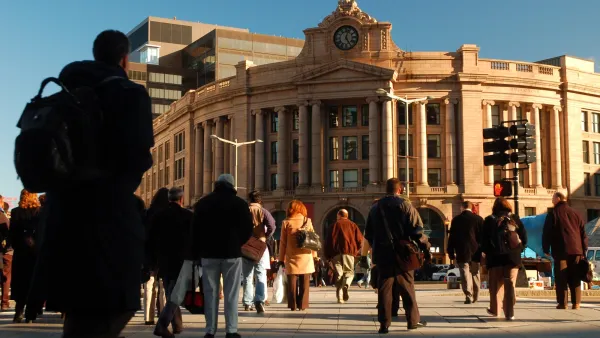
MBTA threatens to use eminent domain to pedestrianize Boston streets during World Cup
Boston city hall has been unusually reluctant to align with MassDOT and MBTA's proposed crowd management plans.

Planetizen Federal Action Tracker
A weekly monitor of how Trump’s orders and actions are impacting planners and planning in America.

‘Going backwards:’ Baltimore mayor, students rally against state's transit funding plan
Maryland's proposed six-year plan provides no funding for Baltimore’s BMORE bus program and reduces its road maintenance funding.

Detroit to transform waterfront with $2.2 billion investment
Developers will convert about 18 acres of unused parking lot space into civic spaces.

'Texas' Main Street' gets a multimodal glow-up
Congress Avenue in Austin is undergoing a major renovation to receive bike lanes and upgraded pedestrian infrastructure.

The Massachusetts town that didn't get the T wants a re-do
Fifty years ago, Arlington said no to a stop on the MBTA Red Line connecting it to Boston. Now, the town wants a second chance.

After $600,000 wasted, CA high-speed rail board limits CEO’s power
Ian Choudri will no longer be able to sign, change or manage contracts.

FREE Course: Walkable City 1: Why Walkability?
After describing his path towards focusing on walkability as the essence of good planning, Jeff Speck marches through his five principal reasons for making more walkable places.
Reinventing Malls: Planning Alchemy—Turning Gray Fields Into Gold
The course focuses on the opportunities and imperatives that shape reinvention of mall sites.

One Hundred Miles
County of Mendocino
planning NEXT
The Architects Foundation
University of Cincinnati Online
Montrose County
Northern Illinois Transit Authority (NITA)
The Pocatello Development Authority