In Denmark, a ship-building-site-turned-cultural-hub demonstrates the power of mixed-use spaces and organic planning.


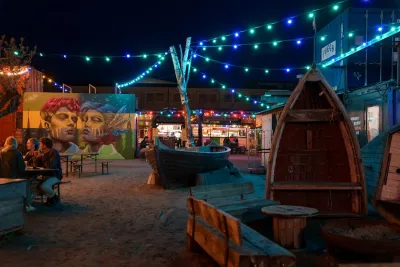
In early May I traveled to Copenhagen with hopes that the city might meet my high expectations — As a guy who’s big on urban waterfronts and how they develop, I was pleasantly surprised that it did.
And no place was more intriguing to me than Refshaleøen, a former industrial site for shipbuilding and maritime industry that has been revitalized into a lively network of activities and public spaces. The multi-use space has everything from food to saunas, all while successfully preserving the shipyard’s gritty, industrial character. For urban planners and designers, it’s an excellent example of how adaptive reuse and a strong, people-centered approach can transform a manufacturing site to a cultural landmark.
Refshaleøen’s Evolution
History of the Site and Land Ownership
Refshaleøen is a man-made island in Copenhagen’s harbour, and began as a major shipyard for Burmeister & Wain in the 1870s. By the mid 1900s B&W became the largest workplace in Denmark, making the port and shipbuilding industries major components of Copenhagen’s identity. Like other industrial ports worldwide, de-industrialization during the back end of the 20th century impacted the shipyards, and B&W went from the top employer of the country to completely bankrupt by 1996.
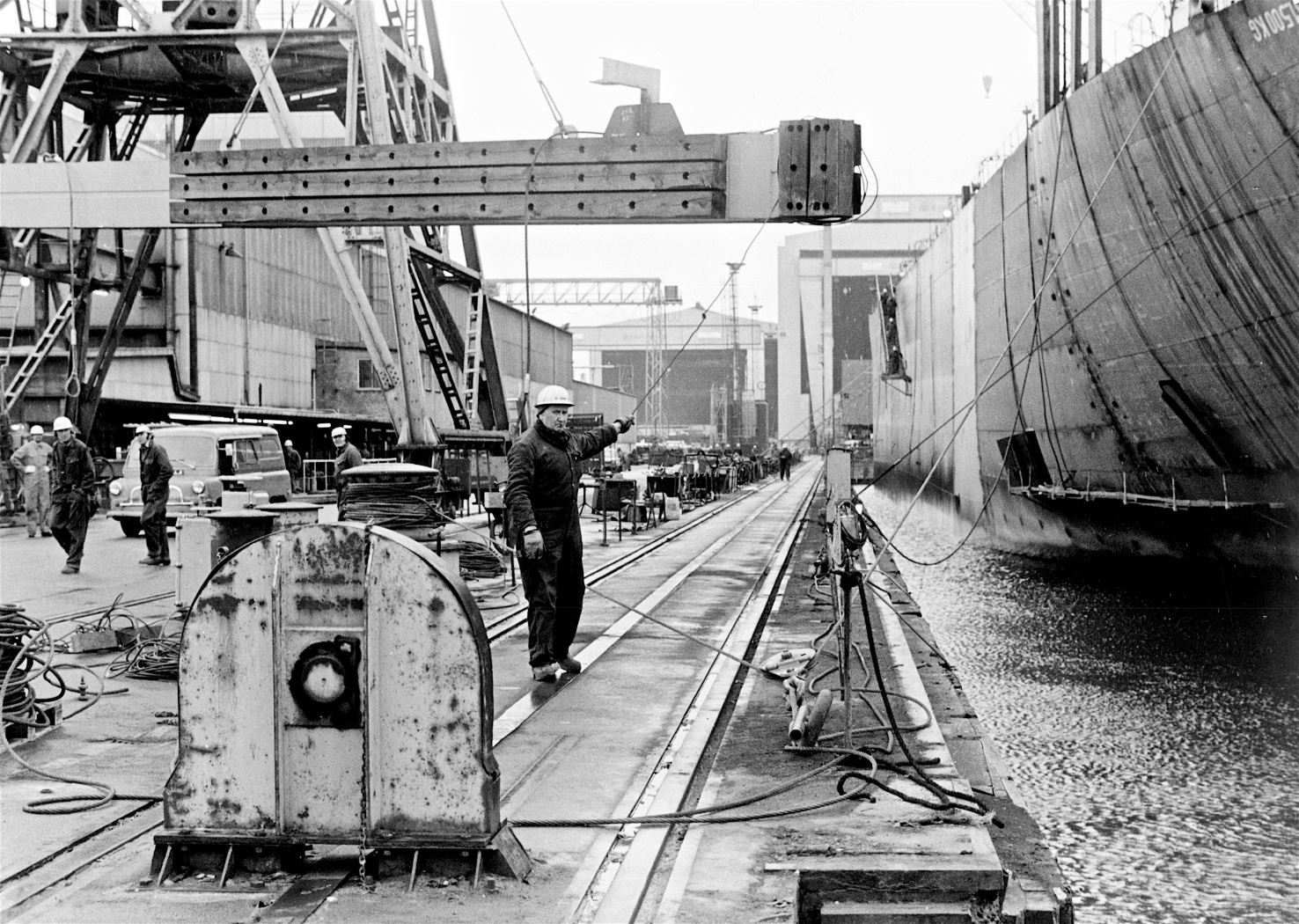
B&W’s bankruptcy led to a change of ownership over the area, with Refshaleøens Ejendomsselskab, a property company owned by four pension funds, becoming the majority landowner.
After 1996, Refshaleøens Ejendomsselskab slowly evolved the area into a place for arts and culture, where creatives and entrepreneurs could benefit from the cheap rents of existing shipping containers and old halls for new uses. By 2009, the area was permanently opened to the public, and Refshaleøens Ejendomsselskab became more selective about the activities and businesses they would lease to, acting as a curator and a negotiator to ensure tenants were compatible with the image they had in mind for the area: a space that maintained the industrial identity and gritty character, but also celebrated creativity and culture. The result is a waterfront space gleaming with authenticity.
Placemaking Success
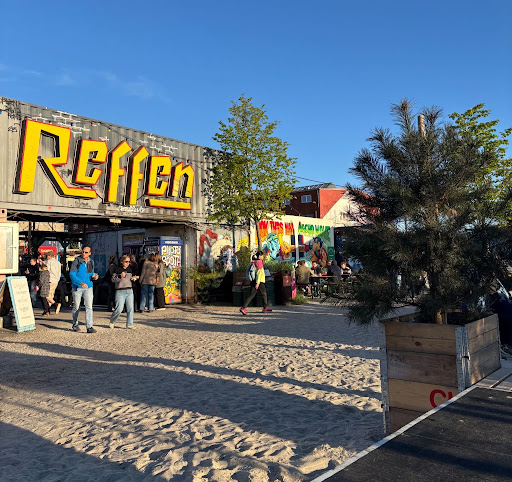
Refshaleøens Ejendomsselskab developed the character of the island by populating it with activities that are compatible, and span a wide range of interests. Through adaptive reuse, the company successfully transformed a space meant for shipbuilding into a hub for culture and leisure.
Activities & uses
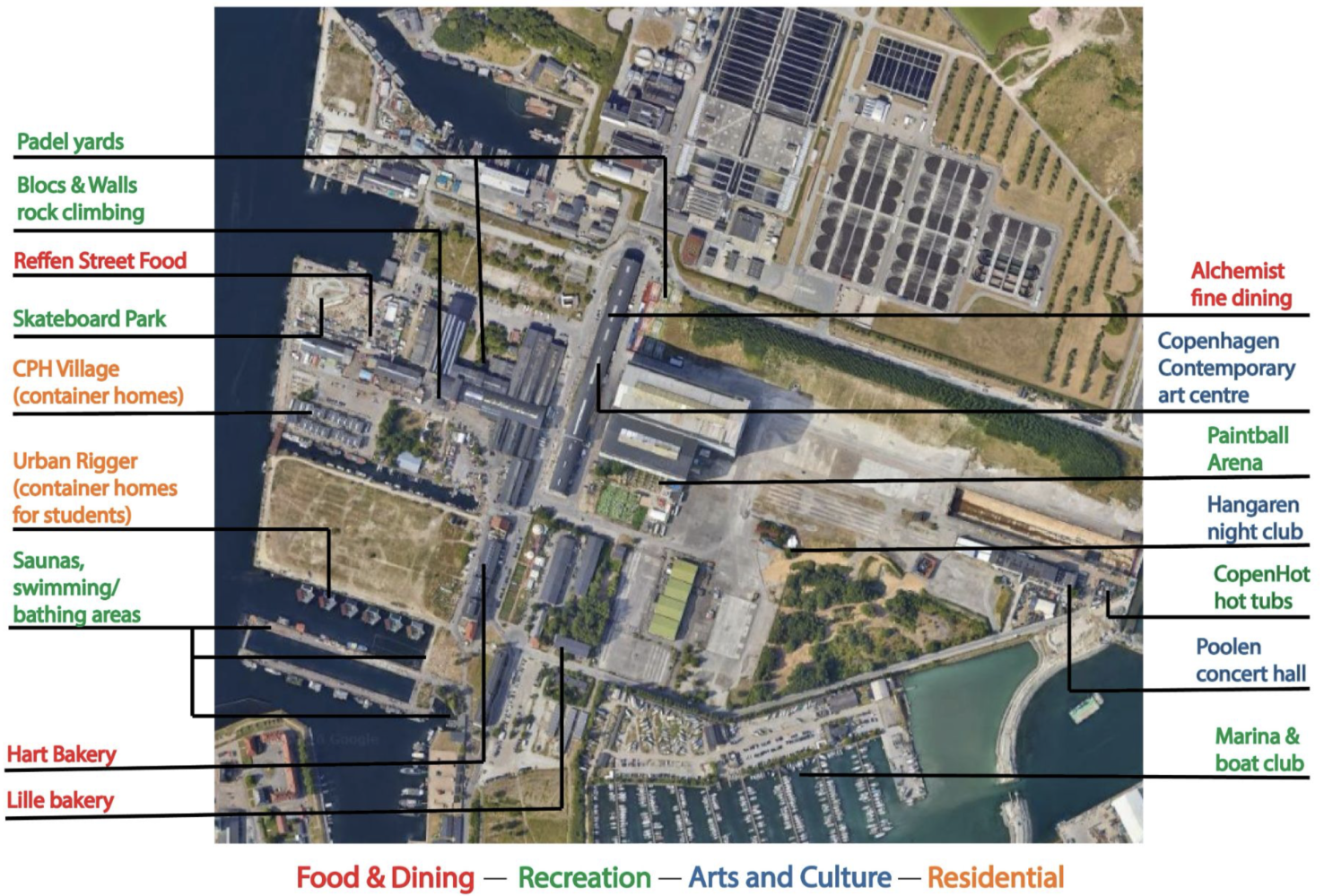
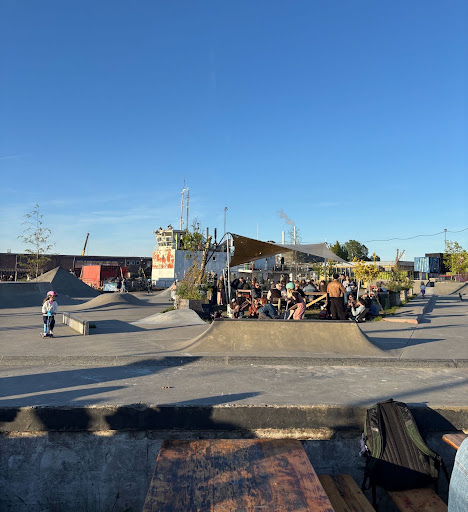
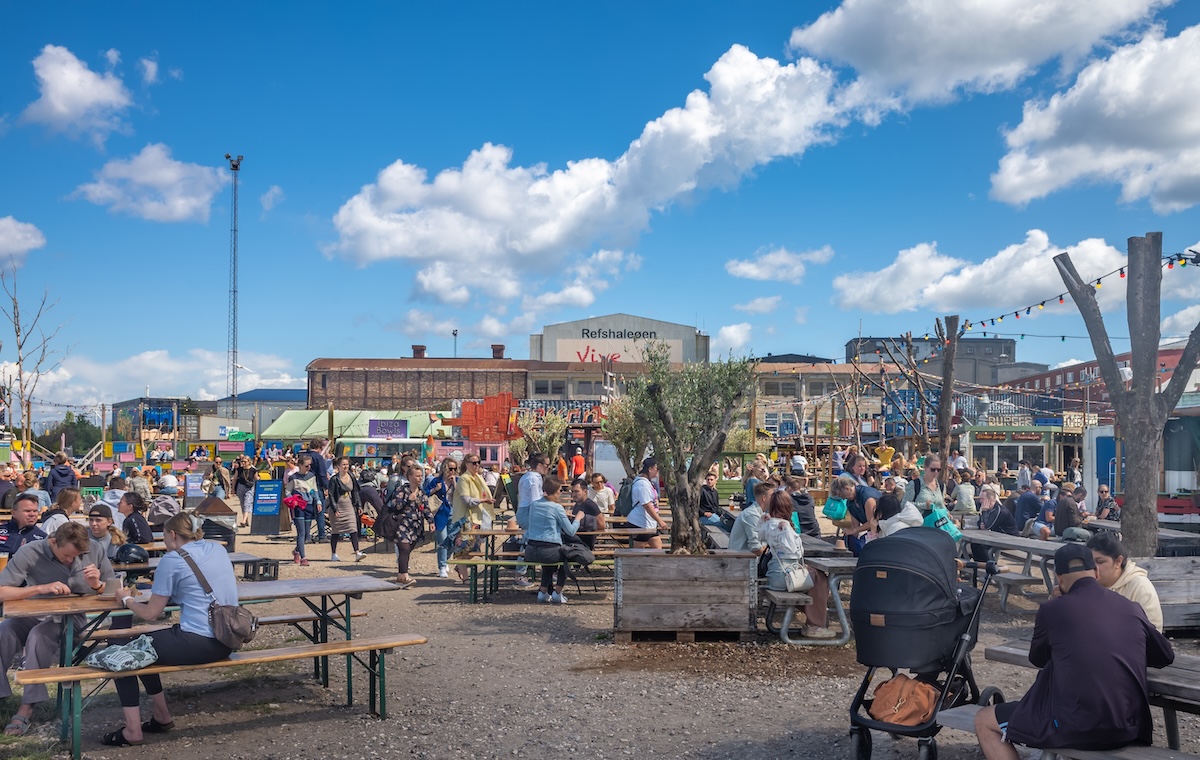
The diverse set of activities and uses at Refshaleøen are a major generator for public use. Food and drink prevail (as they often do) in attracting large quantities of visitors (and spending), but the overall range of uses and activities, from small businesses to recreation and housing (like CPH Village and Urban Rigger) works cohesively. For example, some people may come for one thing, like rock climbing, get something to eat after, grab a beer, look out at the water and check out a shop or two on the way out, all in the same place. This mix of uses is more likely to generate activity on a regular basis and encourage people to stay longer, unlike places with few, or only one, type of use.
Year-round use
In cities with colder or harsher climates like Copenhagen, successful public spaces understand that they cannot only consider how to encourage public use in the best summer weather, but in the colder winters as well, ensuring more consistent use year-round. Saunas, hot tubs, ice skating, heated beer gardens and Christmas markets provide enjoyable seasonal activities to ensure continued public use in the area throughout the winter.
Events & programming
Both small and large scale programming and events have been important for attracting visitors and building the reputation of the area. Music festivals have commonly been held on the island, with recurring heavy metal festivals such as Copenhell, EDM festivals and Eurovision in 2014. Events for art, photography and culture also support local artists, communities and demographics. All of these activities have built the reputation of the area by welcoming various interests, and normalized people going a little further out of the city centre to reach it.
Interaction with the water
Lastly, the area appropriately interacts with the water. Not through high profile development or flashy new spaces, but through simple measures. Refshaleøen’s gritty character has been maintained, meaning people can walk along wharves which are mostly unchanged from their industrial past. Fewer seating options right next to the water does not stop people from sitting on ledges and dangling their feet above the water — an option which is not discouraged by railings and fences which condemn fun in the name of safety. And, much of the available seating is oriented towards the water, encouraging people to do one of the most popular waterfront activities: simply looking at the water.
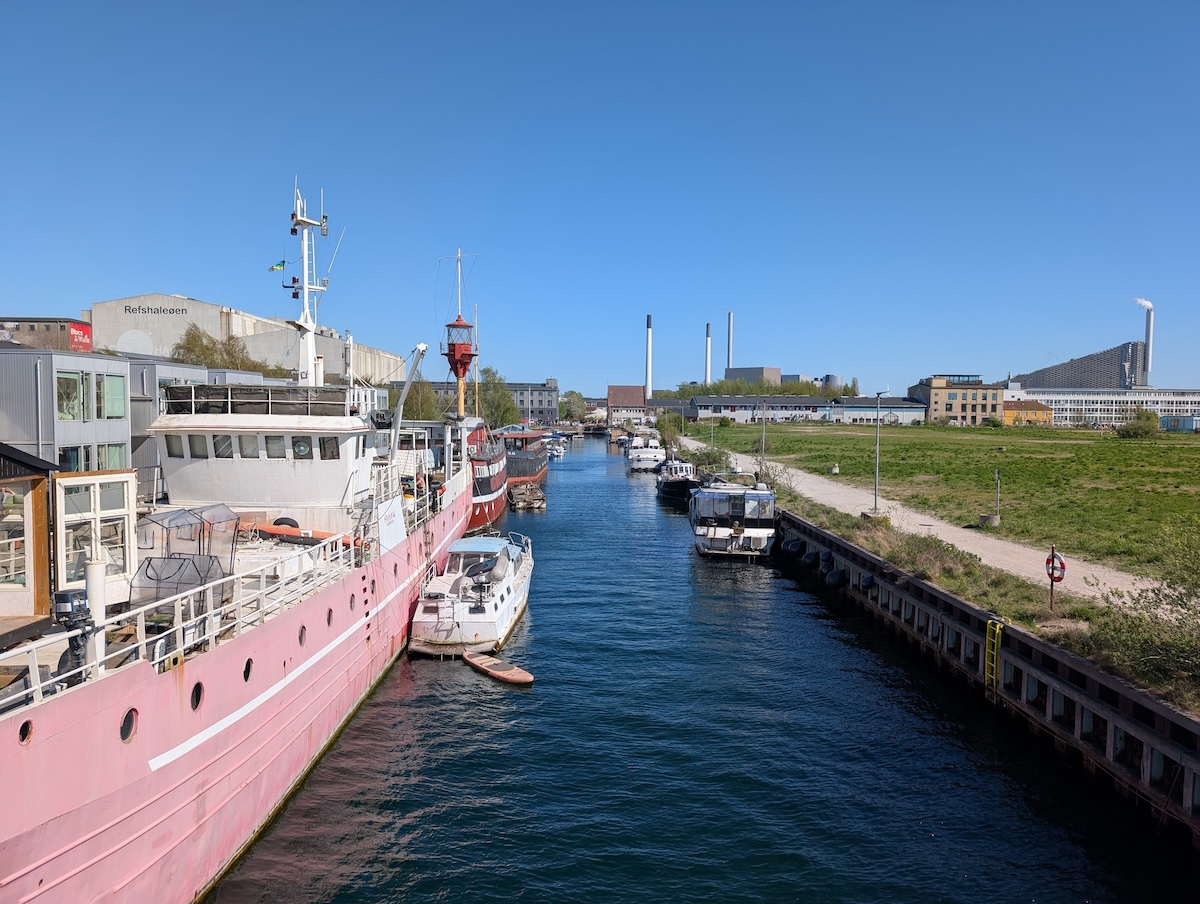
Next to Reffen’s food stalls, artificial sand and beach chairs provide a relaxing and playful element on the waterfront (and at a low cost). Places to enter the water are also present, with swimming areas and a marina meeting the needs of recreational swimmers, tanners, kayakers and sailors.
Refshaleøen’s lessons
Taking the organic approach to placemaking
Refshaleøen’s evolution shows us that revitalization efforts and the creation of successful public spaces does not need to be forced. The area began building its character and reputation in a somewhat organic manner, attracting artists and vendors who flourished in the cheap spaces Refshaleøen provided. The early organic development has made the place much more authentic than it might have been with strict and structured management from the jump. Over the course of 30 years, a nearly abandoned area turned into a destination which receives swaths of visitors and creates substantial economic output.
Many places could benefit from a planning approach which allows interesting things to appear and gain traction gradually, with public use and the local economy growing as a byproduct. Provide places suitable for the endeavours of artists and small business owners, and they will follow.
Private investment has tremendous upside
This may go without saying, but partnerships with private companies can have tremendous upside. It was perhaps very lucky that a private landholder prioritized this sort of development rather than looking for a quicker way to turn a profit, but it shows the potential that private investment can have in revitalization and public space activation, particularly for cities looking to fill gaps in public funding. Having one major landholder (rather than many landholders) has also made it much easier for Refshaleøen to uphold the character of the area and manage tenants, making for a more connected network of spaces and activities.
Authenticity attracts
Refshaleøen is undoubtedly a unique part of Copenhagen. Through adaptive reuse and its variety of activities and unique tenants, the area celebrates the historical context while providing new and exciting places for people to gather and live. The lesson it provides is this: celebrate what makes your place unique, and don’t be afraid to think outside the box.

How Copenhagen Became a ‘Sponge City’
The Danish capital is implementing a massive, multi-pronged strategy to build resilience against flooding and shore up water supplies during drought periods.
Envisioning the 'Soft City'
Density and diversity—where boundaries between spaces and uses are lessened—create more vibrant, livable places and more functional cities.
Copenhagen Strives to Be Carbon Neutral by 2025
The Danish capital has an ambitious goal to be the world’s greenest and most bike-friendly city, and it is taking big steps to make that happen soon.

Planetizen Federal Action Tracker
A weekly monitor of how Trump’s orders and actions are impacting planners and planning in America.

‘Going backwards:’ Baltimore mayor, students rally against state's transit funding plan
Maryland's proposed six-year plan provides no funding for Baltimore’s BMORE bus program and reduces its road maintenance funding.

Detroit to transform waterfront with $2.2 billion investment
Developers will convert about 18 acres of unused parking lot space into civic spaces.

25 states, cities sue the EPA over erased power plant emissions limits
The coalition also intends to sue the EPA for not regulating emissions from gas-fired power plants.

Newsom vetoes giving CA tribes greater voice in water projects
In his veto letter, Newsom said the bill would add ‘uncertainty’ to the state’s fight to secure Californians’ water supplies.

Michigan Senate votes to revise 'lax' dam safety laws
A Bridge Michigan investigation found more than 100,000 Michigan residents live in the floodpath of a high or significant-hazard dam.

FREE Course: Walkable City 1: Why Walkability?
After describing his path towards focusing on walkability as the essence of good planning, Jeff Speck marches through his five principal reasons for making more walkable places.
Reinventing Malls: Planning Alchemy—Turning Gray Fields Into Gold
The course focuses on the opportunities and imperatives that shape reinvention of mall sites.

City of Thousand Oaks
City of Wisconsin Rapids
Harvard University Graduate School of Design
The Architects Foundation
University of Cincinnati Online
Northern Illinois Transit Authority (NITA)
The Pocatello Development Authority
The Urban Renewal Agency of the City of Pocatello

