The Viceroy Seaglider can fly at speeds of 180mph for up to 180 miles.


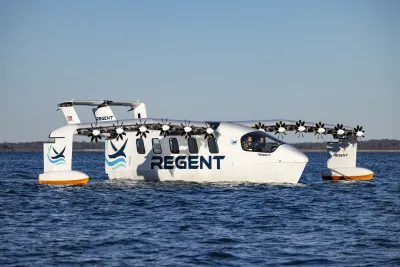
Regent Craft’s Viceroy Seaglider — the world’s first electric vehicle that can function as both a plane and a boat — had its first public demonstration on Sept. 30. Regent presented the fifth overall test flight of the new technology publicly to celebrate opening a 255,000 square-foot manufacturing facility in Rhode Island.
“The 12-passenger electric vessel operates in three modes: starting on its hull at low speed, transitioning to hydrofoils once clear of the dock and taking flight on a cushion of air above the water surface, according to Regent. It can fly at speeds up to 180 mph for up to 180 miles.”
Regent Vice President of Programs Larry Wirsing told Smart Cities Dive that coastal cities are prime locations for these vessels, and that Regent had mapped out every community it thought would fall into their market. Regent expects customers to board the Viceroy Seaglider as early as 2027.
Read the full story: Seaglider electric plane-boat hybrid takes flight in first public demo

Planetizen Federal Action Tracker
A weekly monitor of how Trump’s orders and actions are impacting planners and planning in America.

Washington state to charge fee to drivers with fuel-efficient cars
Revenue from the fee will go towards supporting the state’s highways.

Illinois considers spending $1 billion in taxpayer money on data center
A quantum computing campus and data center are currently under construction in Chicago.

‘Demolition of our heritage:’ Some US tribes speak out against BAAJA
A coalition of indigenous groups in the United States are concerned about provisions in the bill that may weaken their ability to halt large energy projects.

How LA’s new mayor plans to tackle affordable housing crisis
Mayor-elect Nithya Raman has proposed overhauling the city’s permitting process.

Interactive map reveals Pennsylvania's abandoned oil, gas wells — many on residential property
It is difficult for residents to know if a well is near their home, or if it poses a threat to them.

FREE Course: Walkable City 1: Why Walkability?
After describing his path towards focusing on walkability as the essence of good planning, Jeff Speck marches through his five principal reasons for making more walkable places.
Reinventing Malls: Planning Alchemy—Turning Gray Fields Into Gold
The course focuses on the opportunities and imperatives that shape reinvention of mall sites.

City of Charlotte
City of Rosemead
Rutgers University, Edward J. Bloustein School of Planning and Public Policy
University of Michigan School for Environment and Sustainability (SEAS)
Hunter College, City University of New York (CUNY)
The Architects Foundation
University District Partnership