Two mayors resigned from the Charlotte Regional Transportation Planning Organization after it voted in favor of the toll roads.


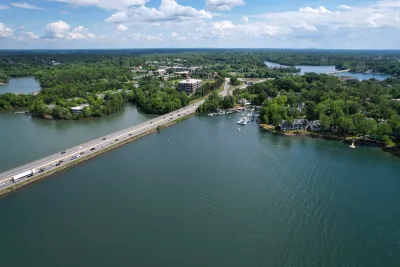
The Charlotte Regional Transportation Planning Organization voted to build toll roads on I-77 on Sept. 23, prompting Davidson Mayor Rusty Knox and Matthews Mayor John Higdon to resign from the organization. Both mayors said the project would not bring congestion relief.
Spectrum News reports:
“These toll lanes do not meaningfully address congestion, our No. 1 concern,” Matthews Mayor John Higdon said. “We are being asked to sacrifice neighborhoods, accept state interference and set a dangerous statewide precedent for a project that doesn't even solve the problem it claims to address. Congestion relief is the reason this conversation started and yet the solution being forced upon us cannot deliver it.”
The CRTPO initially rescinded its support of the project four months ago, fearing the construction would negatively impact historically Black neighborhoods. However, state lawmakers ruled that all communities opposed to the project would have to repay the North Carolina Department of Transportation nearly $70 million. "Every community that voted to pull their support of the project in May changed their votes to avoid being penalized," Chloe Salsameda writes for Spectrum News.
Read the full story: Transportation board gives green light to build toll lanes on I-77 South
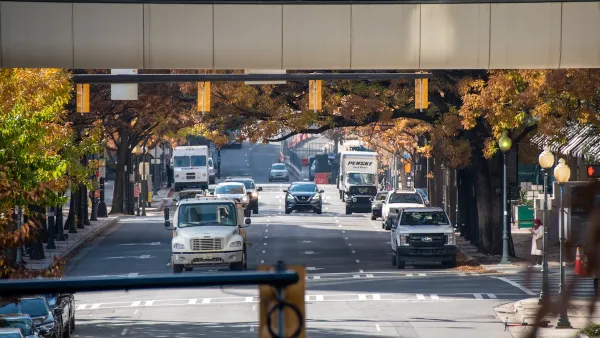
Road safety in Charlotte, NC, a 'public health crisis'
Twelve serious or fatal crashes happen in the region every week. Since 2021, over 900 people have been killed in accidents.

Local Opposition to Ohio DOT's I-77 Widening Plans Near Akron
The Ohio Department of Transportation wants to add lanes to Interstate 77 outside Akron to reduce congestion. Some local officials think the project will connect the region to the East Coast; others think the money would be better spent locally.

Planetizen Federal Action Tracker
A weekly monitor of how Trump’s orders and actions are impacting planners and planning in America.

Eastern Nebraska is running out of electricity
Data centers and electrification are straining eastern Nebraska’s grid, throttling economic development.

Study reveals best places in the U.S. for cycling, walking
New research from Streetlight Data examines bicycle and pedestrian miles per capita in the 100 largest U.S. cities by population.

Next-generation nuclear reactors are coming to Texas
The reactors will not require towering containment structures thanks to new safety features.

California distributes $1.3 billion to prevent transit service cuts, bolster projects
Twenty-eight projects across California received a portion of the funding.

Pennsylvania Democrats have 15 affordability, clean energy bills for flipped state Senate
Bills in consideration include a bill supporting geothermal energy and a bill supporting solar on warehouses.

FREE Course: Walkable City 1: Why Walkability?
After describing his path towards focusing on walkability as the essence of good planning, Jeff Speck marches through his five principal reasons for making more walkable places.
Reinventing Malls: Planning Alchemy—Turning Gray Fields Into Gold
The course focuses on the opportunities and imperatives that shape reinvention of mall sites.

City of Charlotte
City of Rosemead
Rutgers University, Edward J. Bloustein School of Planning and Public Policy
University of Michigan School for Environment and Sustainability (SEAS)
Hunter College, City University of New York (CUNY)
The Architects Foundation
City of Cambridge
The Pocatello Development Authority
The Urban Renewal Agency of the City of Pocatello