Get ready for that new train smell and more seats. But they won’t go faster or run more frequently on the Cascades route in Washington and Oregon.


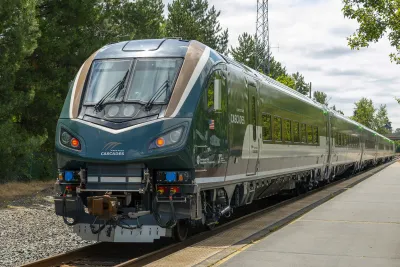
A date that Pacific Northwest train riders and advocates have long awaited is finally nigh. Amtrak’s sleek, amenity-packed new trains will debut on the Cascades intercity route on Sept. 30.
Amtrak leaders previewed the launch of commercial service of the “Airo” fleet in an event streamed live on YouTube Thursday.
“This is one of the most significant modernization efforts in Amtrak’s history. While customers will notice the beautiful new interiors and all of the features, this is really setting up Amtrak for the future of rail,” said Celia Ann Pfleckl, the assistant vice president for the Airo program, during the launch announcement livestream.
Initially, one new Airo train will make one roundtrip each day between Seattle and Vancouver, B.C., and a second new train will operate one roundtrip a day between Seattle and Eugene, Oregon.
Amtrak Cascades will operate with a mixed fleet this fall and winter, gradually switching over to solely next-generation trains by early 2027, the rail operator said. Each new train added will follow the schedule of the older one it replaces. The modernization will not result in schedule additions regionally for the time being.
The state-supported Amtrak Cascades line serves eighteen cities from Vancouver, Canada, to Eugene, Ore., including Bellingham, Seattle, Tacoma, Olympia and Portland.
Pfleckl and her colleagues gushed Thursday about amenities that customers can look forward to, including comfy seats with moveable headrests, individual power outlets, improved onboard Wi-Fi, bigger windows, reading lights and digital info displays. The revamped cafe cars have self-service options and mood lighting. The six large restrooms feature touchless controls.
The 300-passenger Airo trainsets offer significantly more seats per departure than the coaches they will replace on the Cascades line, some of which date to the 1970s. That increased seat count is the most important detail, said Charles Hamilton, executive director of the passenger rail advocacy group All Aboard Washington.
“That has been what has kept us from moving forward,” Hamilton said in an interview, noting that the existing trains are regularly sold out, particularly on Fridays and Sundays.
“This will give us more capacity to have more folks riding,” Hamilton said. “That’s going to be a big deal.”
The Amtrak Cascades line has been operating with reduced passenger capacity since March 2025, when dozens of 1980s-era Horizon rail cars were pulled from service due to corrosion problems. Ridership statistics consequently showed a decrease last year compared to the record high of nearly 1 million riders in 2024.
Amtrak placed a large order for new Siemens-built trains in 2021 as part of a nationwide modernization campaign. In total, eight new trainsets, two new diesel locomotives, and a spare cab car are coming to the Northwest. The Amtrak Cascades service is the first in line to receive next-generation railcars from the national fleet renewal order.
“These new Amtrak Cascades trains are a game-changer for rail travel in the Pacific Northwest,” said Washington’s Secretary of Transportation Julie Meredith in a news release. “They bring improved reliability, comfort, and amenities to one of the most scenic rail corridors in the country. We’re particularly excited to be the first in the nation to introduce these new trains into service.”
Can’t wait
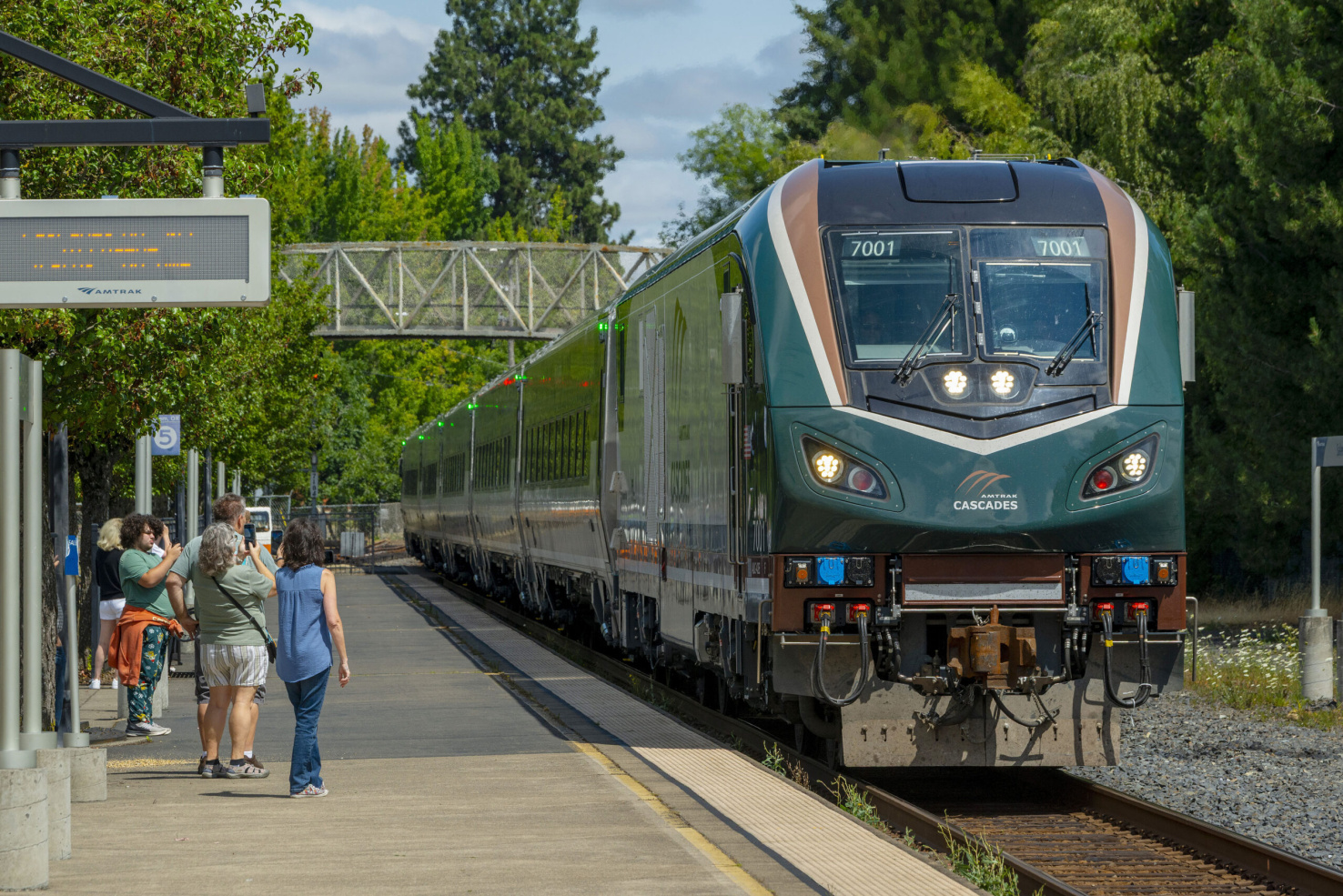
Many in the Pacific Northwest’s sizeable community of rail enthusiasts sound eager to climb on board the new trains at the first opportunity. Over the past few months, trainspotters have closely tracked the arrival of each new Airo train and posted photos on social media and online rail forums of them being tested locally.
The reveal of Sept. 30 as the date for their inaugural service was greeted with comments such as, “Can’t wait,” “Let’s go,” “My 10yr old son wants to go on the first day,” and “I am so happy!” on Reddit and Facebook.
On the launch date, Amtrak said the new Airo equipment would be assigned to Trains 516/519 on the Seattle-British Columbia route and Trains 503/508 on the Seattle-Eugene segment.
“I wouldn’t be at all surprised to see those first trains totally booked very quickly,” Hamilton said.
Same speed and frequency
The new trains will be more fuel efficient, but they won’t improve travel times. The freight-dominated corridor has an existing top speed limit of 79 mph due to track conditions.
Their arrival also won’t unclog the periodic bottlenecks and congestion on the privately-owned tracks. The subpar on-time performance of Amtrak Cascades, while improving, continues to present a challenge and headache.
The Oregon and Washington state transportation departments are in the early stages of updating the Amtrak Cascades long-range plan to identify what it would take to add additional roundtrips at higher speeds. That could entail a mix of track improvements, siding extensions and signal upgrades.
An updated Service Development Plan will then set the stage for difficult negotiations with Union Pacific and BNSF to shoehorn more passenger rail trips in between rising freight train traffic. Not to mention, the state and federal governments would need to find tens of millions of dollars to pay for a rail service expansion.
“We expect the current Amtrak Cascades schedule to continue for the foreseeable future,” was how a Washington transportation department spokesperson assessed the outlook this week.
Washington and Oregon co-manage the regional route and contract with Amtrak to operate the service. Passenger fares cover slightly more than half of the annual operating expenses with taxpayers picking up the rest. Unlike with long-distance routes, Amtrak requires states to subsidize the shorter regional services it operates, such as the 467-mile Cascades line.
In conjunction with the arrival of the new trains, construction workers are putting the finishing touches on a new $300 million train maintenance facility just south of downtown Seattle. This federally-funded project was needed to modernize and enlarge the existing Amtrak rail yard, in part because the new Airo train cars can’t be easily decoupled for servicing.
Read the full story: Northwest rail fans eager for Sept. 30 debut of Amtrak’s Airo fleet

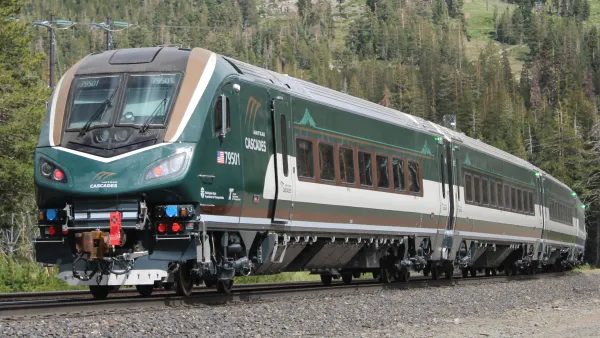
Washington and Oregon receive first new Amtrak trains in decades
The Airo trains promise shorter commutes, more frequent trips and fewer emissions than their predecessors.
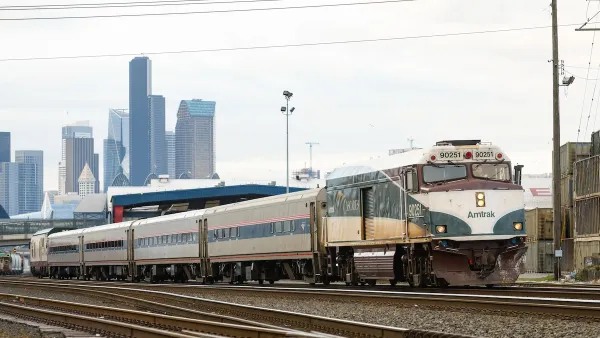
Amtrak Cascades Line Breaks Ridership Record
The route linking Portland, Seattle, and Vancouver, BC served nearly one million riders in 2024.
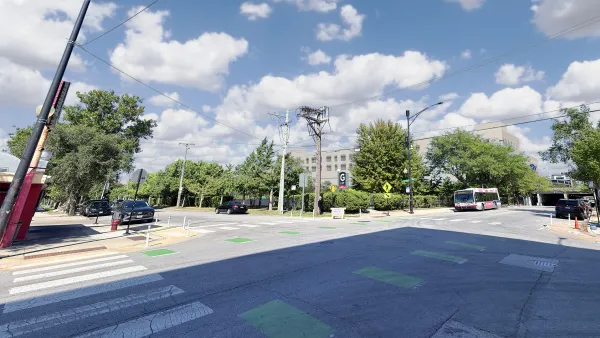
A ‘shady’ deal: Chicagoans rally against planned Amtrak maintenance facility
The $900 million facility would allow Amtrak to maintain entire trains in one building, which the company says will reduce delays.

Planetizen Federal Action Tracker
A weekly monitor of how Trump’s orders and actions are impacting planners and planning in America.

Amtrak, CN end decades-long dispute with eight-year agreement
The new operating agreement establishes an updated framework for the companies to work together, including processes to resolve disputes.

Judges permit Denver to divert 77,000 acre feet from the Colorado River for reservoir expansion
Overuse and climate change have caused the Colorado River’s water levels to plummet.

Maryland local governments examine if they should have more power to raise property taxes
Maryland’s housing market is out of reach for the majority of moderate-income residents.

Northwest rail fans eager for Sept. 30 debut of Amtrak’s Airo fleet
Get ready for that new train smell and more seats. But they won’t go faster or run more frequently on the Cascades route in Washington and Oregon.

NYC DOT wants faster, more permanent street upgrades
The city is examining ways to build more concrete infrastructure without getting entangled in 'decades-long' projects.

FREE Course: Walkable City 1: Why Walkability?
After describing his path towards focusing on walkability as the essence of good planning, Jeff Speck marches through his five principal reasons for making more walkable places.
Reinventing Malls: Planning Alchemy—Turning Gray Fields Into Gold
The course focuses on the opportunities and imperatives that shape reinvention of mall sites.

Harvard University Graduate School of Design
KFH Group Inc.
Greater Baltimore Committee
The Architects Foundation
University of Cincinnati Online
The Pocatello Development Authority
The Urban Renewal Agency of the City of Pocatello