The $4 million pilot program aims to make it easier for people to find public restrooms in New York City.


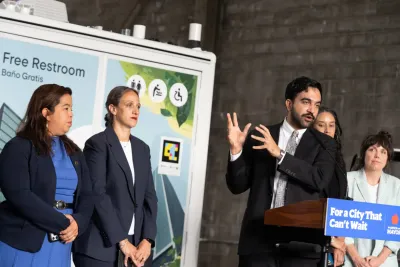
Robotoilets have landed in New York City: on Wednesday, two futuristic public bathrooms began operation on NYC’s streets as part of a $4 million pilot program from the mayor’s office. The initiative aims to make it easier for people to find a place to relieve themselves while on the go — as long as they can do so within the toilets’ strict ten-minute time limit, after which the doors to NYC’s streets will open automatically.
The high-tech public restrooms can only be opened by using special tap cards, which community partners will distribute, or texting a number using a smartphone. The restrooms are equipped with free pad dispensers, and are cheaper to install than conventional public restrooms because they do not utilize the city’s sewer and water systems, Gothamist reports.
Fifteen more robotoilets are expected to roll out in the coming months. NYC has long struggled to provide enough public toilets for its residents — officials estimate there are around 1,000 public bathrooms across the five boroughs, Liam Quigley writes for Gothamist.
Read the full story: NYC deploys robotoilets. The public bathrooms have a strict 10-minute time limit.


Community feedback ushers in changes to NYC’s Park Avenue redesign
New aspects of the design include a two-way bike lane and separate paths for cyclists and pedestrians.
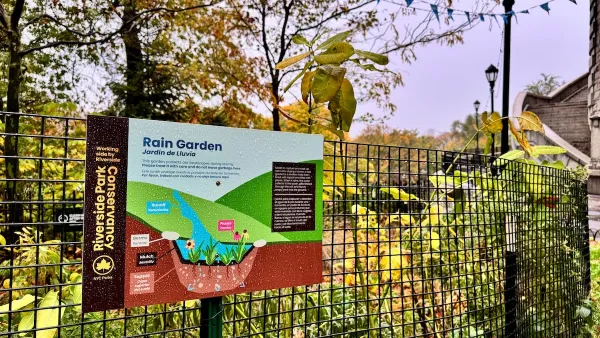
NYC cools commuters with city's first rain garden above a bus stop
New York City officials say the plants in the rain garden can absorb 16 gallons of rainwater during heavy storms.
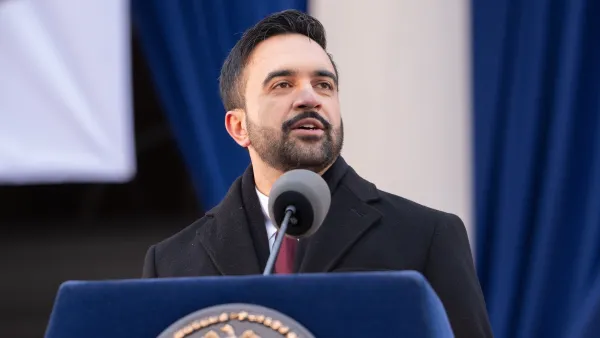
Mamdani overhauls NYC's Vision Zero plan with 100 new policy goals
The overhaul aims to reduce traffic deaths and make streets safer for pedestrians, cyclists and drivers through lower speed limits, new safety infrastructure and more.

Planetizen Federal Action Tracker
A weekly monitor of how Trump’s orders and actions are impacting planners and planning in America.

Amtrak, CN end decades-long dispute with eight-year agreement
The new operating agreement establishes an updated framework for the companies to work together, including processes to resolve disputes.

Judges permit Denver to divert 77,000 acre feet from the Colorado River for reservoir expansion
Overuse and climate change have caused the Colorado River’s water levels to plummet.

Idaho may see an 18% drop in federal surface transit funding — the largest estimated cut in the US
Transit systems in rural communities are much more reliant on federal funding to provide their services.

How ‘post-disaster gentrification’ alters neighborhoods after natural calamities
After hurricanes, fires or other calamities, the original residents of a community are often replaced by younger, wealthier residents.

Maryland local governments examine if they should have more power to raise property taxes
Maryland’s housing market is out of reach for the majority of moderate-income residents.

FREE Course: Walkable City 1: Why Walkability?
After describing his path towards focusing on walkability as the essence of good planning, Jeff Speck marches through his five principal reasons for making more walkable places.
Reinventing Malls: Planning Alchemy—Turning Gray Fields Into Gold
The course focuses on the opportunities and imperatives that shape reinvention of mall sites.

Harvard University Graduate School of Design
KFH Group Inc.
Greater Baltimore Committee
The Architects Foundation
University of Cincinnati Online
The Pocatello Development Authority
The Urban Renewal Agency of the City of Pocatello