The state's "Clean and Reliable Grid Affordability Act" is the latest jumpstart for the VPP market, which turn individual homes into green energy producers.


This article originally appeared on Inside Climate News, a nonprofit, non-partisan news organization that covers climate, energy and the environment. Sign up for their newsletter here.
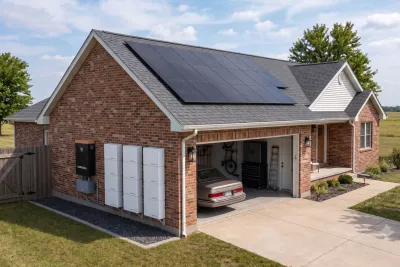
Illinois is the latest example of how a state can embrace virtual power plants and see results almost immediately. Last week, Solrite Energy announced its entry into the Illinois market with a program that provides households with battery energy storage for $20 per month and makes the batteries available to support the local power grid.
A virtual power plant, or VPP, is a network of resources at homes and businesses that can support the larger community by sending electricity to the grid or by reducing demand. Solrite, based in Fort Worth, Texas, joins companies such as Base Power and Energywell that market solar and batteries to Illinois customers served by the state’s two largest electricity utilities, ComEd and Ameren.
This comes after Gov. JB Pritzker signed the Clean and Reliable Grid Affordability Act in January, requiring utilities to develop virtual power plant programs, among other provisions. Often, VPPs are batteries connected to solar, but there are many other types, including grid-connected thermostats and water heaters.
I spoke with Regan George, Solrite’s founder and CEO. Illinois is the fifth state where his company owns virtual power plants, joining California, Connecticut, Massachusetts and Texas. George has become adept at describing his business model, which relies on knowledge of the grid, utility regulation and battery technology.
“We put in batteries at residential locations in areas where we have deals with the utilities or the grid operator,” he said. “They can access our batteries [to help] support the grid and then they pay us.”
The company started as Solnova in 2017, specializing in rooftop solar, and then changed its name to Solrite in 2023 as it shifted its focus to virtual power plants. Solrite owns the batteries and solar panels and sets up a system in which customers pay monthly bills for long-term leases for the equipment. It now has about 50 employees and operates systems in about 7,500 homes.
An Illinois customer pays $20 per month under Solrite’s program to have a battery installed, with no installation fee. The customer can also choose to have solar panels installed and pay 12 cents per kilowatt-hour for the electricity generated by the panels, which is a discount compared to the utility’s standard rate.
If the same customer wanted to buy a battery of this size and solar panels, the costs would be substantial, easily exceeding $30,000. Part of the deal is that Solrite gets to use the battery whenever the grid needs a boost, drawing electricity from many batteries to function like a power plant.
Solrite uses a 60-kilowatt-hour battery, which is much larger than a house usually needs, so there is plenty of power to serve that address and send power to the grid. In a power outage, the household can use the battery to keep the lights on, with enough storage to last for days if needed. (For context, households in ComEd territory consume an average of about 20 kilowatt-hours per day.)
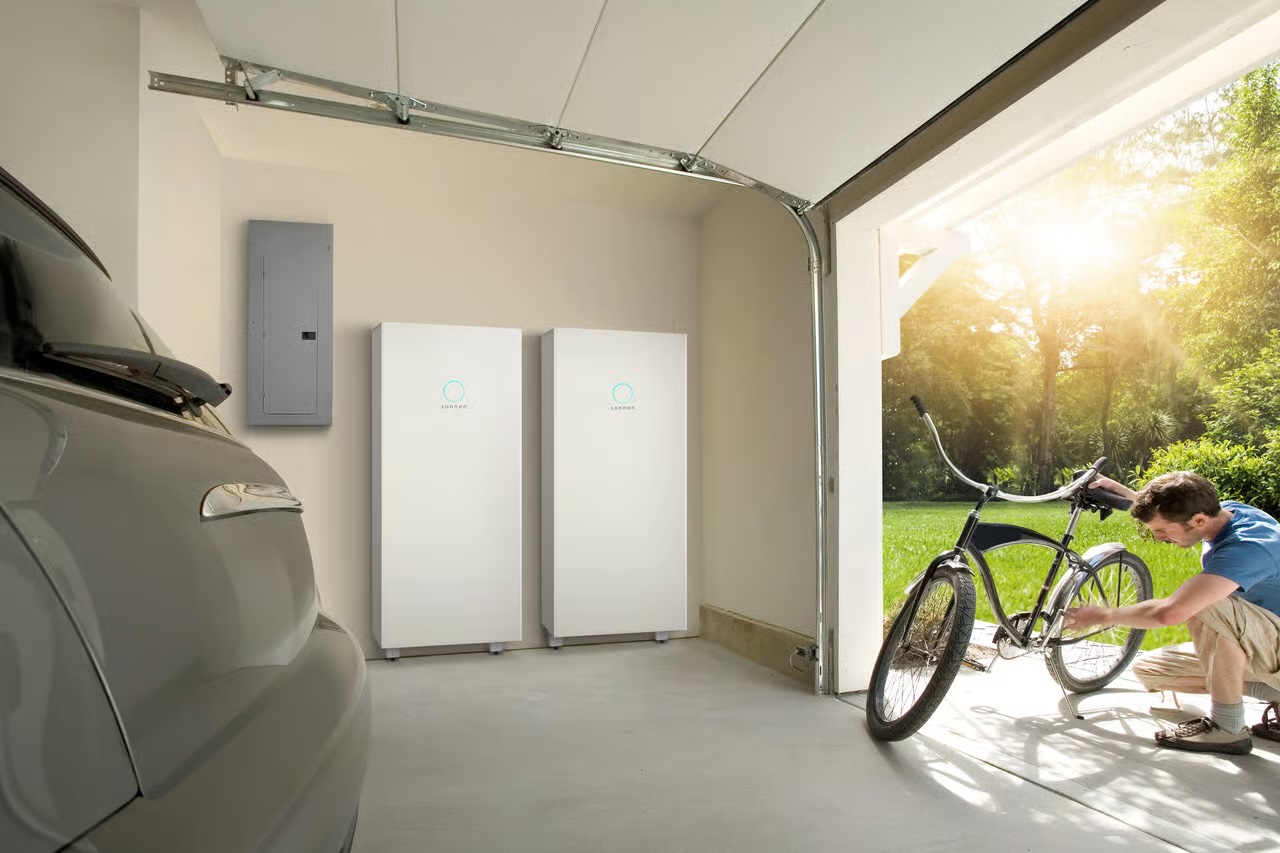
The large battery is a distinguishing feature of Solrite’s business model. It’s about four times the size of a Tesla Powerwall unit, which is another battery often used in VPPs. With large batteries in each home, the aggregate size of the power plant could be much larger as the programs gain popularity.
Another distinguishing feature is that Solrite uses batteries designed for use in VPPs, rather than those for which utility networking is a secondary function. The battery manufacturers include Duracell and Sonnen.
“When we’re talking with a retail electric provider or a utility, [it often begins with] them saying, ‘Don’t worry, we won’t use your batteries too much. We’re only going to use them five to 10 times a year,’” George said. “And I have to stop them and say, ‘No, no, no, not our batteries. I want you to use our batteries as much as you possibly can.’” Meanwhile, the homeowner probably won’t notice when electricity is being exported, he said.
Solrite makes its money by selling electricity from its virtual power plant under contracts with utilities and other buyers, and from the monthly fees paid by people leasing solar and batteries. There’s money to be made because VPPs help utilities reduce the amount of electricity they need when demand and prices are highest.
Mass deployment of virtual power plants has the potential to reduce electricity costs for all Illinois customers, including people not participating, by shifting supply and demand. One example is how VPPs can help to reduce the “capacity charge” from grid operator PJM Interconnection. PJM sets this charge as part of its process to ensure its territory has enough power plants to meet peak demand.
The charge is going to be lower, or at least grow less, as gigawatts of VPPs come online, said Will Kenworthy, Midwest regulatory director for Vote Solar, an advocacy group. “If a battery discharges during the handful of summer peak hours that set that charge, the retail electric supplier avoids that cost—and passes the savings on to customers,” he said.
When scaled, VPPs can reduce reliance on centralized power plants, with broad financial and environmental benefits. There is a virtuous cycle here. Illinois passed a law and companies showed up almost immediately. From the companies’ perspective, the state was opening its doors and streamlining the regulatory process for VPPs to operate.
Entering Illinois is “big for us,” George said. “We’re only going to see more and more markets come on.”


Japan Targeting 2020 Olympics for a Driverless Car System
Japan prioritizes technological advancement to grow its economy.

Planetizen Federal Action Tracker
A weekly monitor of how Trump’s orders and actions are impacting planners and planning in America.

‘Going backwards:’ Baltimore mayor, students rally against state's transit funding plan
Maryland's proposed six-year plan provides no funding for Baltimore’s BMORE bus program and reduces its road maintenance funding.

Detroit to transform waterfront with $2.2 billion investment
Developers will convert about 18 acres of unused parking lot space into civic spaces.

LA to transform part of water treatment facility into new park
By rebuilding some of the Los Angeles-Glendale Water Reclamation Plant’s infrastructure, the city will free up 18,000 square feet to create a new green space for the public.

San Antonio approves $1.1 billion transit agenda
The agency has also begun construction of its Via Rapid Green line, which will service passengers from the San Antonio International Airport.

Guerilla urbanists’ DIY benches joined by sanctioned seats in Chicago
The group behind the original homemade benches said they will continue installing them across bench-less bus stops in Chicago.

FREE Course: Walkable City 1: Why Walkability?
After describing his path towards focusing on walkability as the essence of good planning, Jeff Speck marches through his five principal reasons for making more walkable places.
Reinventing Malls: Planning Alchemy—Turning Gray Fields Into Gold
The course focuses on the opportunities and imperatives that shape reinvention of mall sites.

One Hundred Miles
County of Mendocino
planning NEXT
The Architects Foundation
University of Cincinnati Online
Montrose County
Northern Illinois Transit Authority (NITA)
The Pocatello Development Authority

